
Latest
What Is the Nuclear Briefcase and Why Do World Leaders Carry It?
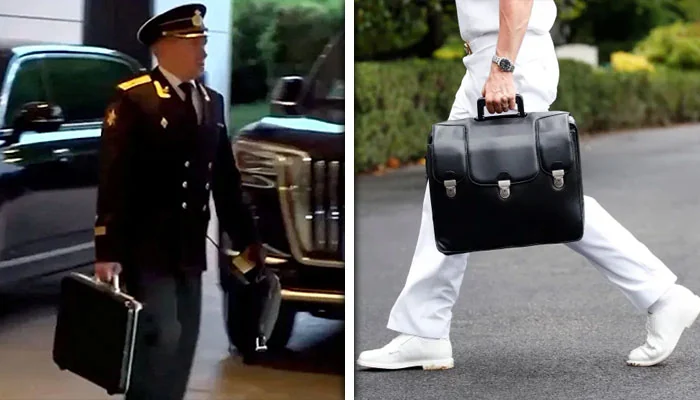
SHENZHEN: During the APEC summit, when the presidents of the United States, China and Russia arrived in Shenzhen, southern China, for trilateral talks, a Russian military officer was spotted carrying a mysterious black briefcase.
When asked about it by a journalist the previous day, the Russian officer reportedly smiled and confirmed that it was indeed a nuclear briefcase. It contains a system known as Cheget, which gives the Russian president direct access to the country’s nuclear weapons command system.
US President Donald Trump also has a similar briefcase, known as the Nuclear Football, which routinely travels with him. However, it has not yet been spotted in Shenzhen.
It remains unclear whether Chinese President Xi Jinping also carries a similar briefcase.
What Is a Nuclear Briefcase?
A nuclear briefcase is a specially equipped case connected to a military command system, through which a head of state can authorize a nuclear attack.
The systems used by the United States and Russia (formerly the Soviet Union) originated during the Cold War, when both superpowers faced the possibility that their leaders might have to make decisions about nuclear attacks within an extremely short period.
The popular image of a leader simply pressing a red button to launch a nuclear attack is far from reality. Carrying out such an order requires an extensive network of military personnel and communication systems.
Why Do World Leaders Carry These Briefcases?
In theory, a nuclear attack could be initiated even when a president is travelling aboard an aircraft, attending a summit or sleeping in a hotel.
Nuclear briefcases therefore help ensure that leaders can authorize a nuclear strike or retaliatory attack at any time, regardless of their location.
They are also important to the concept of nuclear deterrence. Under this principle, an adversary may refrain from launching an attack because it fears that the other side has the capability to retaliate.
Latest
Government Announces New Petrol and Diesel Prices in Pakistan
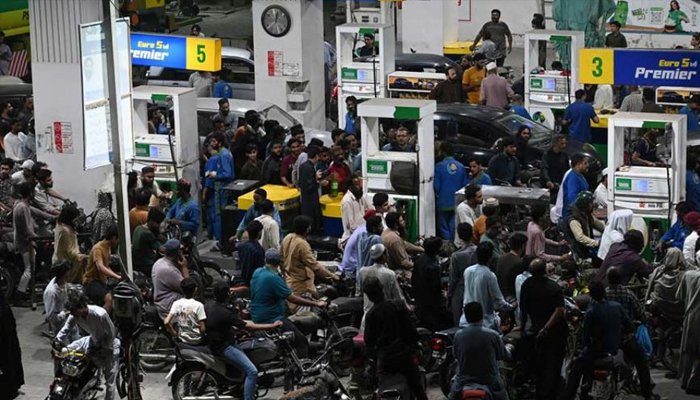
KARACHI: The government has announced new prices of petrol and diesel in Pakistan, with petrol becoming cheaper and diesel witnessing an increase.
According to a notification issued by the Oil and Gas Regulatory Authority (OGRA), the price of petrol has been reduced by Rs. 1 per litre, bringing the new price to Rs. 322 per litre.
Meanwhile, the price of diesel has been increased by Rs. 2 per litre, taking its new price to Rs. 357 per litre.
Latest
US Launches Missile Strike on Iran’s Qeshm Island
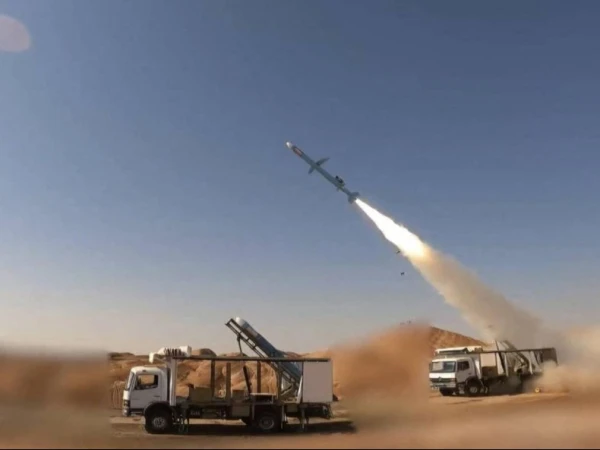
TEHRAN: The United States has carried out a missile strike on Iran’s Qeshm Island, with no details of casualties or damage reported so far.
An explosion was heard in the skies over Qeshm, a southern Iranian island, while semi-official news agencies reported that missiles had struck the island.
Iran’s Tasnim News Agency reported that a US missile landed on the outskirts of Qeshm Island. However, details about the extent of damage caused by the strike remain unavailable.
Refine the headline for accuracyRemove repetition in the report
Latest
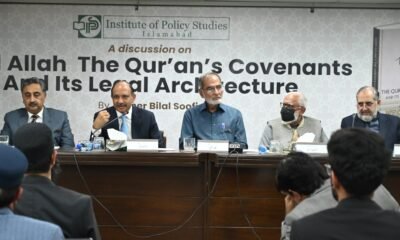
Quranic Covenant System Provides Foundation for Law, Justice and Social Responsibilities: Speakers
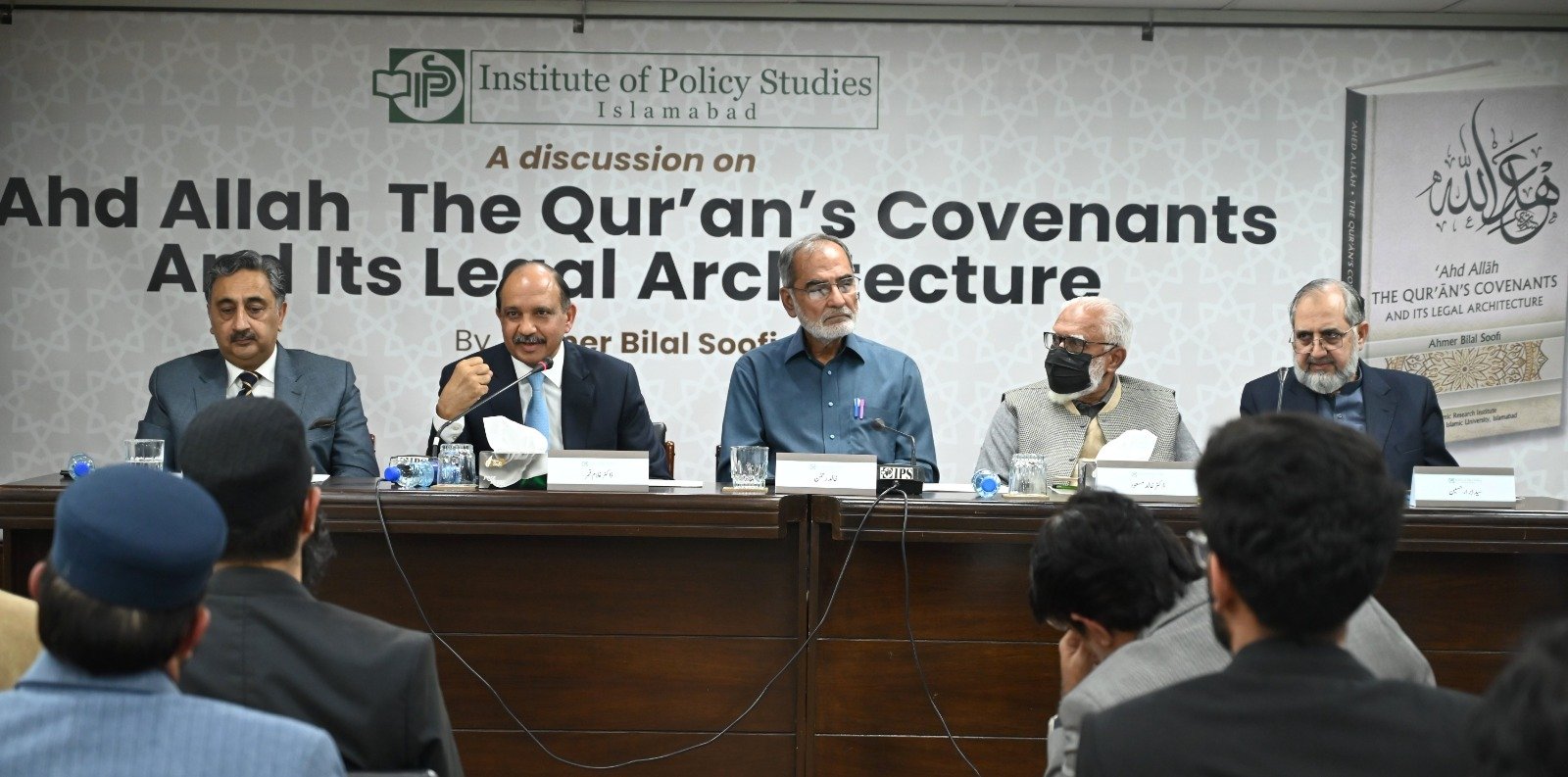
ISLAMABAD: The Quranic concept of covenants and commitments provides a comprehensive framework of mutual rights, duties and responsibilities in relationships with Allah Almighty, fellow human beings and society at large, speakers said at an academic session held in Islamabad.
The session was organized by the Institute of Policy Studies (IPS), Islamabad, to discuss the book Ahdullah: Quranic Covenants and Their Legal Framework by renowned legal expert and former federal minister Ahmer Bilal Soofi.
Religious scholars, legal experts and intellectuals attended the event and discussed the book’s contribution to understanding the Quran as a comprehensive source of ethical, legal and social guidance.
In his opening remarks, Dr. Yasir Riaz said that despite centuries of extensive scholarship on the Holy Quran, its depth continues to offer new insights into emerging questions concerning human thought and conduct. He noted that the book explores a relatively less-discussed aspect of Quranic studies and presents new perspectives on applying divine guidance to human life.
Presiding over the session, Dr. Khalid Masud, a member of the Supreme Court’s Shariat Appellate Bench, highlighted the importance of revisiting the Quranic concept of covenants in contemporary legal and international relations debates.
He explained that a covenant is not merely a contractual arrangement but also represents a commitment to responsibility and moral obligations. He emphasized that the teachings and principles of the Holy Quran should be presented to all humanity rather than being confined to Muslims alone.
Director General Religious Education, Major General (retd) Dr. Ghulam Qamar, attended the event as the chief guest. He appreciated the book’s comprehensive presentation of the Holy Quran as a complete code of life.
He said the Quranic covenant framework holds significance beyond Muslim societies, particularly in protecting minority rights and promoting interfaith harmony. He also recommended sharing the book with relevant national and international institutions.
Earlier, Dr. Mustafiz Alvi, former Dean of the Faculty of Social Sciences at the National University of Modern Languages (NUML), described the publication as a distinctive research contribution. He said the book offers a coherent understanding of individual and collective responsibilities through an in-depth study of Quranic verses.
Dr. Muhammad Akram, Director General of the Shariah Academy, appreciated the author’s efforts to explain the legal framework underlying human relationships, the relationship between humanity and the Creator, and social responsibilities.
Author Ahmer Bilal Soofi thanked IPS for providing a platform for academic discussion and recalled that the institute had previously organized a similar session on one of his books.
In his concluding remarks, IPS Vice Chairman Ambassador (retd) Syed Abrar Hussain highlighted the book’s central theme, noting that the author had examined the Holy Quran from a legal perspective and explored various dimensions of its covenant framework.
He said fulfilling individual, collective, social and international agreements is not merely a legal obligation. Their significance increases further when such commitments are honoured as a religious responsibility.
Other speakers included Supreme Court lawyer Imran Shafiq, editor of Majalla Batool Dr. Saima Asma, International Islamic University Islamabad Assistant Professor Dr. Taimia Sabiha, Sahibzada Qamar-ul-Haq of Jamia Muhammadi Sharif, Chiniot, Islamic economics expert Mufti Dr. Wasi Faseeh Butt, renowned legal expert Professor Dr. Muhammad Mushtaq, Dr. Mustafa Arif Kamal and Dr. Shehzad Iqbal Sham.

Government Announces New Petrol and Diesel Prices in Pakistan
KARACHI: The government has announced new prices of petrol and diesel in Pakistan, with petrol becoming cheaper and diesel witnessing...

US Launches Missile Strike on Iran’s Qeshm Island
TEHRAN: The United States has carried out a missile strike on Iran’s Qeshm Island, with no details of casualties or...

Quranic Covenant System Provides Foundation for Law, Justice and Social Responsibilities: Speakers
ISLAMABAD: The Quranic concept of covenants and commitments provides a comprehensive framework of mutual rights, duties and responsibilities in relationships...

Accused Ahsan Tahir Released from Adiala Jail in Rabia Ahsan Murder Case
RAWALPINDI: Ahsan Tahir, the accused in the Rabia Ahsan murder case, has been released from Adiala Jail. According to sources,...

Return PTI’s Reserved Seats, Barrister Gohar Urges Beneficiaries
PESHAWAR: Pakistan Tehreek-e-Insaf (PTI) Chairman Barrister Gohar Ali Khan has demanded that those who secured the party’s reserved seats should...

LAKKI MARWAT: Police foiled a major terrorist attack in Lakki Marwat after receiving intelligence reports about the preparation of an...

We Made Shehbaz Sharif Prime Minister Twice, Want Him to Complete Five-Year Term: Bilawal Bhutto
KARACHI: Pakistan Peoples Party (PPP) Chairman Bilawal Bhutto Zardari has said that his party made Shehbaz Sharif prime minister twice...

Technical Bids Opened for Demolition of Karachi’s Gul Plaza
KARACHI: Technical bids submitted for the demolition of Gul Plaza have been opened at the office of the Sindh Building...
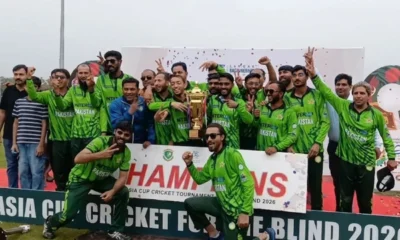

Pakistan Crowned Champions of Asia Cup Blind Cricket Tournament
DHAKA: Pakistan have been crowned champions of the Asia Cup Blind Cricket Tournament after the final against defending champions India...
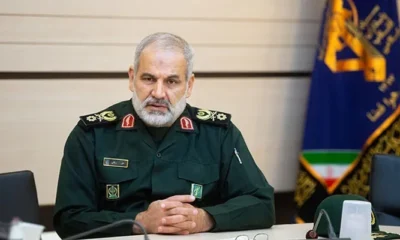

Iran Faces No Restrictions on Missile Deployment, Says IRGC Adviser
TEHRAN: Brigadier General Ali Balali, a senior adviser to the commander of Iran’s Islamic Revolutionary Guard Corps (IRGC) Aerospace Force,...
-
 Health7 months ago
Punjab Govt Opens Admissions for Lady Health Visitor Course
-
 Articles1 year ago
A Glimpse At Maj. Gen. Irfan Malik’s 02 Year Tenure
-
 Latest1 year ago
Punjab CM Maryam refuses to apologise, hits out at critics again
-
 Latest3 weeks ago
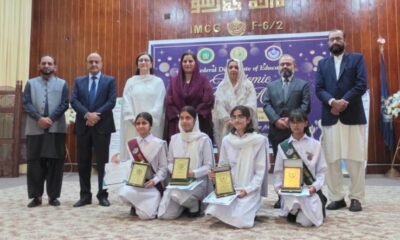
FDE holds Annual Awards Ceremony to Honor Intermediate Position Holders
-

 Latest12 months ago
Digital Pakistan and the Imperative of Implementing the National AI Policy
-
 Latest6 months ago
South Air ready to launch regional flight operations, connecting regions of pakistan
-
 Latest7 months ago
OPF Chairman Qamar Raza Naqvi Receives Warm Welcome from Pakistani Community in US
-

 Articles12 months ago
Golden Hour: A Dialogue of Light, River and Silence