
Latest
Trump vs Pope Leo XIV: Explosive feud escalates as president calls pontiff ‘weak’
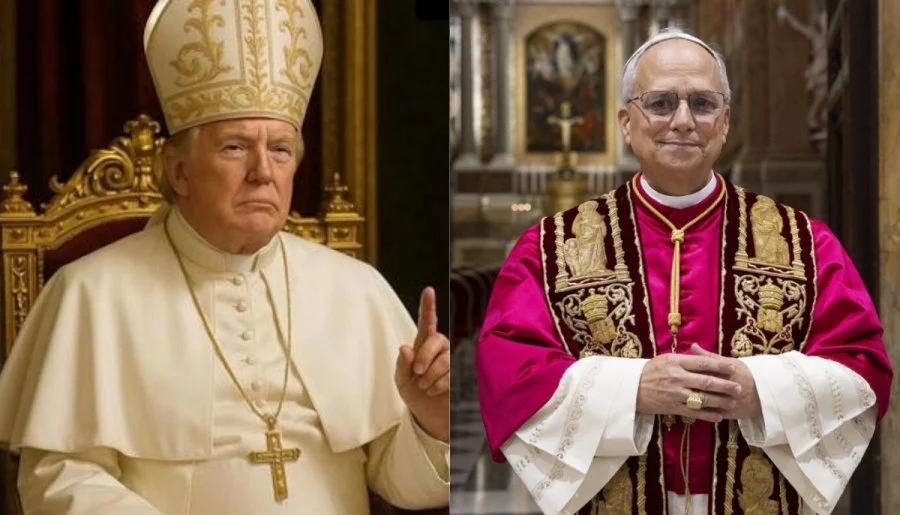
Washington: The relationship between the United States (U.S.) President Donald Trump and the leader of the Catholic Church Pope Leo XIV have deteriorated into one of the most public clashes between an American president and a sitting pope in modern history.
It started with a difference over the Trump administration’s crackdown against immigration; however, it has now turned into wider exchange over war, religion, and the boundaries of moral authority.
How it started
Pope Leo spoke against Trump’s immigration policies even before his election as pope. Speaking to the reporters in November, Pope Leo said: “The treatment of immigrants was extremely disrespectful.”
Even at the time of his election, President Trump posted an AI generated image of himself dressed as pope which drew significant criticism at that time.
The conflict between two most powerful people escalated when the United States and Israel launched joint airstrikes on Iran on February 28, 2026, in an operation called Epic Fury.
The pope expressed deep concern and called on all parties to stop what he described as a “spiral of violence before it became irreparable.”
As the war continued, Pope Leo’s criticism got sharper. He condemned Trump’s threat to destroy Iranian civilization as “unacceptable” and urged ordinary citizens to contact their political leaders.
Though the U.S. and Iran agreed to a two-week ceasefire on April 7, 2026, but till then the conflict between the pope and Trump had escalated and taken on a life of its own.
Trump goes on the offensive
The U.S. president went on offensive after a group of American Catholics made an appearance on CBS News “60 Minutes” segment and opposed the Iran war saying it did not meet the definition of just war under Catholic doctrine.
Trump took to Truth Social and responded by calling Pope Leo “weak on crime” and “bad for foreign policy.”
He also claimed the Church had chosen Leo as pope specifically because he was American, believing it would make dealings with the Trump administration easier.
Trump went on to claim that if he was not the president, Leo would never have become pope at all.
He wrote, “If I wasn’t in the White House, Leo wouldn’t be in the Vatican.” On a separate occasion, while speaking to the reporters, Trump said, “I’m not a big fan of Pope Leo.”
Vance, Homan and Johnson join in
The U.S. Vice President JD Vance, himself a convert to Catholicism, suggested the Vatican should focus on matters of morality and leave American foreign policy to the president.
He also pushed back on a statement Leo had made suggesting that God is never on the side of those who wage war, asking whether God had not been on the side of the Americans who liberated Europe from the Nazis.
House Speaker Mike Johnson chimed in, saying the just war doctrine was a well-settled matter of Christian theology and that the Iran operation met that standard. White House border czar Tom Homan, describing himself as a lifelong Catholic, told reporters that the cardinals should stay out of immigration and focus on fixing problems within the Church itself.
The Pope’s response
Despite massive pushback from the Trump administration’s high ranking officials, Pope Leo did not retreat. He clarified that his words were not intended as attacks on anyone and that the message of the Gospel was clear: “Blessed are the peacemakers.”
“I have no fear of the Trump administration, or speaking out loudly on the message of the Gospel,” he said, adding, “We are not politicians. We don’t deal with foreign policy from the same perspective he might understand it.”
As the war of words continued, Pope Leo shared a striking post apparently directed at the U.S. president that read: “Woe to those who manipulate religion and the very name of God for their own military, economic, and political gain.”
Where things stand now
Now, both men appeared to be retreating from further escalating the conflic but neither had backed down from their core position nor apologised to each other.
Speaking with the reporters Trump said he had no personal issue with the pope and acknowledged Leo had a right to speak his mind. He said they were “not fighting.” When asked whether he would meet with Leo to resolve things, he said he did not think that was necessary.
Leo, speaking while travelling from Cameroon to Angola, said much of what had been reported about their exchanges had been inaccurate or over-interpreted. He noted that a speech he gave calling for peace had been written two weeks before Trump ever criticised him.
Leo said: “And yet as it happens, it was looked at as if I was trying to debate again the president. Which is not in my interest at all.”
The feud might appear to be settling but the underlying disagreements are unlikely to disappear anytime soon.
Latest
Health minister orders probe into Sindh MDCAT complaints
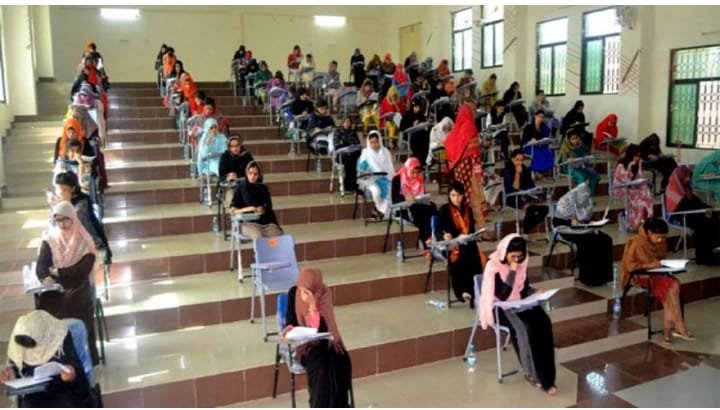
ISLAMABAD:Federal Minister for Health Syed Mustafa Kamal has taken notice of alleged irregularities in the Medical and Dental College Admission Test (MDCAT) held in Sindh and ordered a comprehensive inquiry into the complaints.
According to official sources, the minister directed a five-member committee, including the President of the Pakistan Medical and Dental Council (PMDC), to conduct a transparent investigation and submit its report within 15 days.
The committee has been tasked with examining the complaints and reviewing the circumstances surrounding the alleged irregularities during the examination, sources said.
The minister directed the committee to complete the inquiry within the stipulated timeframe and present its findings for further action in accordance with the applicable rules.
Latest
CDA chairman directs faster work on Expressway East project
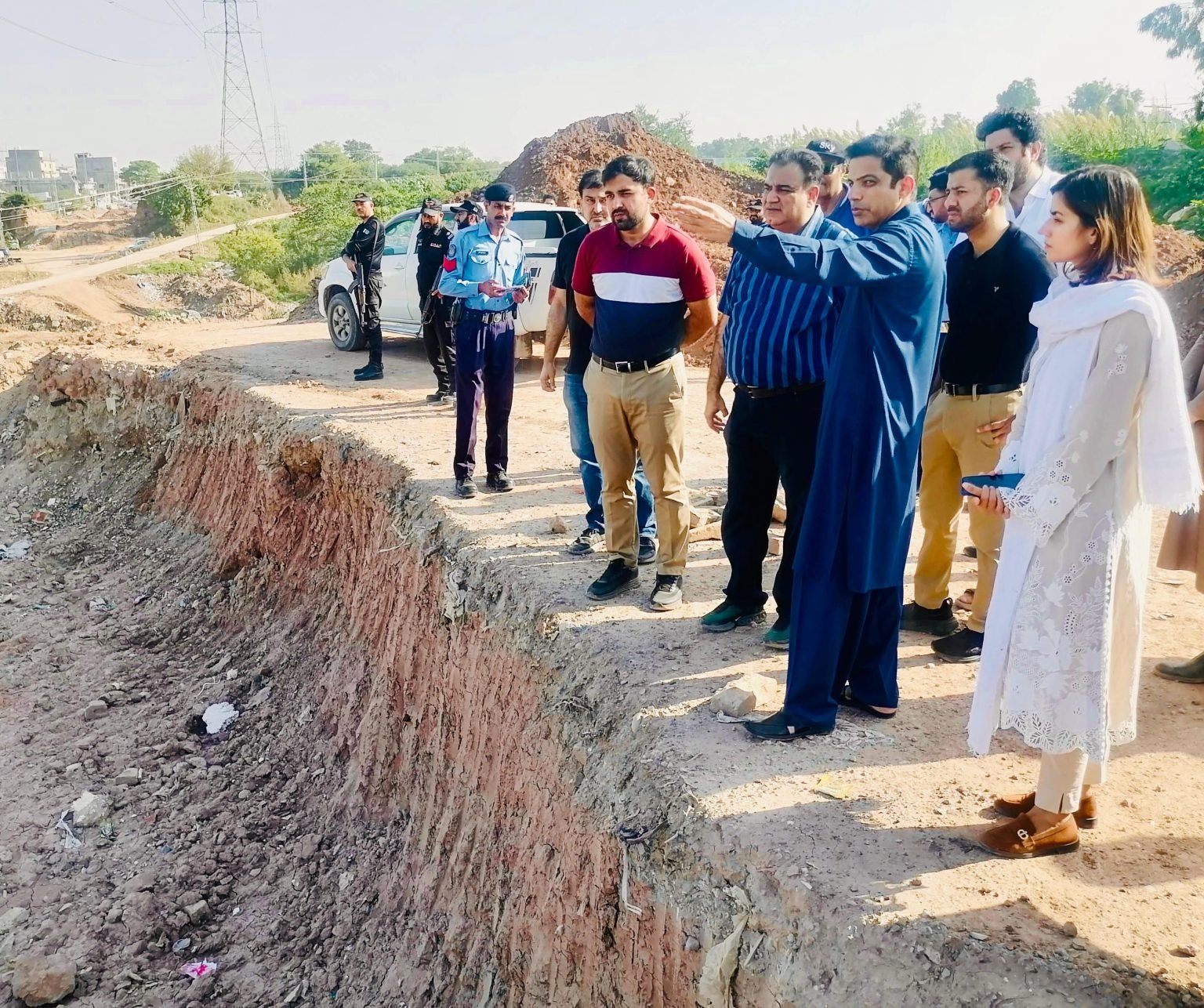
ISLAMABAD: Capital Development Authority (CDA) Chairman Sohail Ashraf has directed officials to accelerate work on the Islamabad Expressway Service Road East project while ensuring strict compliance with approved designs and construction standards.
During an inspection of the project on Saturday, the chairman reviewed progress and was briefed on ongoing works and the next phase of development.
He directed the project director and relevant departments to maintain continuous field monitoring and quality control and ensure effective traffic management to minimise inconvenience to commuters.
The chairman described the Expressway East project as an important infrastructure scheme for improving connectivity, traffic flow and road capacity in the capital. He also stressed that construction quality should not be compromised in efforts to meet the project timeline.
During the visit, he was also briefed on an ongoing enforcement operation against unauthorised and illegal construction along the Islamabad Expressway.
According to the CDA, 377 buildings have been identified for action, including 281 commercial structures. So far, 58 buildings have been sealed, while 124 buildings between Sohan and Khanna bridges have been marked for demolition.
The authority said Rs234.685 million had been recovered through land-use conversion, unauthorised construction and de-sealing charges. Around Rs3 billion remained recoverable under applicable regulations in connection with land-use conversion and violations relating to unauthorised construction, setbacks, floor area ratio and covered area.
The chairman directed the relevant departments to ensure strict enforcement of building-control and land-use regulations, particularly mandatory fire-safety requirements.
The enforcement operation is being conducted by the CDA’s Building Control Section and Enforcement Directorate in coordination with the district administration and Islamabad police.
Latest
GB ministers call on Governor Kundi
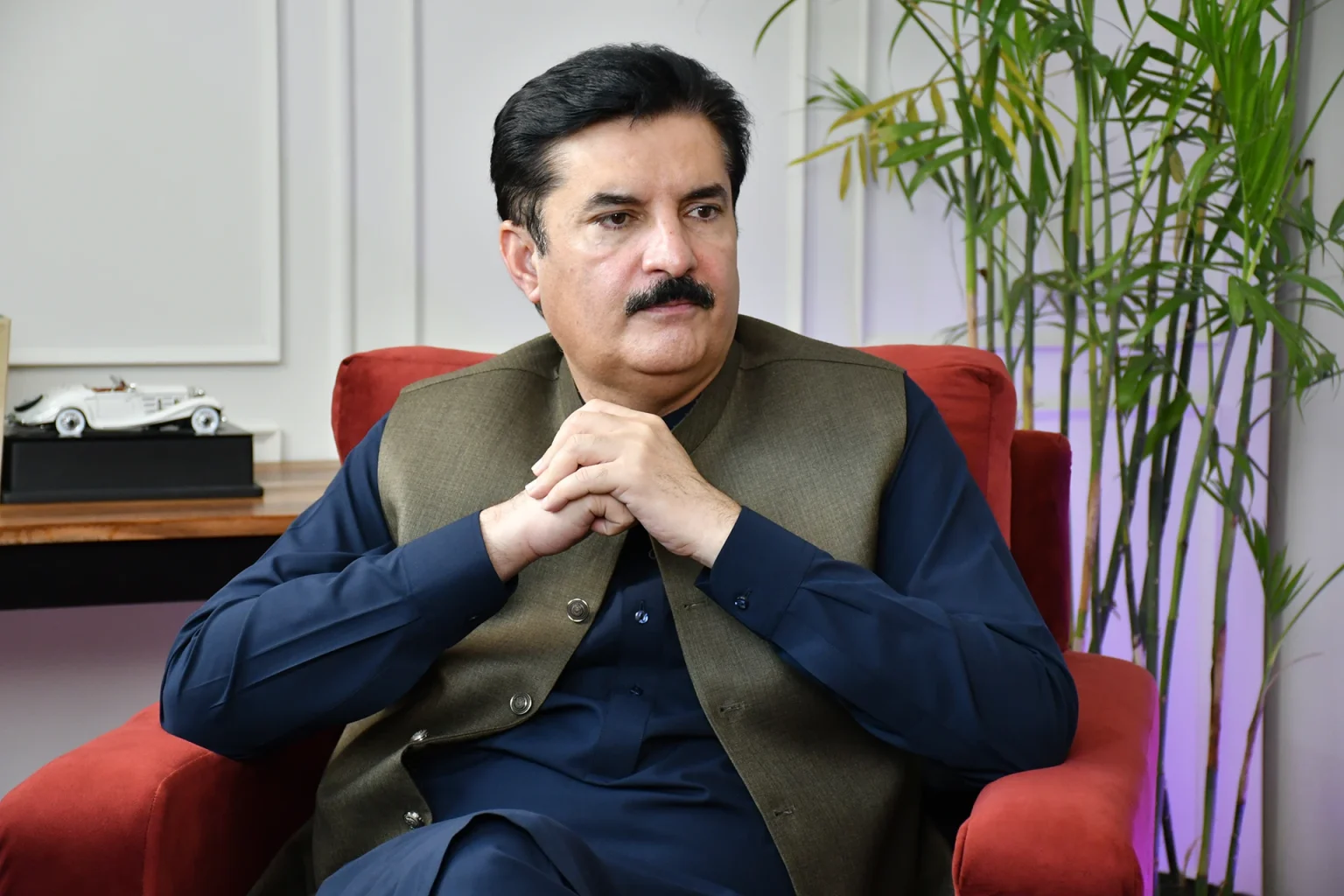
PESHAWAR: Governor Khyber Pakhtunkhwa Faisal Karim Kundi on Saturday held a meeting with a delegation of Gilgit-Baltistan ministers at the Governor’s House here and discussed the country’s political situation and other matters of mutual interest.
The delegation comprised Gilgit-Baltistan Minister for Local Government and Rural Development Zulfiqar Ali Murad, Minister for Health Iqbal Hassan and Minister for Education Aman Ali Ameer.
During the meeting, the two sides exchanged views on the prevailing political situation in the country and various issues of mutual interest. They also discussed the recent elections in Gilgit-Baltistan and the Pakistan Peoples Party’s success in the polls.
The visiting ministers were taken on a tour of the Governor’s House. Governor Kundi presented them with traditional shawls and caps.

Health minister orders probe into Sindh MDCAT complaints
ISLAMABAD:Federal Minister for Health Syed Mustafa Kamal has taken notice of alleged irregularities in the Medical and Dental College Admission...

CDA chairman directs faster work on Expressway East project
ISLAMABAD: Capital Development Authority (CDA) Chairman Sohail Ashraf has directed officials to accelerate work on the Islamabad Expressway Service Road...

GB ministers call on Governor Kundi
PESHAWAR: Governor Khyber Pakhtunkhwa Faisal Karim Kundi on Saturday held a meeting with a delegation of Gilgit-Baltistan ministers at the...

DPM/FM, British HC discuss Pak-UK bilateral ties
ISLAMABAD, Oct 03 (APP):British High Commissioner Jane Marriott, on Saturday, called on Deputy Prime Minister/Foreign Minister Senator Mohammad Ishaq Dar...

Govt, PPP, opposition hold first round of talks at Parliament House
ISLAMABAD: The first round of talks between the government, Pakistan Peoples Party (PPP) and opposition concluded at Parliament House here...

CCC reiterates resolve to maintain internal stability, uphold rule of law
RAWALPINDI: The Corps Commanders’ Conference (CCC) while underscoring the importance of internal stability, on Friday resolved that any attempt to...

IMCG F-6/2 Holds Investiture Ceremony of Newly Elected College Council
ISLAMABAD: The investiture ceremony of the newly elected College Council 2026-27 was held at Islamabad Model College for Girls (IMCG),...

PM orders expansion of Aasaan Khidmat Centers across country
ISLAMABAD: Prime Minister Shehbaz Sharif on Thursday reiterating commitment to providing citizens with fast, transparent, and high-quality services at their...

Armed Forces fully prepared to protect Pakistan’s geographical borders, national security: DG ISPR
RAWALPINDI: Director General (DG) Inter-Services Public Relations (ISPR), Lt Gen Ahmed Sharif Chaudhry, while reiterating that there would be no...

PM reviews progress on Fuel Relief Scheme
ISLAMABAD: Prime Minister Muhammad Shehbaz Sharif Thursday chaired a review meeting regarding the progress of the Prime Minister’s Fuel Relief...
-
 Health6 months ago
Punjab Govt Opens Admissions for Lady Health Visitor Course
-
 Articles12 months ago
A Glimpse At Maj. Gen. Irfan Malik’s 02 Year Tenure
-
 Latest1 year ago
Punjab CM Maryam refuses to apologise, hits out at critics again
-

 Latest10 months ago
Digital Pakistan and the Imperative of Implementing the National AI Policy
-
 Latest5 months ago
Syed Zeeshan Ali Naqvi Elected as President CJP, Raja Gohar Iqbal as Secretary General
-

 Articles10 months ago
Golden Hour: A Dialogue of Light, River and Silence
-
 Latest5 months ago
HEC launches fully online, paperless degree attestation system
-
 Latest5 months ago
OPF Chairman Qamar Raza Naqvi Receives Warm Welcome from Pakistani Community in US