
Latest
9/11 transformed global order, weakened international legal framework: Mushahid Hussain
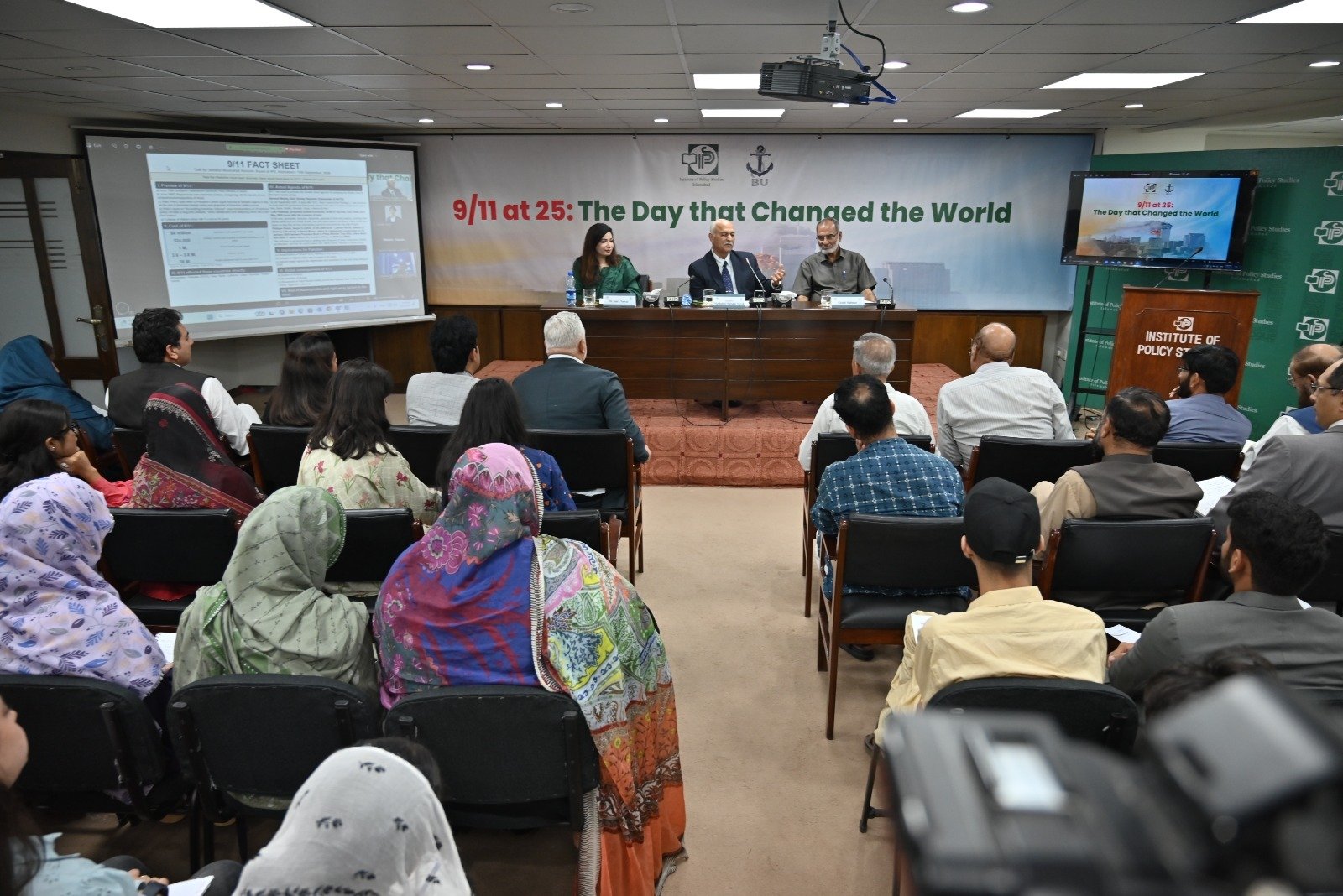
Islamabad: The September 11, 2001, attacks marked a fundamental turning point in global politics, transforming the international security environment and triggering a prolonged “War on Terror” whose consequences extended far beyond the immediate aftermath. The ensuing wars imposed massive human and economic costs, weakened the international legal order, destabilized Pakistan and regional countries, and triggered the collapse of the unipolar US hegemonic order. In this period of global transition, Pakistan has emerged as a resilient country, with the potential to confront current challenges and chart a way forward.
This was discussed at a guest talk titled “9/11 at 25: The Day that Changed the World”, organized by the Institute of Policy Studies (IPS), Islamabad, in collaboration with the Department of International Relations, Bahria University, Islamabad. The talk featured Senator Mushahid Hussain Sayed, chairman of the Pakistan-China Institute; Khalid Rahman, chairman IPS, and Dr Saira Nawaz Abbasi, head of the International Relations Department at Bahria University.
Delivering the keynote address, Mushahid Hussain Sayed argued that 9/11 fundamentally altered the global balance of power and accelerated the decline of unipolar American dominance. Questioning whether the US response to the attacks was proportionate, he contended that the event was subsequently used to pursue a broader geopolitical agenda. Referring to developments preceding 9/11, including the Project for the New American Century and its advocacy for reshaping the Middle East, he highlighted the extent to which regime change and military intervention had become embedded in US strategic thinking.
Citing figures from the Brown University’s ‘Costs of War’ study, Mushahid Hussain noted the enormous human and financial costs of the wars that followed 9/11, including approximately $8 trillion in US expenditure, around one million direct deaths, millions of indirect deaths, and tens of millions of displaced people. He observed that the US intervention in Afghanistan alone consumed approximately $2 trillion over two decades. He further argued that the failure to achieve the intended strategic objectives exposed the limitations of military intervention and contributed to the weakening of American global influence.
Discussing Afghanistan and Pakistan, Mushahid Hussain identified the post-9/11 period as particularly consequential for the region. He argued that political arrangements imposed in Afghanistan failed to adequately account for the country’s historical and social realities, while Pakistan suffered severe destabilization, particularly in the former FATA region. He also pointed to constant expansion of Indian influence in Afghanistan during the US occupation as a major consequence of the post-9/11 environment.
Turning to the broader global implications, he contrasted US war spending with China’s emphasis on economic connectivity and infrastructure during the same period, arguing that this divergence contributed to China’s rise. He also highlighted Russia’s subsequent recovery under President Vladimir Putin and the emergence of Muslim-majority middle powers, including Pakistan, as part of an increasingly significant pattern in the evolving international system.
Mushahid Hussain further identified the rise of Islamophobia and anti-Muslim prejudice as one of the most enduring consequences of the post-9/11 period. He noted the growth of right-wing political movements in parts of the West and linked contemporary tensions to longer historical narratives surrounding Islam and the West. He stressed the need to understand these competing historical and geopolitical visions while clearly distinguishing facts from propaganda.
In his remarks, Khalid Rahman emphasized that the declaration of a “War on Terror” represented a significant departure from treating terrorism primarily as a criminal matter, requiring investigation and prosecution. He identified the erosion of the international legal order as one of the most serious consequences of the post-9/11 response. He also underscored the continuing importance of the UN and international law.
Dr. Saira Nawaz noted that studying 9/11 is important for understanding how systemic change is shaped. She noted that through speech act states securitize a particular issue to serve their domestic and international interests; President Bush also used this mechanism to equate the 9/11 incident with an American security issue. Thus, security is not an objective phenomenon, but rather a subjective matter for every state actor.
The event provided an opportunity to critically examine the long-term geopolitical, legal, economic, and societal consequences of 9/11 and the subsequent “War on Terror,” while reflecting on the transformation of the international order over the past quarter century.
Latest
CDA Prepares Major Operation Against Bari Imam House Despite Political Influence; Strict Action Planned in Case of Resistance
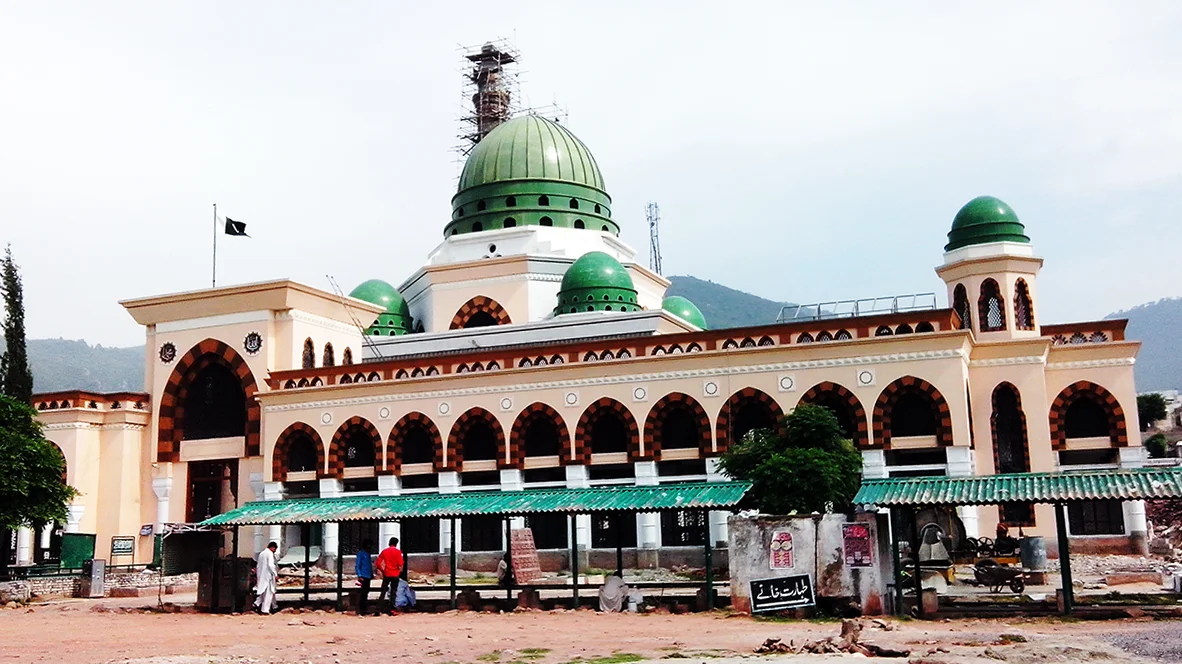
ISLAMABAD: The Capital Development Authority (CDA) has completed preparations for a possible major operation against Bari Imam House in Islamabad to reclaim approximately 200 kanals of disputed government land. Heavy machinery, police deployment and security arrangements have been put in place, while authorities have reportedly decided to take strict legal action in case of any resistance during the operation.
According to well-placed CDA sources, Chairman CDA and Chief Commissioner Islamabad has held several high-level meetings with the Deputy Commissioner, district administration and senior police officials, including the Inspector General of Islamabad Police, to review the proposed operation.
The CDA chairman has also held multiple meetings with relevant authority officials and operational teams, seeking detailed briefings on machinery, manpower, security arrangements, emergency response and the overall strategy required to ensure the operation is carried out effectively. The authority’s Legal Department has also been consulted to examine the legal implications and ensure compliance with court directions.
CDA officials maintain that the Bari Imam House administration does not possess any authenticated government document establishing ownership of the disputed land. They maintain that official records of government property are held by the CDA and district administration.
Political Connections Under Scrutiny
Bari Imam House has remained under the administration of Raja Sarfraz Akram for several years. Various political and social events have been held at the premises, with Deputy Prime Minister Ishaq Dar and Federal Minister for Railways Hanif Abbasi among the prominent political figures reported to have attended events there.
Their participation has prompted questions about possible political patronage and influence surrounding the disputed property. However, attendance at these events alone does not establish involvement in the land dispute, and the concerned political figures’ responses are awaited.
Court Directives Put Ownership Claims to the Test
The Islamabad High Court has directed the applicant to submit documentary evidence of ownership within five days and instructed the CDA to examine the documents and issue a reasoned decision within two days after receiving them. In the absence of satisfactory ownership documents, the authority may proceed in accordance with the law.
CDA sources say preparations also include contingency arrangements to deal with any obstruction or resistance. Strict legal action has reportedly been planned if anyone attempts to obstruct the operation.
The proposed operation could take place towards the end of this week or during the following week, subject to the completion of legal requirements and final approval by the relevant authorities.
With machinery and operational teams reportedly ready, attention is now focused on the CDA’s next move and whether the long-running dispute over approximately 200 kanals of land will finally reach a decisive stage.
Latest
Houthi Militias Launch Missile Attack on Saudi Arabia’s Southern Region

The Saudi-led coalition forces have intercepted and destroyed a missile fired by Houthi militias, according to the coalition.
Saudi authorities reported that no casualties or damage to property had been reported in the missile attack.
It is worth mentioning that a cruise missile launched by Houthi militias from Yemen towards the Saudi capital, Riyadh, was also intercepted and destroyed a day earlier.
Latest
Cyberattacks on Global Companies, Millions of Dollars in Cryptocurrency Stolen; 24-Year-Old Hacker Jailed

A 24-year-old British hacker has been sentenced to six years in prison in the United States for breaching company systems through fake mobile messages and stealing cryptocurrency worth more than $11.6 million.
According to the BBC, Tyler Buchanan, 24, is from Dundee, Scotland. He had been involved in hacking activities since his teenage years and was part of the cybercrime group known as “Scattered Spider.”
Between 2021 and 2023, Buchanan and his associates sent hundreds of fraudulent messages to employees of major technology and telecommunications companies.
The messages warned employees that their work accounts were about to expire and instructed them to log in again immediately through a provided link.
These links redirected employees to fake websites designed to look like genuine company websites, where they entered their usernames, passwords and other confidential information.
The young hacker also developed an automated system on Telegram to collect the stolen information.
Later, the group used the stolen credentials and SIM-swapping techniques to gain access to cryptocurrency accounts belonging to US citizens.
One victim alone lost $1.67 million in December 2022. Buchanan admitted his involvement in the crimes.
Following his guilty plea, the hacker was extradited from Spain to the United States, where a court sentenced him to 72 months in prison on November 17.

CDA Prepares Major Operation Against Bari Imam House Despite Political Influence; Strict Action Planned in Case of Resistance
ISLAMABAD: The Capital Development Authority (CDA) has completed preparations for a possible major operation against Bari Imam House in Islamabad...


Houthi Militias Launch Missile Attack on Saudi Arabia’s Southern Region
The Saudi-led coalition forces have intercepted and destroyed a missile fired by Houthi militias, according to the coalition. Saudi authorities...


Cyberattacks on Global Companies, Millions of Dollars in Cryptocurrency Stolen; 24-Year-Old Hacker Jailed
A 24-year-old British hacker has been sentenced to six years in prison in the United States for breaching company systems...


Importance of the Word ‘Human’ Grows in the Age of Artificial Intelligence; ‘Human’ Named Word of the Year 2026
According to the BBC, Cambridge Dictionary announced that the debate over what it truly means to be human in the...


Government Announces Further Reduction in Petroleum Prices
ISLAMABAD: The Oil and Gas Regulatory Authority (OGRA), in a notification, announced revised petroleum prices under the pricing mechanism approved...

Referendum Is Unconstitutional; Coercion and Creating a Favourable Environment Will Not Work, Says Bilawal Bhutto Zardari
ISLAMABAD: Pakistan Peoples Party (PPP) Chairman Bilawal Bhutto Zardari has said that a referendum on creating new provinces is unconstitutional...
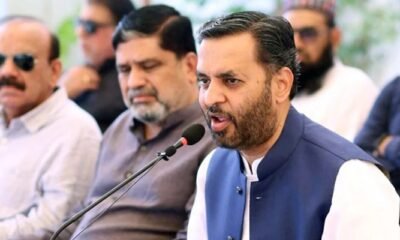

Mustafa Kamal Warns Bilawal, Says He Will Be Responsible for Any Bloodshed in Sindh
KARACHI: Federal Health Minister Mustafa Kamal has termed the creation of smaller provinces inevitable, saying Pakistan cannot function effectively without...


Anchor Rabia Ahsan Murder Case: Husband Sent to Adiala Jail on Judicial Remand
RAWALPINDI: Ahsan Tahir, the husband arrested in connection with anchor Rabia Ahsan’s mysterious murder, was produced before a court after...


Gold Prices in Pakistan Drop Sharply, Fall Below Rs400,000 per Tola
KARACHI: Gold prices in Pakistan recorded a significant decline. According to the All Pakistan Gems and Jewellers Association, the price...
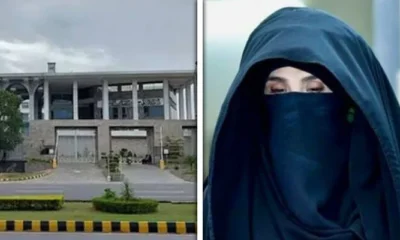

IHC Orders Provision of All Possible Medical Facilities to Bushra Bibi in Jail
ISLAMABAD: The Islamabad High Court (IHC) has directed jail authorities to provide all possible medical and other necessary facilities to...
-
 Health7 months ago
Punjab Govt Opens Admissions for Lady Health Visitor Course
-
 Articles1 year ago
A Glimpse At Maj. Gen. Irfan Malik’s 02 Year Tenure
-

 Latest1 year ago
Punjab CM Maryam refuses to apologise, hits out at critics again
-
 Latest3 weeks ago
FDE holds Annual Awards Ceremony to Honor Intermediate Position Holders
-

 Latest12 months ago
Digital Pakistan and the Imperative of Implementing the National AI Policy
-
 Latest6 months ago
South Air ready to launch regional flight operations, connecting regions of pakistan
-

 Latest7 months ago
OPF Chairman Qamar Raza Naqvi Receives Warm Welcome from Pakistani Community in US
-
 Latest6 months ago
Syed Zeeshan Ali Naqvi Elected as President CJP, Raja Gohar Iqbal as Secretary General