
Latest
Ruling Elite Is Colluding and Wants to Divide the Public, Says Hafiz Naeemur Rehman
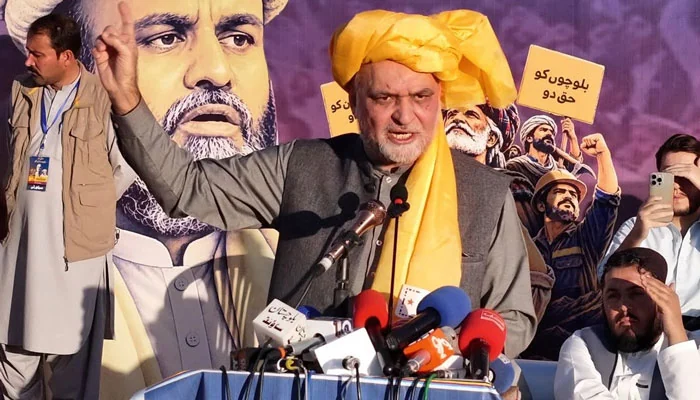
QUETTA: Jamaat-e-Islami Pakistan Emir Hafiz Naeemur Rehman has said that the ruling elite is itself united in its interests but wants to divide the public.
Addressing a public gathering in Quetta, Hafiz Naeemur Rehman said that the ruling elite wants to divide the people and everyone must work together to get rid of this group.
He said that the ruling elite itself operates as a united group but seeks to divide the public. Whether it is a hybrid system or so-called democracy, the same people remain in control everywhere.
The Jamaat-e-Islami chief further said that whether under so-called democracy or dictatorship, the same people are involved in the flour, sugar and refinery mafias. He questioned those who claim that the system has failed, asking who actually controls the system.
He said that a large number of people in Balochistan are disappointed due to the policies of the rulers, adding that the government has no understanding of the situation in the province.
Hafiz Naeemur Rehman also said that Jamaat-e-Islami is striving to ensure that the people of Balochistan receive their rights. He reiterated that many residents of the province have become disillusioned with government policies.
He said that the lack of gas, electricity and basic facilities creates frustration among the people, while the rulers remain unaware of the actual situation.
The Jamaat-e-Islami chief said that his party is fighting the case of the Baloch people and that the people of Punjab will stand alongside them. He added that the people living in Balochistan are the country’s most valuable asset.
He said that although people talk about the province’s vast natural resources, the real treasure of Balochistan is its people. He stressed that Pakistan’s greatest asset cannot be left deprived.
Hafiz Naeemur Rehman announced that a historic public gathering would be held at Minar-e-Pakistan on November 29, where the people of Punjab would express solidarity with Balochistan.
He said that everyone would have to make efforts to get rid of the ruling elite that has remained in control for 80 years. He also urged the youth of Balochistan not to lose hope, assuring them that Jamaat-e-Islami stands with them.
Latest
China Fears US Could More Easily Target Its Nuclear Weapons Using Artificial Intelligence: New York Times
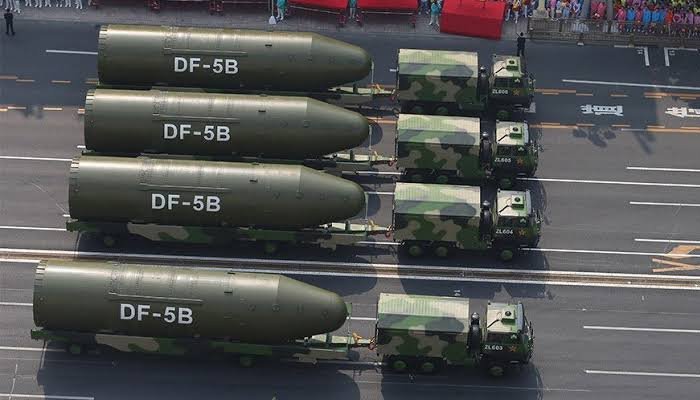
BEIJING: China is concerned that the United States could use artificial intelligence (AI) to locate and target its nuclear weapons more easily, potentially weakening Beijing’s ability to launch a retaliatory strike, according to a report by The New York Times.
The newspaper’s chief China correspondent, Chris Buckley, reviewed more than 100 recent studies by Chinese military and civilian researchers and spoke with experts and former US officials to examine the issue.
According to the report, China’s main concern is that the use of AI in intelligence gathering, surveillance data analysis and precision strikes could enable US forces to detect, track and target Chinese missile launchers much faster than human operators alone.
This could undermine China’s ability to ensure a retaliatory nuclear strike in the event of an attack.
Two researchers from China’s Academy of Military Sciences have warned that incorporating AI and related technologies into nuclear decision-making systems could allow the United States to reduce traditional decision-making processes from 15 to 30 minutes to just 90 seconds or less.
Gerald C. Brown, a former US State Department analyst who studied China’s nuclear strategy, told The New York Times that Chinese researchers believe AI could make it significantly more difficult to protect weapons from enemy attacks.
Citing estimates by the Federation of American Scientists, the report stated that China currently possesses approximately 620 nuclear warheads, with the number projected to reach around 1,000 by 2030. In comparison, the United States and Russia each have approximately 1,800 nuclear warheads.
The report noted that China has been taking steps to improve the survivability of its nuclear assets by dispersing its forces across different locations, constructing around 320 underground missile silos in its northern deserts and testing a long-range submarine-launched missile in July.
Meanwhile, Chinese researchers and the People’s Liberation Army Rocket Force are also exploring the use of AI in their own military systems. These include technologies that could enable hypersonic and ballistic missiles to change their flight paths autonomously and use other techniques to evade defence systems.
However, some Chinese military studies have also warned that flawed or exaggerated data processed through AI could create serious decision-making risks within command-and-control systems.
Philip Reiner of the Institute for Security and Technology pointed out that although no country is handing over the final authority to launch a missile to AI, artificial intelligence is increasingly being used to compile the information that helps determine whether an attack should be carried out.
Latest
Petrol Price Reduced by Rs3 Per Litre, Diesel Rate Unchanged

ISLAMABAD: The government has reduced the price of petrol by Rs3 per litre, while the price of high-speed diesel remains unchanged.
According to an official notification, the new petrol price will be Rs319 per litre, while diesel will continue to be sold at Rs357 per litre from November 24.
Latest
Strong Families Make Strong Societies: PPAF to Hold 396 Events Across 126 Districts Against Gender-Based Violence
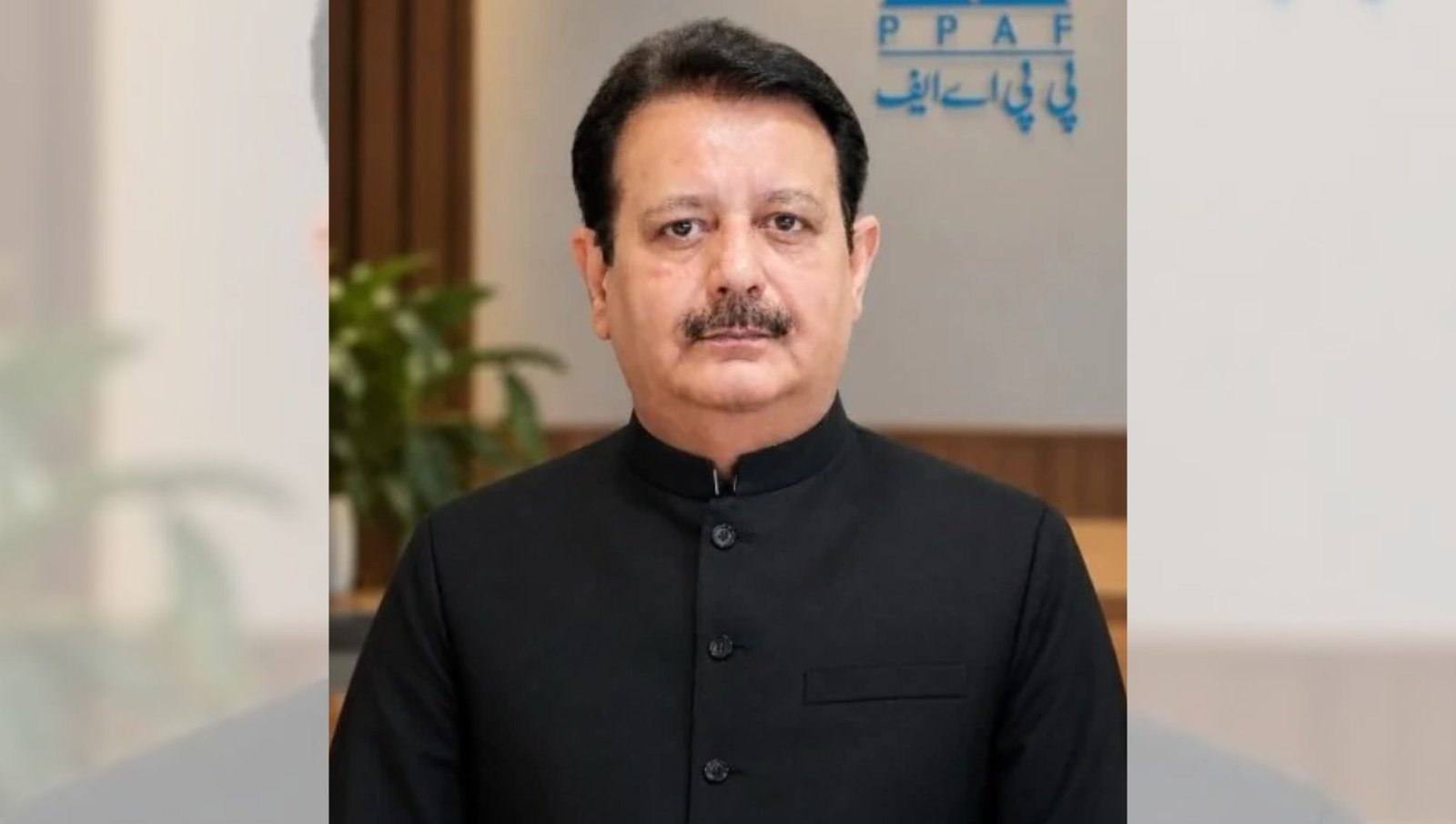
ISLAMABAD: The Pakistan Poverty Alleviation Fund (PPAF) is set to organize 396 community-based events across 126 districts nationwide from November 25 to December 10, 2026, under its Dukhtaran-e-Pakistan Campaign as part of the United Nations’ 16 Days of Activism Against Gender-Based Violence.
PPAF Chief Executive Officer Nadir Gul Barech, in an exclusive interview with the Associated Press of Pakistan (APP) on Monday, said strong families, empowered women and cohesive communities were essential to building a peaceful, inclusive and violence-free Pakistan.
Under the theme “Strong Families Make Strong Societies,” the nationwide campaign will cover all four provinces, Gilgit-Baltistan, Azad Jammu and Kashmir, and the Islamabad Capital Territory. It aims to challenge harmful social practices, promote gender equality and strengthen communities through awareness, dialogue and positive behavioural change.
Barech said sustainable peace required more than responding to violence after it occurred, emphasizing the need to address deep-rooted attitudes, discrimination, social exclusion and inequalities that contribute to gender-based violence.
He described the family as the foundation of social transformation, where values of mutual respect, equality, tolerance and shared responsibility are developed. He added that the Dukhtaran-e-Pakistan Campaign aimed to strengthen family institutions, empower women, engage young people and promote a culture of dignity and non-violence.
Explaining the campaign’s strategic direction, Barech said the initiative was developed in light of the recommendations and outcomes of PPAF’s two-day International Conference on Inclusive and Resilient Economic Empowerment and Growth, held under the theme “From Poverty to Prosperity.”
He said the conference brought together key stakeholders to discuss sustainable poverty reduction, inclusive economic growth and community resilience, identifying women’s empowerment, youth participation, social cohesion and equal opportunities as essential drivers of national development.
The PPAF chief said the campaign would be implemented through partnerships with federal and provincial governments and the Government of Azad Jammu and Kashmir.
Key partners include the Ministry of Poverty Alleviation and Social Safety, Ministry of Human Rights, Prime Minister’s Youth Programme, Dukhtaran-e-Pakistan, Provincial Centres of Excellence on Countering Violent Extremism and PPAF’s nationwide network of partner organizations.
Barech said social cohesion, economic empowerment and equal opportunities were interconnected pillars of sustainable poverty reduction and national development.
The campaign will engage families, women, young people, community leaders and civil society organizations through Social and Behaviour Change Communication activities, awareness sessions and community dialogues to address harmful practices, discriminatory attitudes and social exclusion.
Highlighting the focus on family well-being, he said the campaign would cover 12 thematic areas, including parenting skills, family relationships, engagement with community and religious leaders, youth participation, gender equality, positive masculinity and women’s economic empowerment.
According to Barech, the campaign will include 104 sessions on parenting and family well-being, 84 sessions involving community and religious leaders, and 54 dialogues focusing on gender equality and positive masculinity.
He said these activities would promote shared responsibilities, strengthen family relationships and encourage men, women and young people to play an active role in building respectful and inclusive communities.
The campaign will also address harmful social attitudes and practices contributing to gender-based violence, extremism and exclusion, while promoting tolerance, mutual respect and peaceful coexistence.
Barech emphasized that lasting behavioural change required continuous participation from households, community leaders, government institutions and grassroots organizations rather than isolated interventions.
He said the Dukhtaran-e-Pakistan Campaign aimed to translate broader development goals into practical initiatives at household and community levels.
The campaign will also provide opportunities for communities and partner organizations to share experiences, highlight successful household- and village-level poverty graduation models, and exchange lessons from grassroots development initiatives.
Barech further stressed that social and behavioural change must be linked with inclusive economic opportunities to increase women’s participation in economic activities, engage young people constructively and improve family well-being.
He said empowering women, providing equal opportunities and strengthening families would help communities become more resilient and better equipped to address challenges affecting peaceful coexistence.
The PPAF chief expressed confidence that the nationwide campaign would encourage communities to play an active role in promoting equality, dignity, tolerance and non-violence.
He reaffirmed PPAF’s commitment to community-led development and inclusive economic opportunities as part of broader efforts to build a peaceful, cohesive and resilient Pakistan.

China Fears US Could More Easily Target Its Nuclear Weapons Using Artificial Intelligence: New York Times
BEIJING: China is concerned that the United States could use artificial intelligence (AI) to locate and target its nuclear weapons...


Petrol Price Reduced by Rs3 Per Litre, Diesel Rate Unchanged
ISLAMABAD: The government has reduced the price of petrol by Rs3 per litre, while the price of high-speed diesel remains...

Strong Families Make Strong Societies: PPAF to Hold 396 Events Across 126 Districts Against Gender-Based Violence
ISLAMABAD: The Pakistan Poverty Alleviation Fund (PPAF) is set to organize 396 community-based events across 126 districts nationwide from November...


Multan Becomes Pakistan’s Most Polluted City, Lahore Ranks Second
MULTAN: Multan was the most polluted city in Pakistan during the week of November 16 to 22, according to the...

Iran Rejects US Claims of Plotting Dirty Bomb Attack in Washington
TEHRAN: Iran has rejected US allegations that it was allegedly planning a dirty bomb attack in Washington, describing the claims...

Mir Raza Murder Case: Key Developments Expected in Third JIT Meeting
KARACHI : The third meeting of the Joint Investigation Team (JIT) investigating the Mir Raza murder case is scheduled to...


Gold and Silver Prices Surge in Local and International Markets
KARACHI: Gold and silver prices witnessed a significant increase in both international and local markets after a three-day pause, bringing...

Pakistan and Russia to Sign 15 to 16 Agreements During PM Shehbaz Sharif’s Moscow Visit
MOSCOW : Pakistan and Russia are expected to sign 15 to 16 agreements during Prime Minister Shehbaz Sharif’s visit to...

Five Children Killed in Landmine Explosion in Syria
IDLIB: Five children were killed in a tragic landmine explosion in northwestern Syria, while another child was injured. The incident...

Bahawalpur: Car Carrier Trailer Overturns Due to Fog, Nine New Vehicles Damaged
BAHAWALPUR: A car carrier trailer transporting vehicles from Karachi to Lahore overturned near Bahawalpur due to dense fog. According to...
-
 Health7 months ago
Punjab Govt Opens Admissions for Lady Health Visitor Course
-
 Articles1 year ago
A Glimpse At Maj. Gen. Irfan Malik’s 02 Year Tenure
-
 Latest1 year ago
Punjab CM Maryam refuses to apologise, hits out at critics again
-
 Latest4 weeks ago
FDE holds Annual Awards Ceremony to Honor Intermediate Position Holders
-

 Latest12 months ago
Digital Pakistan and the Imperative of Implementing the National AI Policy
-
 Latest6 months ago
South Air ready to launch regional flight operations, connecting regions of pakistan
-
 Latest7 months ago
OPF Chairman Qamar Raza Naqvi Receives Warm Welcome from Pakistani Community in US
-

 Articles12 months ago
Golden Hour: A Dialogue of Light, River and Silence