
Latest
Multan Becomes Pakistan’s Most Polluted City, Lahore Ranks Second
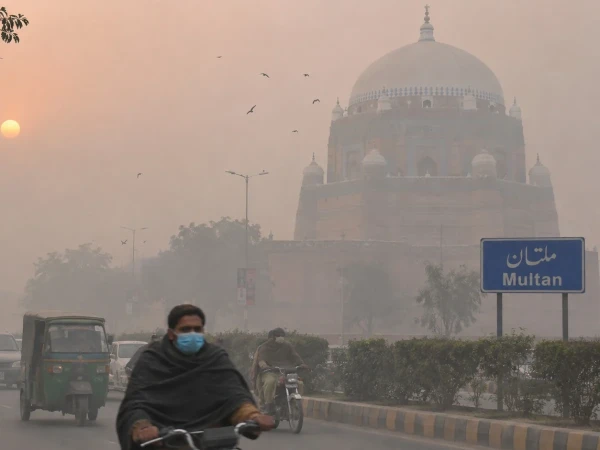
MULTAN: Multan was the most polluted city in Pakistan during the week of November 16 to 22, according to the latest weekly report by the Pakistan Air Quality Initiative (PAQI), with an average PM2.5 concentration of 204.1 micrograms per cubic metre.
According to the report, Multan recorded an average Air Quality Index (AQI) of 254 during the period, placing it in the hazardous category. Pollution levels peaked on November 20, when PM2.5 concentration reached 263.3 micrograms per cubic metre and the AQI climbed to 313. Weekly average pollution in Multan was 41 percent higher than during the same period last year.
In Lahore, the weekly average PM2.5 concentration was recorded at 180 micrograms per cubic metre, while the average AQI stood at 230. The highest pollution level was recorded on November 22, when PM2.5 reached 236.7 micrograms per cubic metre and the AQI rose to 286. However, air pollution in Lahore declined by 17 percent compared to the same period last year. The report noted that data from the past nine years does not indicate any clear long-term trend in Lahore’s pollution levels.
Karachi recorded an average weekly PM2.5 concentration of 75 micrograms per cubic metre and an AQI of 160. This represented a 96 percent increase compared to the previous week, but a 21 percent decrease compared to the same period last year.
In Islamabad, the average PM2.5 concentration was 64.5 micrograms per cubic metre, while the AQI stood at 155, representing a 42 percent decrease compared to last year.
According to PAQI, PM2.5 levels in all four cities remained above the World Health Organization’s recommended limit of 15 micrograms per cubic metre and Pakistan’s national standard of 35 micrograms per cubic metre on all seven days.
The report also highlighted high pollution levels in areas surrounding Lahore. Average PM2.5 concentrations were recorded at 240 micrograms per cubic metre in Kasur, 225 in Narowal, 187 in Kahna Nau and 186 in Raiwind. This indicates that pollution levels in some surrounding districts were even higher than those in Lahore.
According to the report, air masses reaching Lahore spent an estimated average of seven percent of their time over Indian territory during the previous two days, compared to three percent during the same period last year. On November 21, the air trajectory passed over India for 43 percent of the time. However, these figures do not directly establish any specific source of pollution.
Punjab Environmental Protection Agency Deputy Director Ali Aijaz said that measures to control local sources of pollution in Lahore had helped limit AQI increases to a few hours during the morning and evening. He added that pollution levels begin to decline as temperatures rise.
He further stated that pollution levels in other districts could not be directly compared with Lahore because air quality monitoring stations had been installed there for the first time and were fewer in number than those in Lahore.
The report advised residents of Multan to limit outdoor activities and urged vulnerable individuals to remain indoors. Residents of Lahore were also advised to avoid outdoor activities, while sensitive groups were urged to take precautionary measures.
Latest
Global Oil Prices Fall to a Three-Month Low Despite Tensions in the Strait of Hormuz

Global crude oil prices declined for a second consecutive day, falling to nearly a three-month low amid expectations of increased supply in the international market.
The possibility of additional oil supplies has eased concerns over rising tensions in the Strait of Hormuz and potential disruptions to maritime traffic.
According to the report, Brent crude futures fell by 66 cents, or 0.7%, to $88.71 per barrel. Earlier, Brent had closed at its lowest level since August 31.
Meanwhile, US West Texas Intermediate (WTI) crude fell by 60 cents, or 0.8%, to $79.57 per barrel. During the trading session, its price reached its lowest level since August 26.
Suvro Sarkar, Head of the Energy Sector at DBS Bank, said the recent upward trend in Brent crude prices had largely faded.
He noted that despite the continued closure of the Strait of Hormuz, the overall supply situation remained relatively stable. Investors are also assessing the possibility of additional oil supplies in the future alongside tensions in the Middle East and disruptions to maritime transportation.
According to analysts, expectations of increased global oil supply have put downward pressure on prices, although tensions in the Strait of Hormuz continue to pose a threat to oil shipments.
Latest
Houthis Expand Intelligence Network to Tighten Control Over Yemen’s Capital Sanaa

SANAA: Yemen’s Houthi rebels have expanded their intelligence and surveillance operations to further strengthen their control over the capital, Sanaa.
The move reportedly aims to monitor opposition activities, potential uprisings and contacts between rival groups in areas under their control.
According to reports, Houthi leaders have stepped up the activities of military intelligence and internal security agencies, introducing new measures for covert surveillance, intelligence gathering and identifying suspected individuals. These operations also include monitoring the activities of government employees, local tribal groups and military personnel.
Reports suggest that Houthi leadership is facing growing security concerns over alleged espionage, internal divisions and opposition activities in areas under its administration.
Meanwhile, human rights organisations have expressed concern over arrests and crackdowns carried out by the Houthis on allegations of espionage. According to Human Rights Watch, employees of the United Nations and humanitarian organisations have also been detained during these operations.
Latest
Power Distribution Companies Top Corruption Risk List, FBR Ranks Second and CDA Third: Report
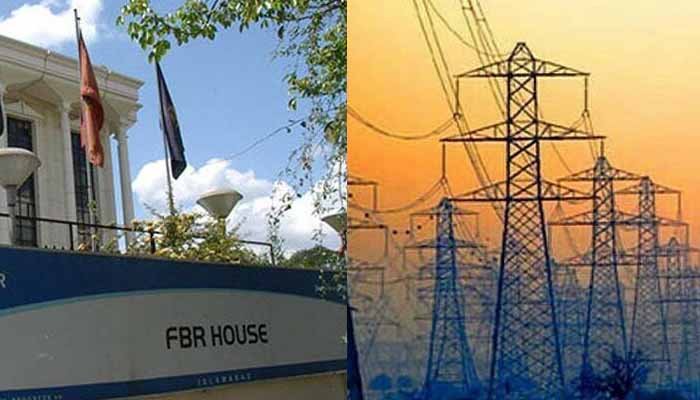
ISLAMABAD: The federal government has released a national corruption risk assessment report, identifying electricity distribution companies as the institutions facing the highest corruption risks, followed by the Federal Board of Revenue (FBR) in second place and the Capital Development Authority (CDA) in third.
According to the report, no institution was placed in the Very High or Extremely High Risk categories. However, electricity distribution companies (DISCOs) emerged as the institutions with the highest corruption risk.
The report identified 56 institutional typologies, 10 cross-cutting governance typologies and 18 regulatory typologies. Among all the assessed institutions, only DISCOs fell into the High Risk category, scoring 61.1 points.
According to the assessment, the FBR ranked second with 54.4 points, followed by the CDA in third place with 49.5 points. Pakistan State Oil (PASSCO) ranked fourth with 47.1 points, while the National Highway Authority (NHA) secured fifth place with 43.4 points.
Similarly, Pakistan Railways ranked sixth with 41.1 points, the Benazir Income Support Programme (BISP) seventh with 40.1 points, Pakistan Post eighth with 39.9 points, Sui Northern Gas Pipelines Limited (SNGPL) ninth with 39.3 points, and the Evacuee Trust Property Board (ETPB) tenth with 39.3 points.
Add a stronger news headlineImprove the English news structure


Global Oil Prices Fall to a Three-Month Low Despite Tensions in the Strait of Hormuz
Global crude oil prices declined for a second consecutive day, falling to nearly a three-month low amid expectations of increased...


Houthis Expand Intelligence Network to Tighten Control Over Yemen’s Capital Sanaa
SANAA: Yemen’s Houthi rebels have expanded their intelligence and surveillance operations to further strengthen their control over the capital, Sanaa....

Power Distribution Companies Top Corruption Risk List, FBR Ranks Second and CDA Third: Report
ISLAMABAD: The federal government has released a national corruption risk assessment report, identifying electricity distribution companies as the institutions facing...


Request Filed for Live Streaming of Appeals Against Imran Khan’s Conviction in £190 Million Case
ISLAMABAD: A significant development has emerged in the £190 million case, as Imran Khan has approached the court seeking live...


Suicide Rate in Israeli Military Reaches 16-Year High
TEL AVIV: The number of suicides among Israeli military personnel has reached its highest level in 16 years. According to...


Democrats Secure Largest Majority in US House of Representatives in 34 Years
WASHINGTON: Democrats have secured a sweeping victory in the US House of Representatives for the first time in nearly 34...


Ghalibaf Says Iran Will Not Hold Talks with US Until Seven Conditions Are Met
TEHRAN: Iran has refused to begin negotiations with the United States, making it clear that no talks with Washington will...


Sheikh Hasina Plans to Return to Bangladesh on December 16
Dhaka: Former Bangladeshi Prime Minister and Awami League chief Sheikh Hasina has expressed her intention to return to Bangladesh on...


Awami League leaders’ houses set on fire after killing of two BNP workers in Bangladesh
DHAKA: Around 30 houses belonging to Awami League leaders and activists were set on fire following the killing of two...


Two flights diverted to alternative airports due to fog and technical issues
ISLAMABAD: Two flights bound for Sialkot and Islamabad were diverted to alternative airports due to dense fog and technical issues....
-
 Health7 months ago
Punjab Govt Opens Admissions for Lady Health Visitor Course
-

 Articles1 year ago
A Glimpse At Maj. Gen. Irfan Malik’s 02 Year Tenure
-

 Latest1 year ago
Punjab CM Maryam refuses to apologise, hits out at critics again
-

 Latest4 weeks ago
FDE holds Annual Awards Ceremony to Honor Intermediate Position Holders
-

 Latest12 months ago
Digital Pakistan and the Imperative of Implementing the National AI Policy
-

 Latest6 months ago
South Air ready to launch regional flight operations, connecting regions of pakistan
-

 Latest7 months ago
OPF Chairman Qamar Raza Naqvi Receives Warm Welcome from Pakistani Community in US
-

 Articles12 months ago
Golden Hour: A Dialogue of Light, River and Silence