
Articles
Pakistan vs Sri Lanka: A Thrilling Contest Showcases Competitive Cricket

By Shahmeer Shahnawaz
The much-anticipated clash between Pakistan and Sri Lanka once again delivered an exciting display of competitive cricket, keeping fans on the edge of their seats. Both teams entered the match with strong line-ups and a clear determination to dominate, making the encounter a treat for cricket lovers.
Pakistan showcased disciplined bowling and aggressive batting intent, applying pressure at crucial moments of the game. The bowlers maintained tight lines and lengths, while the batters played with confidence, rotating the strike effectively and capitalizing on scoring opportunities.
Sri Lanka, known for their resilience, responded with fighting spirit. Their players showed composure under pressure, combining solid defense with timely attacking shots. The team’s fielding effort and tactical awareness added intensity to the contest, reflecting their growing strength in international cricket.
The match highlighted the depth of talent on both sides and reinforced the historic rivalry between Pakistan and Sri Lanka. Moments of brilliance, strategic battles, and passionate performances made the game a memorable one for fans across the globe.
As both teams continue their international campaigns, this encounter served as an important benchmark, offering valuable insights and momentum for upcoming fixtures. Cricket enthusiasts now eagerly look forward to the next chapter in this exciting rivalry.
Articles
Beyond the Position: A Model of Good Governance
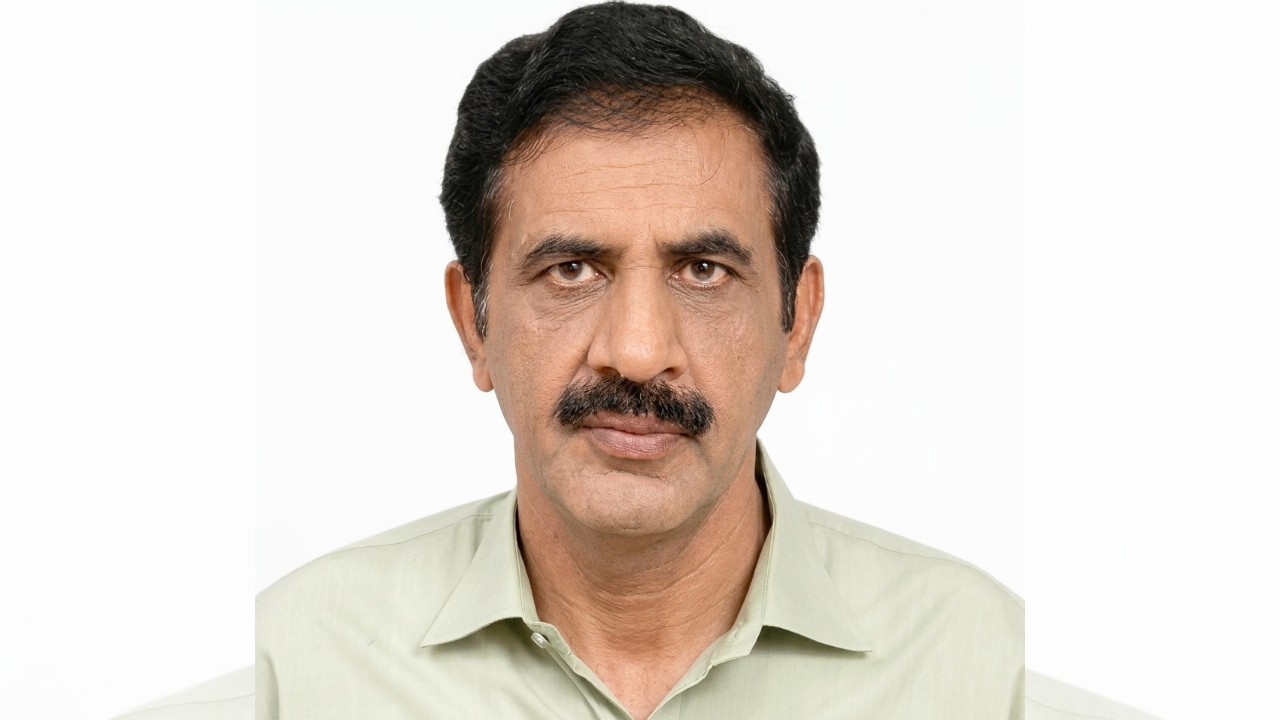
By Nisar Hussain
Good governance is not measured by grand claims, policy documents or the imposing appearance of government buildings. Its real test lies in how efficiently, transparently and responsibly the state deals with citizens, institutions and society. A good administrator is the vital link between the state and the citizen turning authority into service, policy into action and decisions into results. That is why an officer’s real worth is determined not by the title he or she holds, but by the quality of governance that takes shape within the institution under that leadership.
Public office confers authority, but turning authority into public trust requires character, competence, patience, sound judgment and accountability. Administrative performance cannot be measured simply by the number of files crossing an official’s desk. The real measure is how many legitimate matters are resolved without unnecessary delay, how many complex issues are handled within the law, and what impression a citizen carries away after dealing with the state. This is where governance ceases to be an administrative expression and becomes a practical manifestation of public service.

Some public offices demand a sense of responsibility that extends well beyond official working hours. A file on a desk is never merely a piece of paper; behind it may be the legitimate concern, right or livelihood of an institution, a journalist, a businessperson or an ordinary citizen. What may appear to be a minor administrative delay can have consequences far beyond the office concerned. Good administration begins with understanding that exercising authority and exercising it responsibly are two very different things.
In Pakistan’s present domestic and international environment, the information sector is an integral part of this broader concept of governance. The state’s position no longer remains confined to a press room in the capital. Within moments, a statement can reach the other side of the world and so can a misleading or incomplete impression. Accurate information, timely communication and effective public engagement are therefore no longer merely departmental functions; they are essential components of national policy.
The Press Information Department’s fundamental role is to maintain an effective channel between the government and the media, provide credible information in a timely manner, and facilitate the journalistic process. The office of the Principal Information Officer assumes particular importance because it must not only communicate government policies, decisions and priorities to the media and the public in their proper context, but also convey the media’s questions, concerns and observations back to the government. In that sense, the PIO is not merely a conduit for official information but a two-way bridge between the state and the media. The strength of that bridge determines how clearly government decisions reach the public and how accurately public sentiment reaches the government.
In July 2026, BS-20 officer Raisa Adil, who had previously served as Executive Director General, External Publicity Wing, was appointed Executive Director General/Principal Information Officer of the Press Information Department. The appointment came at a time when Pakistan needed to communicate its diplomatic, political and national priorities effectively at both domestic and international levels. Her experience in the External Publicity Wing provided a relevant professional background for the assignment, particularly at a time when foreign policy and public diplomacy can no longer be treated as separate domains.
Pakistan’s role in facilitating diplomatic contacts between the United States and Iran also assumed significance during this period. Islamabad’s efforts to facilitate dialogue and its role in hosting diplomatic engagement attracted international attention. At such sensitive moments, the responsibility of the information machinery extends beyond issuing news releases. The real challenge is to ensure that Pakistan’s diplomatic efforts, position and progress are communicated to the international media promptly, accurately and with sufficient context. Much of diplomacy is conducted quietly; its significance, however, becomes visible internationally only when it is translated into effective public communication. That is the essence of modern public diplomacy: diplomatic effort must also become credible international communication.
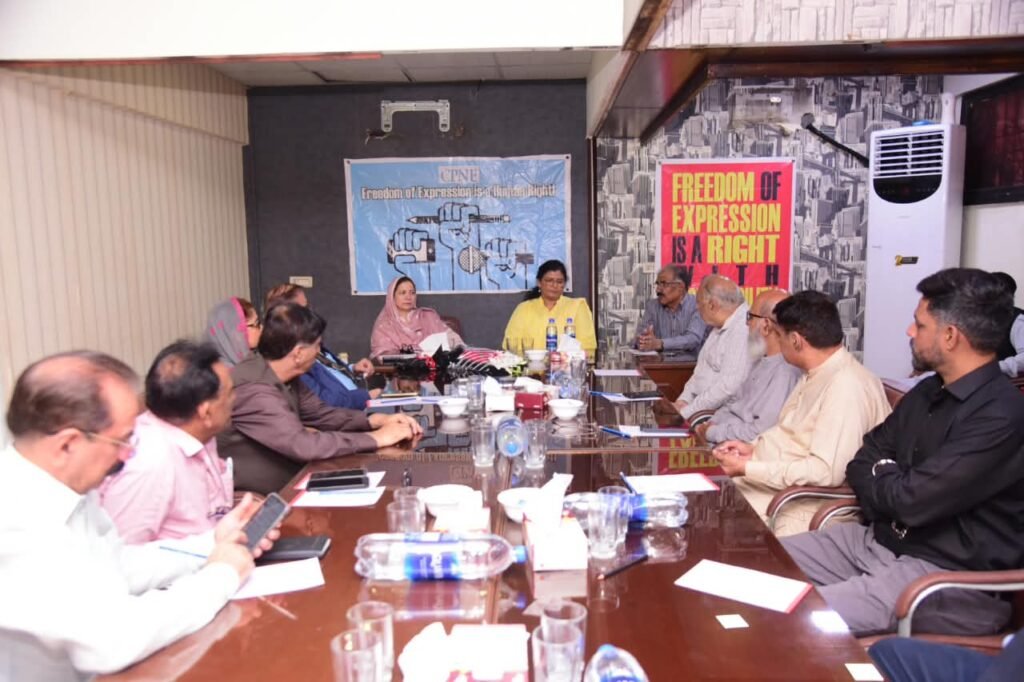
The Prime Minister’s address to the 81st session of the United Nations General Assembly in September 2026 provided another important opportunity to present Pakistan’s position before the international community. Issues ranging from the Middle East and US-Iran tensions to the Strait of Hormuz and Bab el-Mandeb, Kashmir, the Indus Waters Treaty, Palestine, terrorism and climate change featured prominently in Pakistan’s international messaging. On such occasions, the PIO’s responsibility does not end with transmitting the official text to the media. The greater task is to communicate complex foreign-policy positions and sensitive issues in a manner that preserves their meaning, avoids ambiguity and provides both domestic and international media with clear, usable information.
Raisa Adil’s working style has been marked by accessibility, courtesy and professional composure. In an administrative position, however, these qualities acquire real significance only when accompanied by responsiveness, efficiency and decision-making. Equal access for large and small media organisations, processing legitimate matters according to established rules, explaining why an impractical request cannot be entertained, and pursuing the resolution of pending issues within the law reflect an administrative approach in which institutional rules take precedence over personal preference. Progress in some longstanding media-related matters, including cases associated with ABC, also points to an effort to address issues that have remained pending.
This brings us to an important principle of good governance: good administration does not mean approving every request. It means hearing every legitimate request, deciding it within the law and, where rejection is unavoidable, providing a reasonable explanation. Institutional trust is built through precisely this kind of conduct. An officer’s responsibility is not to please everyone; it is to ensure that the system functions in such a way that legitimate work does not depend upon personal influence, pressure or connections.
The practical essence of the office can perhaps be reduced to two fundamental responsibilities: conveying the government’s position to the media and conveying the media’s voice to the government. International communication during sensitive diplomatic developments, Pakistan’s representation before forums such as the United Nations, and day-to-day engagement with the domestic media may appear to be separate responsibilities. In reality, they are part of the same administrative philosophy: communication that is timely, effective and trustworthy.
The true identity of a public official is not defined by the length of time spent in office but by the administrative culture established during that tenure. Offices change hands and names come and go. What endures is whether, during an officer’s tenure, access becomes easier, legitimate matters are addressed promptly, institutions become more responsive, and decisions are taken within the framework of rules and law. That is the real measure of administrative leadership.
Former Information Secretary and Principal Information Officer (PIO) Anwar Mahmood offers another instructive example of this tradition. During his tenure, he contributed significantly to the development of Pakistan’s media landscape, treating media development not merely as an administrative responsibility but as an essential component of effective public communication. The evolution of electronic media, support for newspapers and media organizations, and the establishment and strengthening of institutions associated with the sector all formed part of that broader effort. His experience and institutional knowledge continued to be valued even after retirement, when he was entrusted with another important national responsibility. His career illustrates a simple but enduring principle: a person who has something meaningful to contribute is never truly without work; an office may come to an end, but a role in public service need not.
Public office is temporary authority; character can become its lasting legacy. The finest form of governance is one in which the institution becomes more visible than the individual, and public service matters more than personal authority.
The greatest achievement of an officer is not that his or her name is remembered everywhere. It is that, after the tenure ends, the institution is more accessible, better organised and more trusted than before. That is the point at which office gives way to character and good governance ceases to be the achievement of an individual and becomes part of a stronger administrative tradition.
The writer is a veteran Pakistani journalist with nearly four decades of experience in print and electronic media, having served in senior editorial.
Articles
Golden Hour: A Dialogue of Light, River and Silence

By Nisar Hussain
Column: Diwan-e-Aam
They say every city has an hour of pure beauty, but Melbourne’s hour of radiance is that fleeting moment the world calls the Golden Hour. It is the time when the descending sun drapes the Yarra River in molten gold, and the towers standing along its edge catch their own reflections, shimmering with a borrowed brilliance.
This sight is not merely something to be observed; it is something to be felt. One senses as though the light itself is leaning in, speaking softly and deliberately.
Step away from the haste of the city, and as dusk settles, the boats gliding silently along the Yarra create the impression that even time has paused to watch.
The lights scattered along the banks, the mirrored silhouettes of buildings, and the delicate blend of pink, orange and gold produce a rare harmony where nature and civilisation seem to embrace. This is the moment that gives Melbourne’s Golden Hour its unmatched splendour.
At the heart of the city, the Yarra flows with a dreamlike quiet as evening spreads across its surface. From aboard dinner cruises like the Spirit of Melbourne or the Golden Hour Cruise, the city appears transformed, reflected, softened and almost mythical. During this slow three-hour journey, stretching from dusk into night, food, music, scenery and silence merge into a seamless, contemplative passage of time.
Sitting at the edge of the boat, when a lone streetlight casts its trembling reflection on the water, the city seems awake yet gentled, as if its pulse has found a steady calm. This hour belongs not only to photographers but to all who seek meaning in the language of light.
The angle of the sun, the orange glimmer rippling across the river, and the flickering lights beneath the bridges all converge to turn an ordinary instant into a framed memory.
A professional camera is not essential; the only real requirement is a heart that knows how to feel light. A wide-angle lens can help weave river and skyline into a single visual poem. Even so, the truth remains that sometimes the most exquisite picture is the one captured only by the eyes, unbound by frames and unpossessed by technology.
As the boat continues forward, both shores bathe in light. Buildings, bridges and their reflections intermingle until the boundary between life and dream begins to blur. It is more than leisure; it is a pause, a quiet conversation with oneself. In those moments, you cease to be a tourist and become an observer. You step out of life’s race and enter a space where earth, sky and heart turn the same shade of gold.
Every Australian city has a distinctive evening charm. The magic of sunset over the Sydney Harbour Bridge, the scattered light along the Great Ocean Road, or Brisbane’s gentle twilight on the river all have their own allure. Yet Melbourne stands apart. Here, light walks beside the river, rebounds from glass façades, then dissolves into the air like breath.
Life’s most precious moments are often found not in noise but in silence. Time spent on the Golden Hour Cruise is such a moment, where you, the river, the city and the light breathe in a single rhythm. When the boat returns to the quay and Melbourne’s night lights awaken, you realise you have brought back not just a picture but a feeling. It is grounded, serene and golden.
And this is the moment the city calls you toward. Come not merely as a tourist but as a silent witness to the light that restores Melbourne’s soul each evening. Pause for a while, breathe, and see how, at times, even light carries a quiet voice.
Articles
A Glimpse At Maj. Gen. Irfan Malik’s 02 Year Tenure
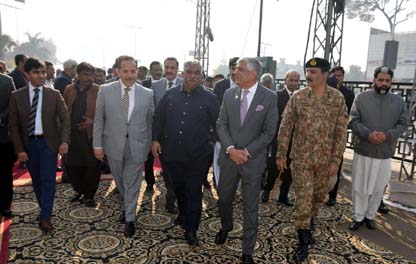
Umair Mehboob
“Perfection is attained by slow degrees; it requires the hand of time”. Voltaire
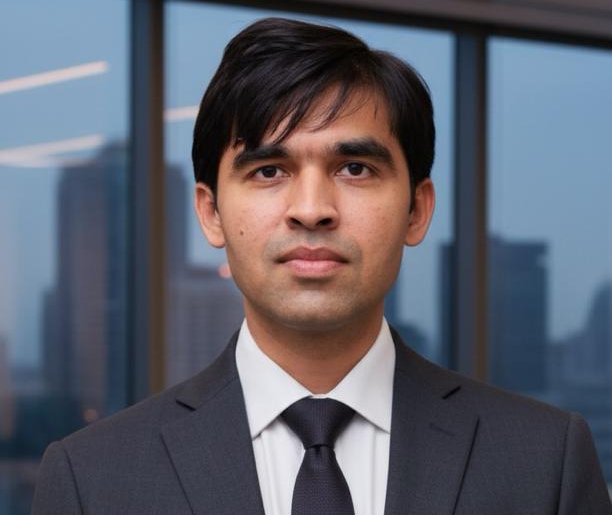
Although this quote of the French philosopher Voltaire can aptly be applied and usually does apply to every phenomenon around us, but more so, and that too with a sluggish pace, in the matters of institutional reformation and broadly, statecraft. However, there are some glaring examples of able navigators for whom this aphorism appears to work swiftly. One of them is Maj. Gen. Irfan Ahmed Malik HI (M), who in his two years tenure (since he became the HOD of ML&C Deptt) has done wonders of the sort, which, to a bare reader, would be a fantasy tale. Yet here we are, having witnessed the stupendous transformation of ML&C Deptt from one barely able to keep rolling to the one navigating now the colossal number of affairs to perfection.
When Maj. Gen. Irfan Malik took over the command in Sep, 2023, ML&C ship was already sinking with over 8000 litigations attributing singularly to Uniform Taxation policy and the Cantonment Boards which come under the umbrella of ML&C Deptt were on the verge of bankruptcy due to adverse Court decisions barring the collection of Tax (the main source on the basis of which service delivery is ensured to over 5 (M) residents in 44 Cantonments all over Pakistan). The situation was unpropitious and the morale of officers down. Yet with sheer brilliance and pragmatic approach, Gen. Irfan turned the tides in a span of 08 months. The long overdue Constitutional Amendment was made restoring the ML&C Deptt’s ability to collect tax and ensure stability in services.
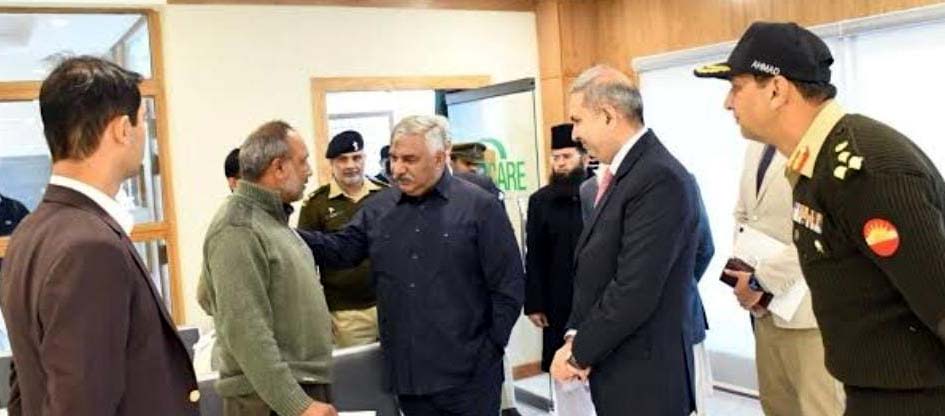
Concurrently, Gen Irfan realized that the trust of public can only be restored by transparency (faltering otherwise) and in the 21st Century, transparency is a function of automation. With this peculiar notion in mind, he proceeded to reduce human interaction to facilitate general public (at the cost of antagonism of many officials whose vested interests were directly hit by this intervention). The ML&C Management Information System (MIS), the first of its kind, was developed and implemented. It led to the integration of all core works of the Deptt. The system streamlined finance (Taxation, Billing, Audit, Procurement), HR (Recruitments, Payroll), Services (Application / Complaints) and legal dimensions. Likewise, ML&C IT Policy, 25 was dished out to protect IT assets and data. He also realized that only a loyal and mentally devoted workforce (a factor of ownership by the leader) can lead to the reformation he had in mind — after all, it is the infantry which will translate any vision (howsoever noble) into reality. The process started and that too on an ultrasonic pace (but without compromising the transparency and due process).
The record of 30000+ employees was digitized. The paperless domain was introduced covering aspects like real time posting / transfers along with mobile notifications. This specific process which otherwise, would have taken ages, took a mere calendar year. The discipline dimension was also not overlooked: with the introduction of AI based attendance app having features of Geo fencing, timestamp and liveliness.
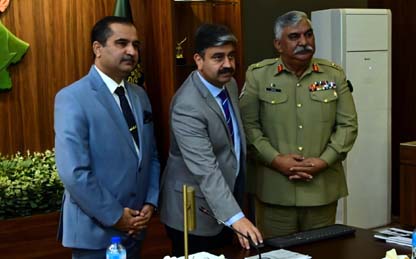
To eliminate the menace of ghost employees, the payroll was linked with attendance. On the pragmatic side, process of HR Rationalization (mammoth in scope but do able in the eyes of Gen. Irfan) was undertaken. A quintessential study was conducted by the brilliant minds of ML&C Deptt to resolve issue of overstaffing, ghost employees and irregular appointments. A novel concept of “Basic Functional Unit” was introduced and new scale registers were formulated accordingly. It led to the identification of around 2500 surplus staff with a financial impact of 1 (B) / per annum.
The list is long: it might seem a eulogy but in fact is a statistical compendium of the things done in Gen. Irfan’s tenure. The Cantonments Servant Regularization Policy was introduced in 2024 (with the noble intention of regularizing those employees who truly deserved regularization and were otherwise serving on contract / adhoc or daily wage basis for years, and in some cases decades). One area that was neglected by successive regimes was promotions, again it might seem exaggeration but pending promotions of 2776 employees (since 2019) were made including time scale and regular ones thus boosting the morale of a huge workforce and restoring their confidence in leadership. The loopholes in erstwhile recruitment and promotion policy were plugged. Gen. Irfan will take personal pains in ensuring that he chaired every interview of direct recruitment with a single notion in mind — meritocracy. Moreover, the welfare of employees, again a pivotal thing in organizational culture and workforce productivity was not downplayed.
Gen. Irfan ensured that long pending cases of pension and commutation were paid, PM’s assistance package was implemented but side by side, accountability was also ensured with over 100 inquiries initiated and miscreants shown the door. The rare combination of overwhelming administration coupled with compassion precipitously resulted in two outcomesperformance and loyalty of workforce (the second thing being Aristotle’s favourite virtue in his Virtue Ethics). Well researched policies were promulgated like CB Polio Eradication Support Policy, ML&C Rent Controller Policy, Code of Conduct for drivers, Health and Education Policy, to name a few.
A nationwide internship programme was launched covering areas like Legal, Health, Engineering & Horticulture.
To sum up, Gen. Irfan single handedly steered ML&C Deptt out of crises. His profound, pragmatic vision he ensured was translated into reality. His interventions would have stupendous repercussions. His legacy will live for times to come.
The writer is a Civil Servant presently serving as CEO Murree Cantonment. He can be approached at engg.umair07@gmail.com

Health minister orders probe into Sindh MDCAT complaints
ISLAMABAD:Federal Minister for Health Syed Mustafa Kamal has taken notice of alleged irregularities in the Medical and Dental College Admission...

CDA chairman directs faster work on Expressway East project
ISLAMABAD: Capital Development Authority (CDA) Chairman Sohail Ashraf has directed officials to accelerate work on the Islamabad Expressway Service Road...

GB ministers call on Governor Kundi
PESHAWAR: Governor Khyber Pakhtunkhwa Faisal Karim Kundi on Saturday held a meeting with a delegation of Gilgit-Baltistan ministers at the...

DPM/FM, British HC discuss Pak-UK bilateral ties
ISLAMABAD, Oct 03 (APP):British High Commissioner Jane Marriott, on Saturday, called on Deputy Prime Minister/Foreign Minister Senator Mohammad Ishaq Dar...

Govt, PPP, opposition hold first round of talks at Parliament House
ISLAMABAD: The first round of talks between the government, Pakistan Peoples Party (PPP) and opposition concluded at Parliament House here...
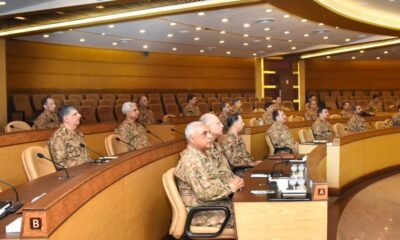

CCC reiterates resolve to maintain internal stability, uphold rule of law
RAWALPINDI: The Corps Commanders’ Conference (CCC) while underscoring the importance of internal stability, on Friday resolved that any attempt to...
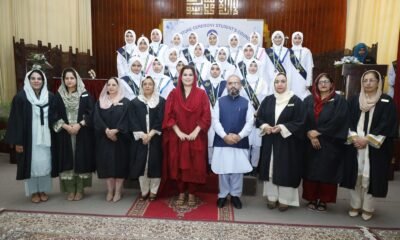

IMCG F-6/2 Holds Investiture Ceremony of Newly Elected College Council
ISLAMABAD: The investiture ceremony of the newly elected College Council 2026-27 was held at Islamabad Model College for Girls (IMCG),...
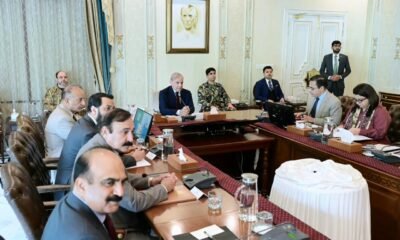

PM orders expansion of Aasaan Khidmat Centers across country
ISLAMABAD: Prime Minister Shehbaz Sharif on Thursday reiterating commitment to providing citizens with fast, transparent, and high-quality services at their...
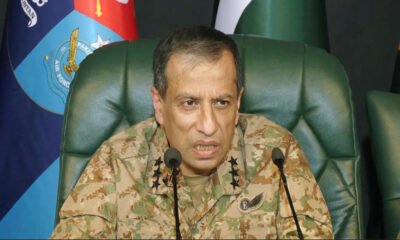

Armed Forces fully prepared to protect Pakistan’s geographical borders, national security: DG ISPR
RAWALPINDI: Director General (DG) Inter-Services Public Relations (ISPR), Lt Gen Ahmed Sharif Chaudhry, while reiterating that there would be no...

PM reviews progress on Fuel Relief Scheme
ISLAMABAD: Prime Minister Muhammad Shehbaz Sharif Thursday chaired a review meeting regarding the progress of the Prime Minister’s Fuel Relief...
-
 Health6 months ago
Punjab Govt Opens Admissions for Lady Health Visitor Course
-
 Articles12 months ago
A Glimpse At Maj. Gen. Irfan Malik’s 02 Year Tenure
-
 Latest1 year ago
Punjab CM Maryam refuses to apologise, hits out at critics again
-

 Latest10 months ago
Digital Pakistan and the Imperative of Implementing the National AI Policy
-
 Latest5 months ago
Syed Zeeshan Ali Naqvi Elected as President CJP, Raja Gohar Iqbal as Secretary General
-

 Articles10 months ago
Golden Hour: A Dialogue of Light, River and Silence
-

 Latest5 months ago
HEC launches fully online, paperless degree attestation system
-
 Latest5 months ago
OPF Chairman Qamar Raza Naqvi Receives Warm Welcome from Pakistani Community in US