
Latest
Oil prices dip, most stocks rise on lingering Iran peace hopes
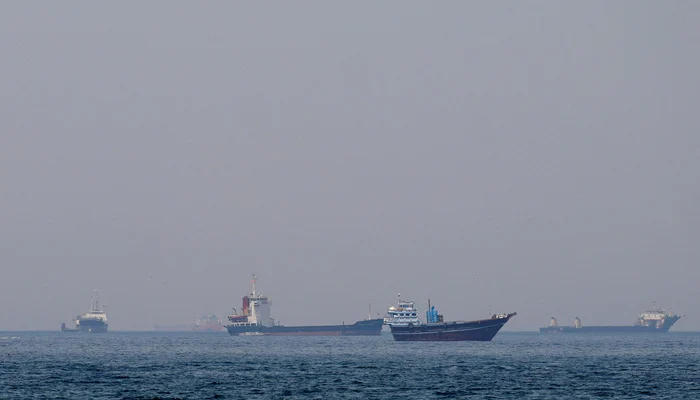
Oil prices fell on Tuesday while most stocks rose on lingering hopes for a deal to end the US-Iran war and reopen the Strait of Hormuz, even as Tehran said it had not decided whether to attend peace talks.
With the end of a two-week ceasefire approaching, the White House said Vice President JD Vance was ready to return to Pakistan for fresh negotiations to end a conflict that has sent crude soaring and revived inflation fears.
However, the Islamic Republic’s position remained uncertain as it accused Washington of violating its fragile truce through its blockade of the country’s ports and seizure of a ship.
Crude plunged on Friday after Tehran said it would allow ships to transit the Strait of Hormuz, which had been effectively closed since the war began on February 28.
But the commodity rebounded on Monday as Iran closed the waterway again, citing the blockade and seizure.
Donald Trump has similarly accused Tehran of violating the ceasefire by harassing vessels in the Strait of Hormuz, the transit passage for about one-fifth of global oil.
The US president said the blockade would not be lifted until an agreement had been reached.
“THE BLOCKADE, which we will not take off until there is a ‘DEAL,’ is absolutely destroying Iran,” Trump said on social media. “They are losing $500 Million Dollars a day, an unsustainable number, even in the short run.”
He told PBS News that Iran was “supposed to be there” at the talks in Pakistan.
“We agreed to be there,” he said, warning that if the ceasefire expired “then lots of bombs start going off”.
He separately told Bloomberg News it was “highly unlikely” he would extend the truce.
Based on its start time, the truce theoretically expires overnight on Tuesday, Iran time, although in his comments to Bloomberg Trump said the end was Wednesday evening Washington time.
The Middle Eastern country’s parliament speaker Mohammad Bagher Ghalibaf said “Trump wants to turn this negotiating table into a surrender table or justify renewed hostilities, as he sees fit”.
“We do not accept negotiations under the shadow of threats, and in the last two weeks we have been preparing to show new cards on the battlefield,” he wrote on X.
Still, investors remained largely upbeat that the two sides will eventually come to a deal that will reopen the strategic strait.
US benchmark crude West Texas Intermediate rose more than 1%, while Brent was also higher.
Tech rally
Seoul led the equity market gains thanks to a resumption of the tech rally that had pushed the Kospi to multiple records before the war, while Tokyo and Taipei were also well up.
Hong Kong, Singapore and Manila also advanced, although Shanghai and Sydney fluctuated.
That came even after a down day on Wall Street, where the S&P 500 and Nasdaq Composite retreated from Friday’s record closes.
Asia had opened “with a gentle lean into risk as signs Iran may join talks with the US offer a pathway, however narrow, toward easing tensions ahead of the ceasefire deadline”, wrote SPI Asset Management’s Stephen Innes.
“Markets are pricing the possibility of progress rather than its certainty,” he said.
“Trump’s remark that a ceasefire extension is ‘highly unlikely’ if no deal is reached has effectively put a clock on the market.
“However, traders recognise the playbook. Hard deadlines and firm rhetoric often soften as negotiations evolve, but the presence of a timeline still sharpens positioning and raises the stakes around each headline.”
In company news, Japanese arms firms enjoyed healthy buying after Tokyo said on Tuesday it would ease decades-old export rules, paving the way for the sale of lethal weapons overseas.
The policy shift, which ends Tokyo’s self-imposed restraint on the sale of lethal arms, comes as it seeks to enter the international arms market, hoping to bolster national defence as well as boost economic growth.
Fujitsu climbed 2.4%, NEC added 3.7% and Mitsubishi Electric was up 0.9%, while Mitsubishi Heavy gained 0.4%.
Latest
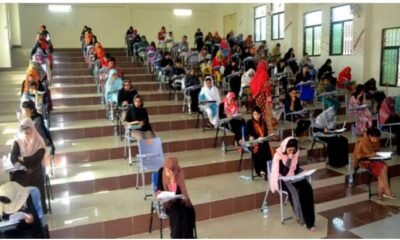
Health minister orders probe into Sindh MDCAT complaints
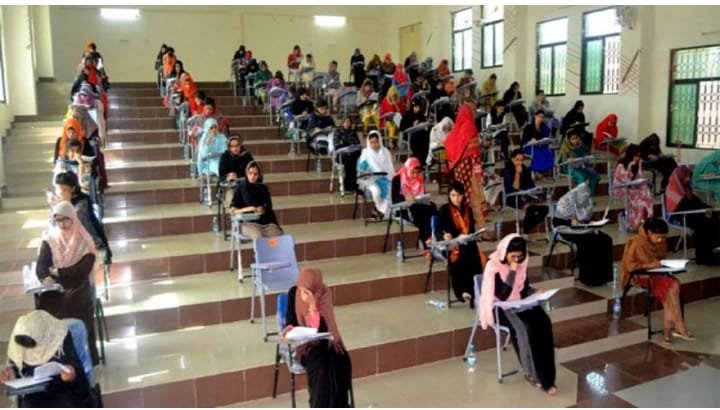
ISLAMABAD:Federal Minister for Health Syed Mustafa Kamal has taken notice of alleged irregularities in the Medical and Dental College Admission Test (MDCAT) held in Sindh and ordered a comprehensive inquiry into the complaints.
According to official sources, the minister directed a five-member committee, including the President of the Pakistan Medical and Dental Council (PMDC), to conduct a transparent investigation and submit its report within 15 days.
The committee has been tasked with examining the complaints and reviewing the circumstances surrounding the alleged irregularities during the examination, sources said.
The minister directed the committee to complete the inquiry within the stipulated timeframe and present its findings for further action in accordance with the applicable rules.
Latest
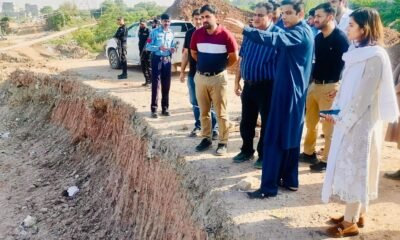
CDA chairman directs faster work on Expressway East project
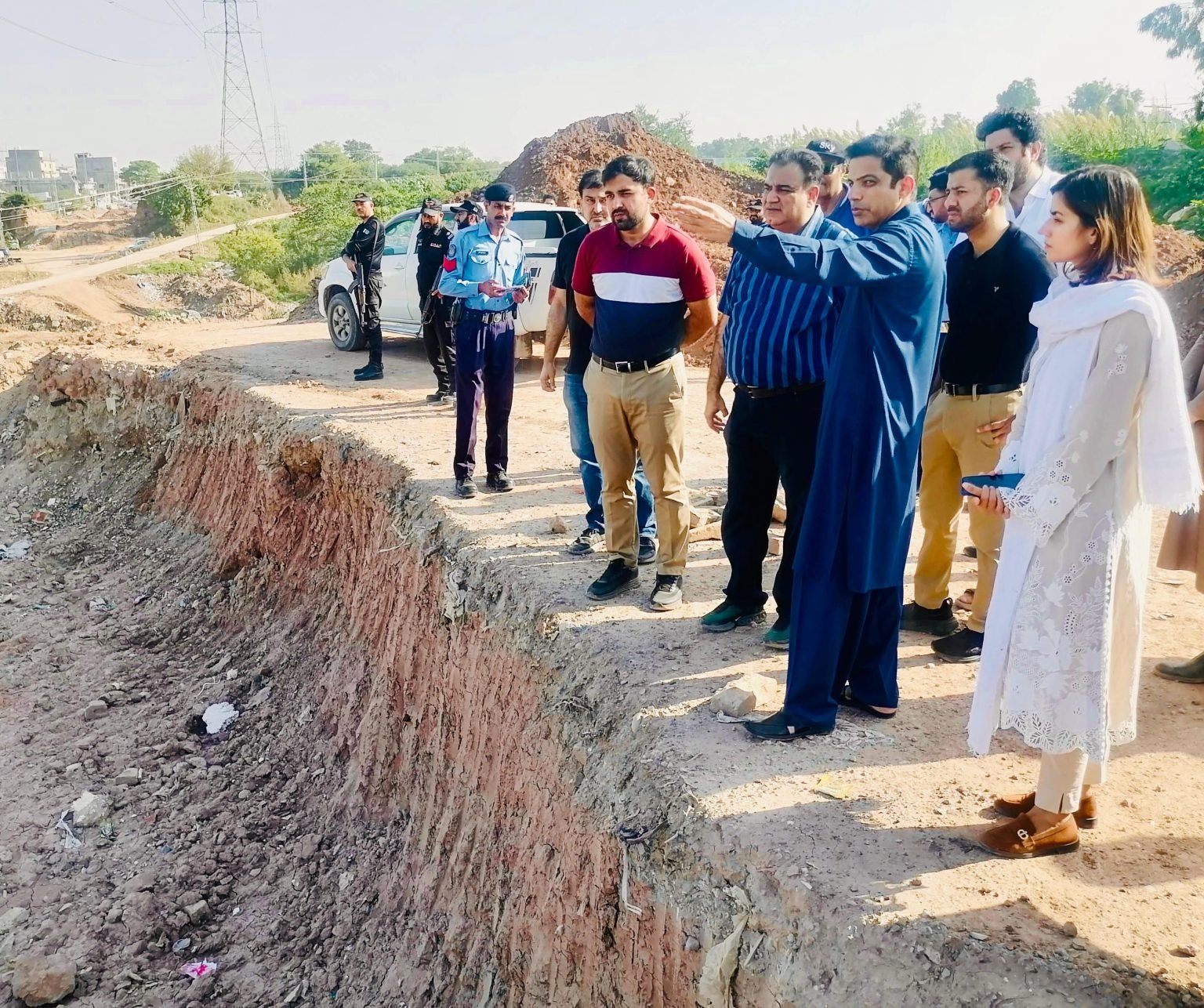
ISLAMABAD: Capital Development Authority (CDA) Chairman Sohail Ashraf has directed officials to accelerate work on the Islamabad Expressway Service Road East project while ensuring strict compliance with approved designs and construction standards.
During an inspection of the project on Saturday, the chairman reviewed progress and was briefed on ongoing works and the next phase of development.
He directed the project director and relevant departments to maintain continuous field monitoring and quality control and ensure effective traffic management to minimise inconvenience to commuters.
The chairman described the Expressway East project as an important infrastructure scheme for improving connectivity, traffic flow and road capacity in the capital. He also stressed that construction quality should not be compromised in efforts to meet the project timeline.
During the visit, he was also briefed on an ongoing enforcement operation against unauthorised and illegal construction along the Islamabad Expressway.
According to the CDA, 377 buildings have been identified for action, including 281 commercial structures. So far, 58 buildings have been sealed, while 124 buildings between Sohan and Khanna bridges have been marked for demolition.
The authority said Rs234.685 million had been recovered through land-use conversion, unauthorised construction and de-sealing charges. Around Rs3 billion remained recoverable under applicable regulations in connection with land-use conversion and violations relating to unauthorised construction, setbacks, floor area ratio and covered area.
The chairman directed the relevant departments to ensure strict enforcement of building-control and land-use regulations, particularly mandatory fire-safety requirements.
The enforcement operation is being conducted by the CDA’s Building Control Section and Enforcement Directorate in coordination with the district administration and Islamabad police.
Latest
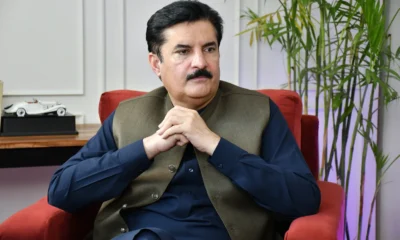
GB ministers call on Governor Kundi
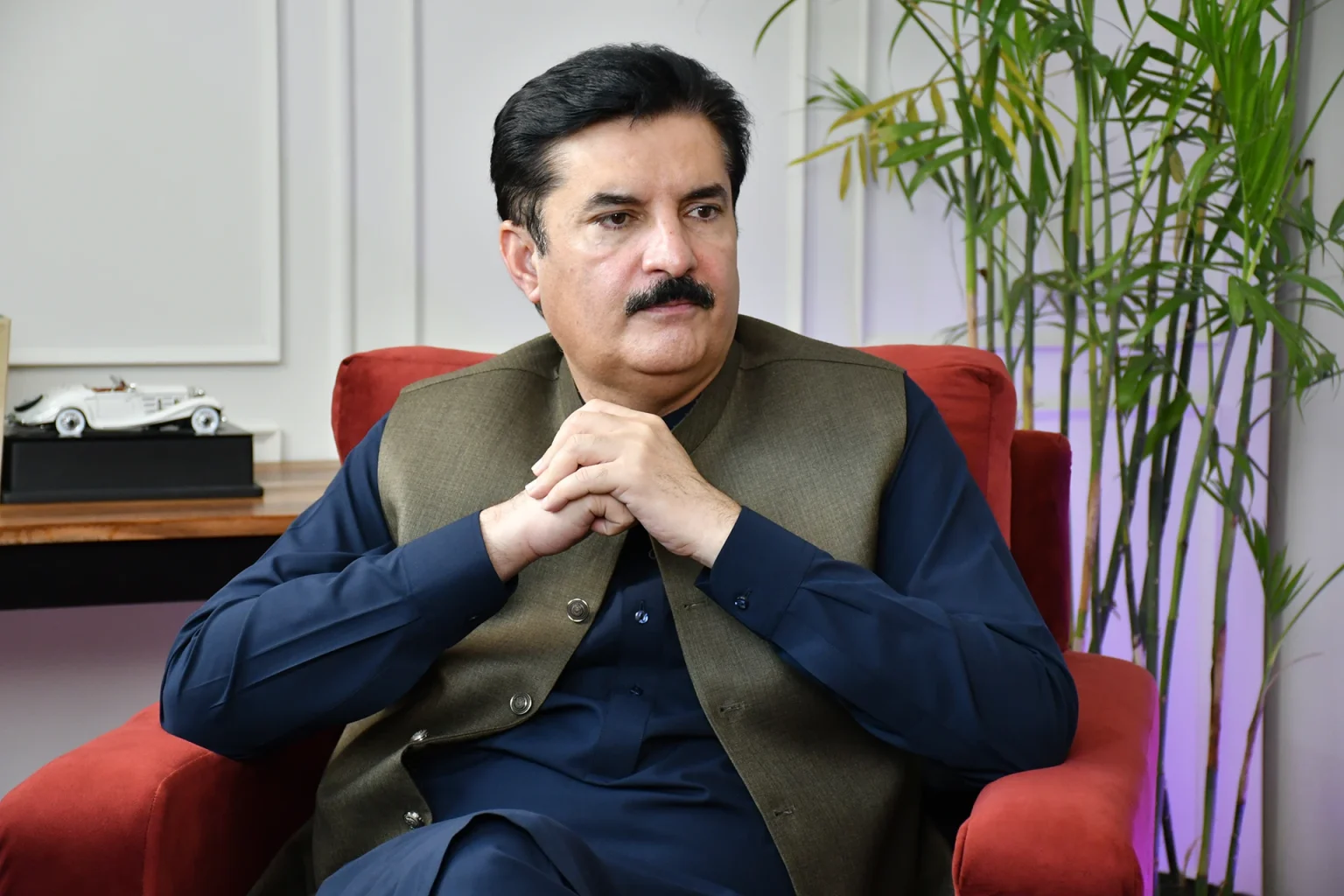
PESHAWAR: Governor Khyber Pakhtunkhwa Faisal Karim Kundi on Saturday held a meeting with a delegation of Gilgit-Baltistan ministers at the Governor’s House here and discussed the country’s political situation and other matters of mutual interest.
The delegation comprised Gilgit-Baltistan Minister for Local Government and Rural Development Zulfiqar Ali Murad, Minister for Health Iqbal Hassan and Minister for Education Aman Ali Ameer.
During the meeting, the two sides exchanged views on the prevailing political situation in the country and various issues of mutual interest. They also discussed the recent elections in Gilgit-Baltistan and the Pakistan Peoples Party’s success in the polls.
The visiting ministers were taken on a tour of the Governor’s House. Governor Kundi presented them with traditional shawls and caps.

Health minister orders probe into Sindh MDCAT complaints
ISLAMABAD:Federal Minister for Health Syed Mustafa Kamal has taken notice of alleged irregularities in the Medical and Dental College Admission...

CDA chairman directs faster work on Expressway East project
ISLAMABAD: Capital Development Authority (CDA) Chairman Sohail Ashraf has directed officials to accelerate work on the Islamabad Expressway Service Road...

GB ministers call on Governor Kundi
PESHAWAR: Governor Khyber Pakhtunkhwa Faisal Karim Kundi on Saturday held a meeting with a delegation of Gilgit-Baltistan ministers at the...

DPM/FM, British HC discuss Pak-UK bilateral ties
ISLAMABAD, Oct 03 (APP):British High Commissioner Jane Marriott, on Saturday, called on Deputy Prime Minister/Foreign Minister Senator Mohammad Ishaq Dar...

Govt, PPP, opposition hold first round of talks at Parliament House
ISLAMABAD: The first round of talks between the government, Pakistan Peoples Party (PPP) and opposition concluded at Parliament House here...

CCC reiterates resolve to maintain internal stability, uphold rule of law
RAWALPINDI: The Corps Commanders’ Conference (CCC) while underscoring the importance of internal stability, on Friday resolved that any attempt to...

IMCG F-6/2 Holds Investiture Ceremony of Newly Elected College Council
ISLAMABAD: The investiture ceremony of the newly elected College Council 2026-27 was held at Islamabad Model College for Girls (IMCG),...

PM orders expansion of Aasaan Khidmat Centers across country
ISLAMABAD: Prime Minister Shehbaz Sharif on Thursday reiterating commitment to providing citizens with fast, transparent, and high-quality services at their...

Armed Forces fully prepared to protect Pakistan’s geographical borders, national security: DG ISPR
RAWALPINDI: Director General (DG) Inter-Services Public Relations (ISPR), Lt Gen Ahmed Sharif Chaudhry, while reiterating that there would be no...

PM reviews progress on Fuel Relief Scheme
ISLAMABAD: Prime Minister Muhammad Shehbaz Sharif Thursday chaired a review meeting regarding the progress of the Prime Minister’s Fuel Relief...
-
 Health6 months ago
Punjab Govt Opens Admissions for Lady Health Visitor Course
-
 Articles12 months ago
A Glimpse At Maj. Gen. Irfan Malik’s 02 Year Tenure
-

 Latest1 year ago
Punjab CM Maryam refuses to apologise, hits out at critics again
-

 Latest10 months ago
Digital Pakistan and the Imperative of Implementing the National AI Policy
-
 Latest5 months ago
Syed Zeeshan Ali Naqvi Elected as President CJP, Raja Gohar Iqbal as Secretary General
-

 Articles10 months ago
Golden Hour: A Dialogue of Light, River and Silence
-
 Latest5 months ago
HEC launches fully online, paperless degree attestation system
-
 Latest5 months ago
OPF Chairman Qamar Raza Naqvi Receives Warm Welcome from Pakistani Community in US