
Latest
Atta Tarar says Pakistan emerges as formidable power post Marka-e-Haq
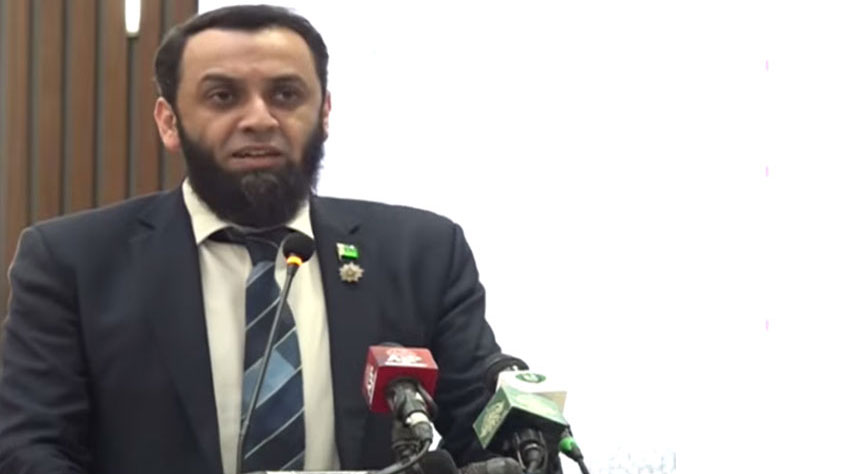
ISLAMABAD: Federal Minister for Information and Broadcasting Attaullah Tarar on Thursday said that Pakistan has emerged as a “serious and formidable power” on the world stage following its victory in the Marka-e-Haq.
Addressing a seminar commemorating 1st anniversary of Marka-e-Haq (Battle of Truth), the minister said this victory reflects the nation’s unwavering resolve, collective vision, and its ability to dominate the global narrative through facts and strategic clarity.
The seminar was attended by the government officials, intelligentsia, diplomatic corps, media and civil society.
He highlighted that while the Indian government attempted to suppress the truth by banning Pakistani YouTube channels, Pakistan responded not with bans, but with digital innovation.
By geo-tagging specific locations within India, Pakistan’s digital teams successfully delivered patriotic content and visuals of JF-17 Thunder jets directly to Indian audiences, effectively forcing them to question their own government’s propaganda, he added.
He said our comprehensive strategy and seamless coordination across all levels of leadership ensured a decisive victory in the war of narratives against India.
Putting things into context, the minister recalled his visit to Azad Kashmir where he led a delegation of local and foreign journalists following accusations from India regarding Pahalgam incident.
“We wasted no time and took a delegation of journalists to Baila Noor Shah, which India alleged, had terrorist camps and terrorist hideouts,” he said, adding the delegation found nothing but “a public school in the area, in addition to shepherds and people who were talking to each other, there.”
“We exposed Indian propaganda during that visit which was so successful that subsequently we visited Muridke and Bahawalpur where India also had alleged that there were other terrorist activities were going on,” he recalled.
“On that very night came a cowardly attack from our eastern neighbor,” he emphasized.
India’s whole premise of aggression following Pahalgam was based on “propaganda and fiction.”, Tarar noted.
He said India has always been in a habit of conducting false flag operation which were used as means for aggression and attacking Pakistan. Till this date, India still has trouble in digesting two nations theory.
With every passing day, the basis on which Pakistan was created is gaining more credence, he said, pointing to the rise of Hindutva ideology in India where minorities are being persecuted with impunity.
He said India is in habit of externalizing its internal issues and internalizing the external ones.
“Terrorism is India’s internal issue and on the other hand, the Kashmir dispute is an external issue,” he said, adding as per international resolutions, there is supposed to be a plebiscite in Indian Illegally Occupied Jammu and Kashmir.
“When a state is oppressive in nature, thrives on ideology of religious extremism and right wing politics, and lacks objective and strategic clarity, it always relies on lies to further its objective,” he noted.
“When I say that India is promoting terrorism, I have justification and evidence to say so,” citing transnational regression and transnational assassinations in which India is involved.
He said these transnational assassinations are taking place in US, Canada and UK. “There is an ideology behind that and that ideology is an ideology of terrorism.”
The minister also draw a comparison between Pakistan and India highlighting how Pakistan has been fighting terrorism as a frontline state.
No other nation has to its credit the sacrifices Pakistan has made against terrorism, he emphasized.
“Starting from armed forces, no other country has a higher officer to solider mortality ratios,” he said, adding the amount of officers that got martyred is the highest.
“Our officers lead from front and motivate the soldiers laying down their lives for the motherland.”
“When I say no other country has to its credit the amount of sacrifices that Pakistan has given against terrorism, I have evidence to substantiate it. When it comes to assessing economic losses, they are in billions of dollars.”
When one Pakistani lays down his or her life, it is not only for Pakistan but also to make the world a safer place, he said, adding it is an established fact Pakistan combating terrorism while India is promoting terrorism.
“India can make a lot of movies but when it comes to the harsh realities, we have not only captured their spies but we have legally proven our case at international level,” the minister stressed.
“Our first and foremost objective was to tell the world that Pakistan believes in peace and combating terrorism while India is promoting terrorism,” he said, adding India has always spun this argument that Pakistan does cross border terrorism.
“The way Pahalgam episode carried out is not only absurd but its ridiculous in a way that they built their narrative around the Pahalgam whose FIR registered within 10 minutes of the incident took place.”
He questioned that the LoC is “100KM away from Pahalgam, so if infiltration was to take place what kind of defence they had in place. “The so called terrorists penetrated 100km in their territory and they did not find out,” he added.
Highlighting the government’s strategy to defeat Indian propaganda, he said, “it is extremely important to give out the right information at the right time to right audience.”
Tarar said Pakistan got edge in narrative domain following an announcement by Prime Minister Shehbaz Sharif who asked for independent and impartial inquiry into the incident. One year on, India has nothing to say, he added.
“This edge was not possible without unity, cohesion and synergy. The civil military relations are ideal and we have complete unity in thought and action,” he said, adding the ministry of information, during that time, was in constant touch with the ISPR and receiving information in real time.
“Synergy was of prime importance and we saw this unity trickles down to all level,” he said recalling how the public rallied behind the government and armed forces.
He also recalled his speech in the Parliament where he highlighted the unity among all political parties for giving befitting response to India.
The minister also appreciated the people of Pakistan especially Gen Z for their creativity and innovation in giving fitting response to India on social media in humorous way that eventually grabbed attention of entire Indian media.
He commended Pakistani media, journalists and anchorpersons while comparing them with Indians who created a lot sensationalism.
Concluding his address, the minister vowed to continue to fight Indian propaganda in the narrative domain.
Latest
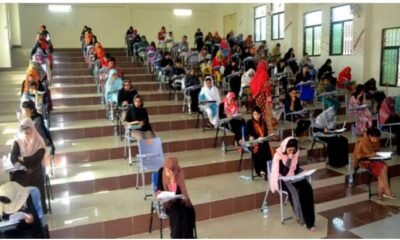
Health minister orders probe into Sindh MDCAT complaints
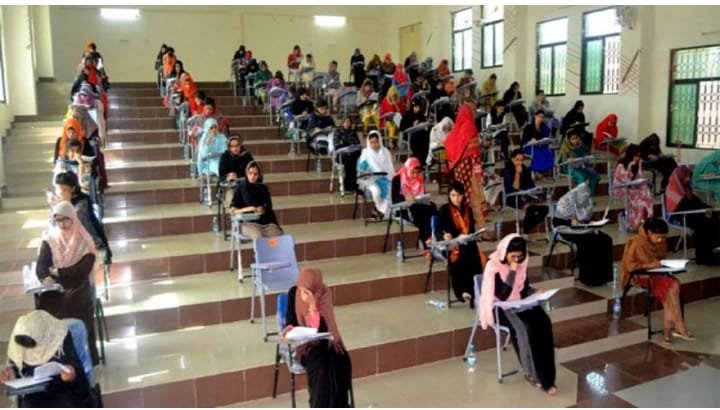
ISLAMABAD:Federal Minister for Health Syed Mustafa Kamal has taken notice of alleged irregularities in the Medical and Dental College Admission Test (MDCAT) held in Sindh and ordered a comprehensive inquiry into the complaints.
According to official sources, the minister directed a five-member committee, including the President of the Pakistan Medical and Dental Council (PMDC), to conduct a transparent investigation and submit its report within 15 days.
The committee has been tasked with examining the complaints and reviewing the circumstances surrounding the alleged irregularities during the examination, sources said.
The minister directed the committee to complete the inquiry within the stipulated timeframe and present its findings for further action in accordance with the applicable rules.
Latest
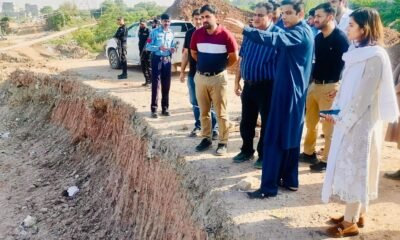
CDA chairman directs faster work on Expressway East project
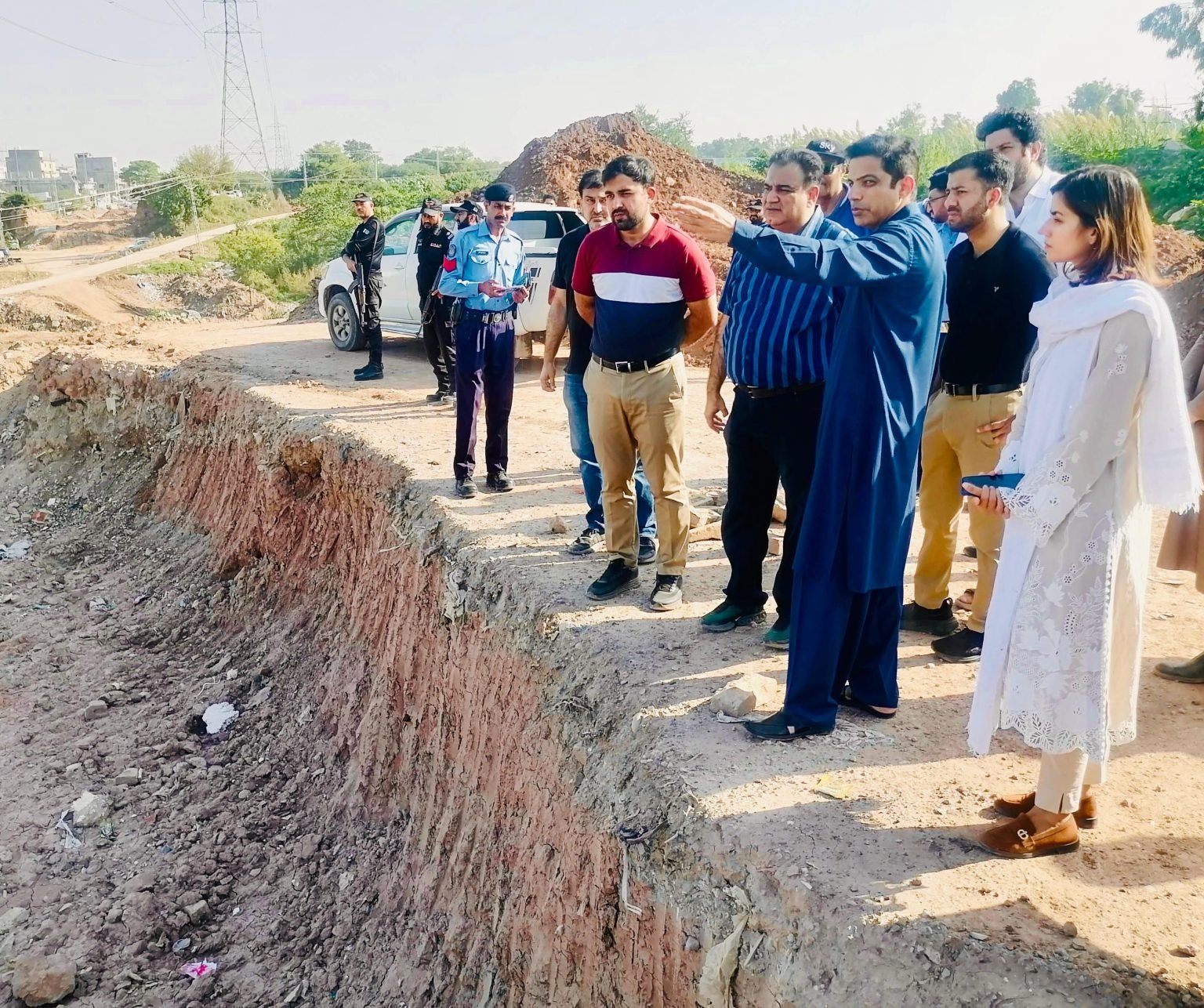
ISLAMABAD: Capital Development Authority (CDA) Chairman Sohail Ashraf has directed officials to accelerate work on the Islamabad Expressway Service Road East project while ensuring strict compliance with approved designs and construction standards.
During an inspection of the project on Saturday, the chairman reviewed progress and was briefed on ongoing works and the next phase of development.
He directed the project director and relevant departments to maintain continuous field monitoring and quality control and ensure effective traffic management to minimise inconvenience to commuters.
The chairman described the Expressway East project as an important infrastructure scheme for improving connectivity, traffic flow and road capacity in the capital. He also stressed that construction quality should not be compromised in efforts to meet the project timeline.
During the visit, he was also briefed on an ongoing enforcement operation against unauthorised and illegal construction along the Islamabad Expressway.
According to the CDA, 377 buildings have been identified for action, including 281 commercial structures. So far, 58 buildings have been sealed, while 124 buildings between Sohan and Khanna bridges have been marked for demolition.
The authority said Rs234.685 million had been recovered through land-use conversion, unauthorised construction and de-sealing charges. Around Rs3 billion remained recoverable under applicable regulations in connection with land-use conversion and violations relating to unauthorised construction, setbacks, floor area ratio and covered area.
The chairman directed the relevant departments to ensure strict enforcement of building-control and land-use regulations, particularly mandatory fire-safety requirements.
The enforcement operation is being conducted by the CDA’s Building Control Section and Enforcement Directorate in coordination with the district administration and Islamabad police.
Latest
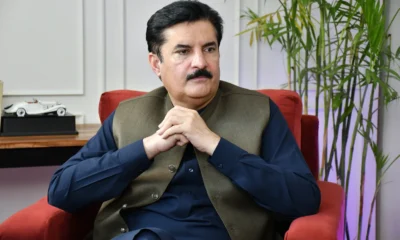
GB ministers call on Governor Kundi
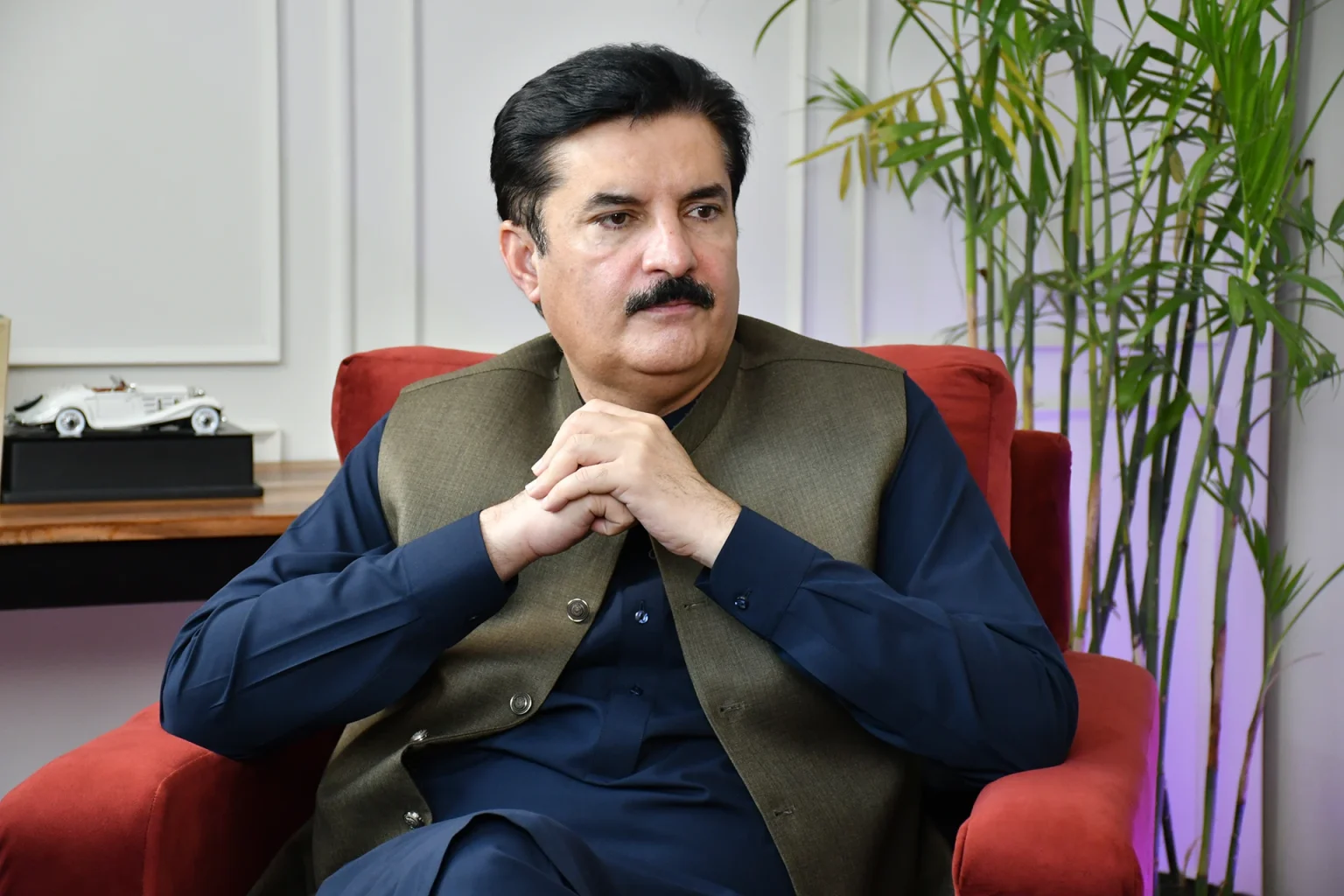
PESHAWAR: Governor Khyber Pakhtunkhwa Faisal Karim Kundi on Saturday held a meeting with a delegation of Gilgit-Baltistan ministers at the Governor’s House here and discussed the country’s political situation and other matters of mutual interest.
The delegation comprised Gilgit-Baltistan Minister for Local Government and Rural Development Zulfiqar Ali Murad, Minister for Health Iqbal Hassan and Minister for Education Aman Ali Ameer.
During the meeting, the two sides exchanged views on the prevailing political situation in the country and various issues of mutual interest. They also discussed the recent elections in Gilgit-Baltistan and the Pakistan Peoples Party’s success in the polls.
The visiting ministers were taken on a tour of the Governor’s House. Governor Kundi presented them with traditional shawls and caps.

Health minister orders probe into Sindh MDCAT complaints
ISLAMABAD:Federal Minister for Health Syed Mustafa Kamal has taken notice of alleged irregularities in the Medical and Dental College Admission...

CDA chairman directs faster work on Expressway East project
ISLAMABAD: Capital Development Authority (CDA) Chairman Sohail Ashraf has directed officials to accelerate work on the Islamabad Expressway Service Road...

GB ministers call on Governor Kundi
PESHAWAR: Governor Khyber Pakhtunkhwa Faisal Karim Kundi on Saturday held a meeting with a delegation of Gilgit-Baltistan ministers at the...

DPM/FM, British HC discuss Pak-UK bilateral ties
ISLAMABAD, Oct 03 (APP):British High Commissioner Jane Marriott, on Saturday, called on Deputy Prime Minister/Foreign Minister Senator Mohammad Ishaq Dar...

Govt, PPP, opposition hold first round of talks at Parliament House
ISLAMABAD: The first round of talks between the government, Pakistan Peoples Party (PPP) and opposition concluded at Parliament House here...

CCC reiterates resolve to maintain internal stability, uphold rule of law
RAWALPINDI: The Corps Commanders’ Conference (CCC) while underscoring the importance of internal stability, on Friday resolved that any attempt to...

IMCG F-6/2 Holds Investiture Ceremony of Newly Elected College Council
ISLAMABAD: The investiture ceremony of the newly elected College Council 2026-27 was held at Islamabad Model College for Girls (IMCG),...

PM orders expansion of Aasaan Khidmat Centers across country
ISLAMABAD: Prime Minister Shehbaz Sharif on Thursday reiterating commitment to providing citizens with fast, transparent, and high-quality services at their...

Armed Forces fully prepared to protect Pakistan’s geographical borders, national security: DG ISPR
RAWALPINDI: Director General (DG) Inter-Services Public Relations (ISPR), Lt Gen Ahmed Sharif Chaudhry, while reiterating that there would be no...

PM reviews progress on Fuel Relief Scheme
ISLAMABAD: Prime Minister Muhammad Shehbaz Sharif Thursday chaired a review meeting regarding the progress of the Prime Minister’s Fuel Relief...
-
 Health6 months ago
Punjab Govt Opens Admissions for Lady Health Visitor Course
-
 Articles12 months ago
A Glimpse At Maj. Gen. Irfan Malik’s 02 Year Tenure
-
 Latest1 year ago
Punjab CM Maryam refuses to apologise, hits out at critics again
-

 Latest10 months ago
Digital Pakistan and the Imperative of Implementing the National AI Policy
-
 Latest5 months ago
Syed Zeeshan Ali Naqvi Elected as President CJP, Raja Gohar Iqbal as Secretary General
-

 Articles10 months ago
Golden Hour: A Dialogue of Light, River and Silence
-
 Latest5 months ago
HEC launches fully online, paperless degree attestation system
-
 Latest5 months ago
OPF Chairman Qamar Raza Naqvi Receives Warm Welcome from Pakistani Community in US