
Latest
Amid Mideast crisis, Pakistan facilitating dialogue to promote regional peace, Amb. Asim tells US War College team
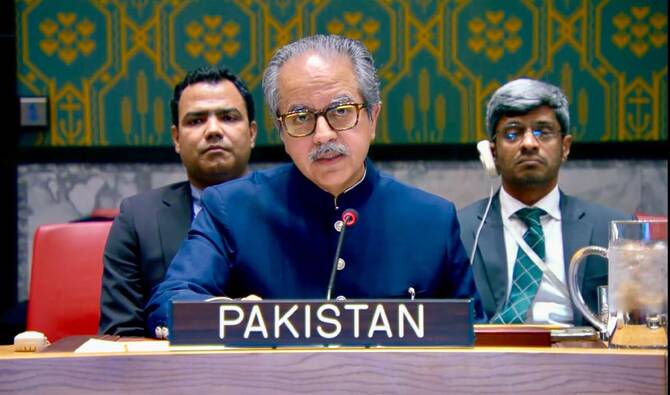
UNITED NATIONS: Highlighting the serious risks the Middle East crisis poses to international peace, Pakistan’s UN Ambassador Asim Iftikhar Ahmad told a delegation from the U.S. War college that Islamabad is actively fostering dialogue and contributing towards diplomatic efforts aimed at promoting regional stability.
Speaking to the 40-member delegation, which visited the Pakistani Mission to the UN on Monday, he emphasized Pakistan’s “constructive role” in promoting regional peace, stability, dialogue and diplomacy, especially with respect to its mediatory role between the United States and Iran.
The delegation, led by Col. Stephan Walters, consisted of 33 American participants as well as two from Pakistan, and one each from Turkiye, Sri Lanka, Moldova, Guatemala and Ecuador.
Dealing with the Middle East crisis, Ambassador Asim Ahmad, who was answering questions, said it had far-reaching global consequences extending well beyond the region. He pointed out its impact on global energy markets, oil and gas supplies, fertilizer availability, food security, inflation, maritime navigation, merchandise trade, and global economic growth projections.
Referring to the disruption in the Strait of Hormuz, he underlined the serious implications for international energy flows and trade routes. The United Nations, he said, had examined various scenarios assessing the consequences of a prolonged crisis. Pakistan, too, had experienced its economic effects arising from regional instability.
Beyond economic concerns, the crisis posed serious risks to regional and international peace and security, the Pakistani envoy said. Pakistan supported efforts for de-escalation, dialogue, and diplomacy, he said, noting its engagement with the United States, Iran, Gulf countries, Egypt, China, Turkiye, and other partners was aimed at preventing further escalation and creating conditions conducive to peaceful dialogue.
Pakistan’s balanced, principled, and objective approach, he said, had enabled it to maintain trust and engagement with all relevant stakeholders, noting that Islamabad’s close relations with the United States, Iran, Gulf countries, and major international powers, together with its current membership of the Security Council, positioned it well to facilitate dialogue and contribute constructively to diplomatic efforts aimed at regional peace and stability.
Discussing the evolving security environment in the Middle East and Gulf region, Ambassador Asim Ahmad that recent developments may lead to renewed thinking regarding regional security arrangements and strategic alignments. In this regard, he emphasized that future security frameworks should remain grounded in international law, the UN Charter, collective security, mutual respect for sovereignty, and equal security for all states.
The ambassador also underlined Pakistan’s deep interest in peace and stability in the Persian Gulf region, noting the country’s longstanding economic, energy, security, and people-to-people ties with those states, including the presence of millions of Pakistanis living and working there.
Responding to questions on Islamophobia, the Pakistani envoy explained that the phenomenon refers to discrimination, marginalization, or victimization of Muslims based on their faith. Freedom of religion and belief is a fundamental human right, he said, emphasizing the importance of fostering respect, inclusion, and interfaith harmony.
He pointed out that Pakistan, together with like-minded countries, played a leading role at the United Nations in advancing efforts to combat Islamophobia, including support for the establishment of a UN Special Envoy to Combat Islamophobia tasked with developing recommendations and action-oriented initiatives for member states.
On questions relating to demographic change, population shifts, aging societies, and birth rates, he said these issues are increasingly being discussed within the United Nations framework in the context of development, human rights, economic policy, and technological transformation.
He noted that artificial intelligence is playing a growing role in supporting governments and UN agencies through data analysis, policy recommendations, and forecasting tools, saying that the influence of AI on policymaking is expected to expand further in the years ahead.
At the outset, Ambassador Asim Ahmad reaffirmed Pakistan’s deep and abiding commitment to the United Nations and multilateralism, describing the world body as the central platform for collective action on international peace and security, development, human rights, climate change, and emerging challenges including artificial intelligence and information technology.
He emphasized that today’s global challenges were too complex and interconnected for any single country to address alone, highlighting the continued importance of multilateral cooperation through the UN platform.There was a need for UN to evolve in response to changing global realities and noted ongoing reform efforts, including revitalization of the General Assembly and the Security Council reform. Pakistan’s supported democratic, transparent, and accountable reforms of the Security Council while opposing the creation of new permanent seats.
Ambassador Asim Ahmad underscored Pakistan’s active role as a current member of the Security Council in promoting international peace and security, including through peacekeeping, counterterrorism, regional stability, and advocacy for peaceful settlement of disputes.
He also highlighted the broad-based and dynamic relationship between Pakistan and the United States, encompassing security, defense, intelligence, counter-terrorism, economic cooperation, trade, and strong people-to-people ties.
Addressing the relationship between artificial intelligence and human rights, Ambassador Asim Ahmad emphasized that AI is becoming increasingly significant in governmental and institutional decision-making processes. He noted that the growing use of AI would inevitably raise important human rights considerations, making the subject an increasingly prominent area of discussion within the United Nations system.
people-to-people ties with those states, including the presence of millions of Pakistanis living and working there.
On their part, participants thanked the Mission for facilitating a meaningful exchange on contemporary global challenges, and acknowledged Pakistan’s active role in diplomacy, mediation, and peacebuilding efforts at the United Nations.
Earlier, Ms. Saima Saleem, a Mission’s counsellor, and Col. Umar Shafique, Military and Police Advisor at the Pakistan Mission, gave detailed presentations to the participants about the work of the Mission across different UN pillars as well as contribution to UN peacekeeping respectively.
Latest
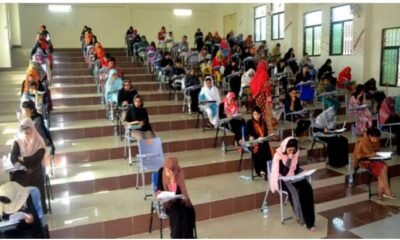
Health minister orders probe into Sindh MDCAT complaints
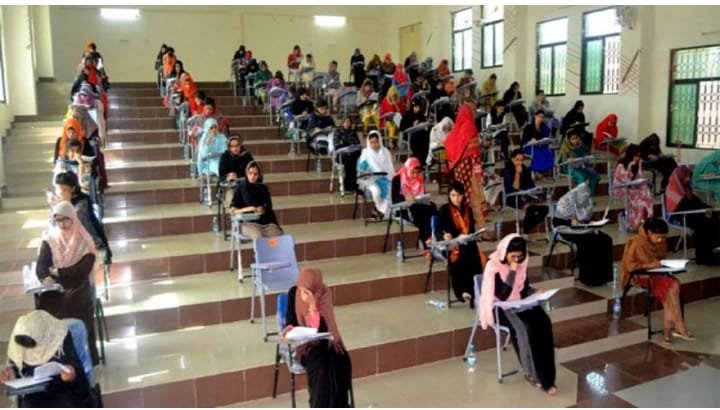
ISLAMABAD:Federal Minister for Health Syed Mustafa Kamal has taken notice of alleged irregularities in the Medical and Dental College Admission Test (MDCAT) held in Sindh and ordered a comprehensive inquiry into the complaints.
According to official sources, the minister directed a five-member committee, including the President of the Pakistan Medical and Dental Council (PMDC), to conduct a transparent investigation and submit its report within 15 days.
The committee has been tasked with examining the complaints and reviewing the circumstances surrounding the alleged irregularities during the examination, sources said.
The minister directed the committee to complete the inquiry within the stipulated timeframe and present its findings for further action in accordance with the applicable rules.
Latest
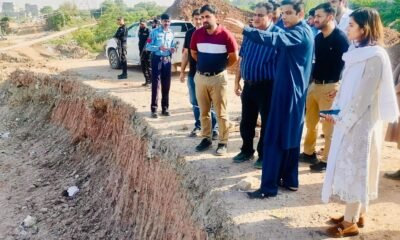
CDA chairman directs faster work on Expressway East project
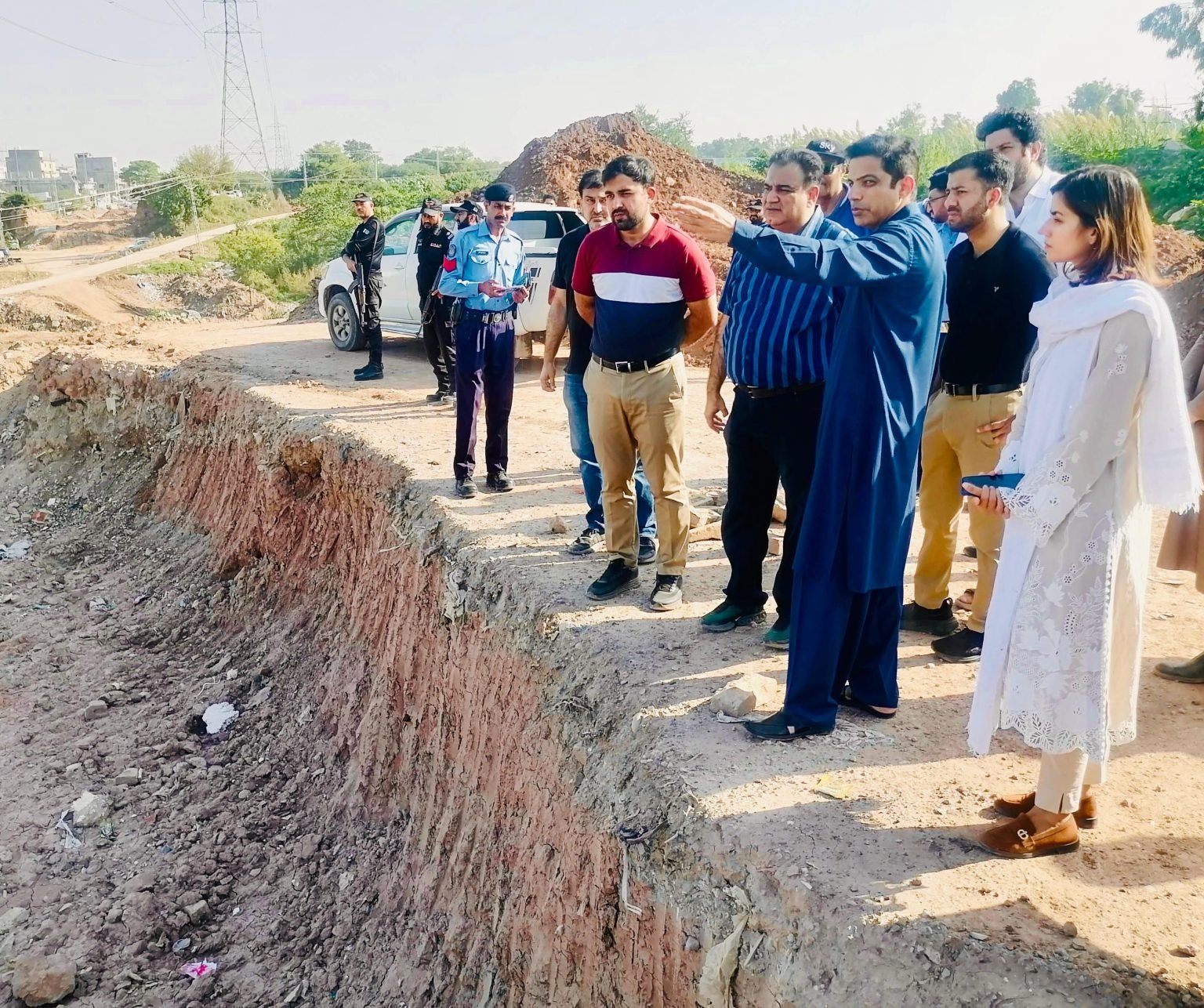
ISLAMABAD: Capital Development Authority (CDA) Chairman Sohail Ashraf has directed officials to accelerate work on the Islamabad Expressway Service Road East project while ensuring strict compliance with approved designs and construction standards.
During an inspection of the project on Saturday, the chairman reviewed progress and was briefed on ongoing works and the next phase of development.
He directed the project director and relevant departments to maintain continuous field monitoring and quality control and ensure effective traffic management to minimise inconvenience to commuters.
The chairman described the Expressway East project as an important infrastructure scheme for improving connectivity, traffic flow and road capacity in the capital. He also stressed that construction quality should not be compromised in efforts to meet the project timeline.
During the visit, he was also briefed on an ongoing enforcement operation against unauthorised and illegal construction along the Islamabad Expressway.
According to the CDA, 377 buildings have been identified for action, including 281 commercial structures. So far, 58 buildings have been sealed, while 124 buildings between Sohan and Khanna bridges have been marked for demolition.
The authority said Rs234.685 million had been recovered through land-use conversion, unauthorised construction and de-sealing charges. Around Rs3 billion remained recoverable under applicable regulations in connection with land-use conversion and violations relating to unauthorised construction, setbacks, floor area ratio and covered area.
The chairman directed the relevant departments to ensure strict enforcement of building-control and land-use regulations, particularly mandatory fire-safety requirements.
The enforcement operation is being conducted by the CDA’s Building Control Section and Enforcement Directorate in coordination with the district administration and Islamabad police.
Latest
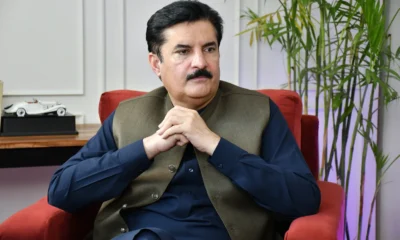
GB ministers call on Governor Kundi
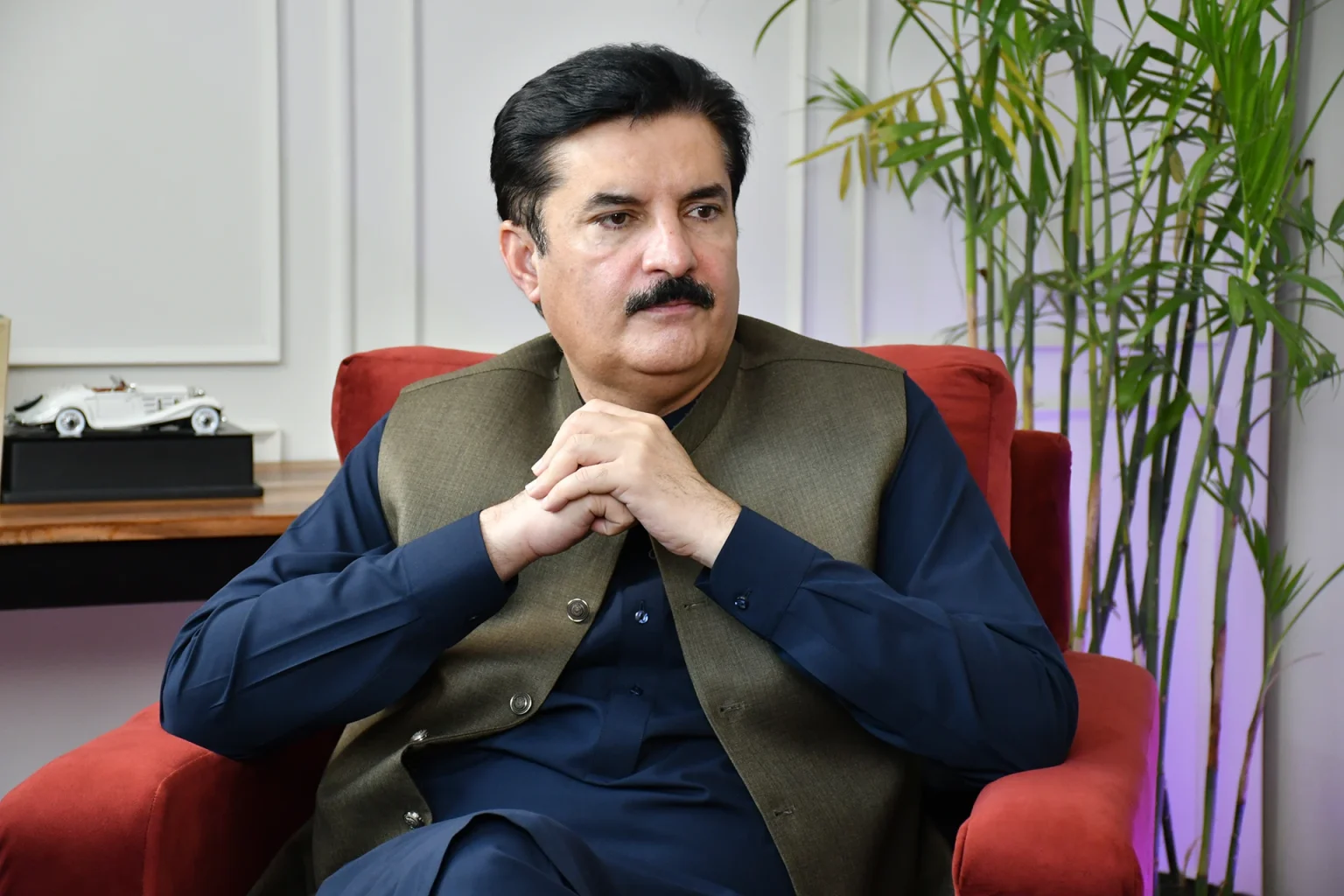
PESHAWAR: Governor Khyber Pakhtunkhwa Faisal Karim Kundi on Saturday held a meeting with a delegation of Gilgit-Baltistan ministers at the Governor’s House here and discussed the country’s political situation and other matters of mutual interest.
The delegation comprised Gilgit-Baltistan Minister for Local Government and Rural Development Zulfiqar Ali Murad, Minister for Health Iqbal Hassan and Minister for Education Aman Ali Ameer.
During the meeting, the two sides exchanged views on the prevailing political situation in the country and various issues of mutual interest. They also discussed the recent elections in Gilgit-Baltistan and the Pakistan Peoples Party’s success in the polls.
The visiting ministers were taken on a tour of the Governor’s House. Governor Kundi presented them with traditional shawls and caps.

Health minister orders probe into Sindh MDCAT complaints
ISLAMABAD:Federal Minister for Health Syed Mustafa Kamal has taken notice of alleged irregularities in the Medical and Dental College Admission...

CDA chairman directs faster work on Expressway East project
ISLAMABAD: Capital Development Authority (CDA) Chairman Sohail Ashraf has directed officials to accelerate work on the Islamabad Expressway Service Road...

GB ministers call on Governor Kundi
PESHAWAR: Governor Khyber Pakhtunkhwa Faisal Karim Kundi on Saturday held a meeting with a delegation of Gilgit-Baltistan ministers at the...

DPM/FM, British HC discuss Pak-UK bilateral ties
ISLAMABAD, Oct 03 (APP):British High Commissioner Jane Marriott, on Saturday, called on Deputy Prime Minister/Foreign Minister Senator Mohammad Ishaq Dar...

Govt, PPP, opposition hold first round of talks at Parliament House
ISLAMABAD: The first round of talks between the government, Pakistan Peoples Party (PPP) and opposition concluded at Parliament House here...

CCC reiterates resolve to maintain internal stability, uphold rule of law
RAWALPINDI: The Corps Commanders’ Conference (CCC) while underscoring the importance of internal stability, on Friday resolved that any attempt to...

IMCG F-6/2 Holds Investiture Ceremony of Newly Elected College Council
ISLAMABAD: The investiture ceremony of the newly elected College Council 2026-27 was held at Islamabad Model College for Girls (IMCG),...

PM orders expansion of Aasaan Khidmat Centers across country
ISLAMABAD: Prime Minister Shehbaz Sharif on Thursday reiterating commitment to providing citizens with fast, transparent, and high-quality services at their...

Armed Forces fully prepared to protect Pakistan’s geographical borders, national security: DG ISPR
RAWALPINDI: Director General (DG) Inter-Services Public Relations (ISPR), Lt Gen Ahmed Sharif Chaudhry, while reiterating that there would be no...

PM reviews progress on Fuel Relief Scheme
ISLAMABAD: Prime Minister Muhammad Shehbaz Sharif Thursday chaired a review meeting regarding the progress of the Prime Minister’s Fuel Relief...
-
 Health6 months ago
Punjab Govt Opens Admissions for Lady Health Visitor Course
-
 Articles12 months ago
A Glimpse At Maj. Gen. Irfan Malik’s 02 Year Tenure
-
 Latest1 year ago
Punjab CM Maryam refuses to apologise, hits out at critics again
-

 Latest10 months ago
Digital Pakistan and the Imperative of Implementing the National AI Policy
-
 Latest5 months ago
Syed Zeeshan Ali Naqvi Elected as President CJP, Raja Gohar Iqbal as Secretary General
-

 Articles10 months ago
Golden Hour: A Dialogue of Light, River and Silence
-
 Latest5 months ago
HEC launches fully online, paperless degree attestation system
-
 Latest5 months ago
OPF Chairman Qamar Raza Naqvi Receives Warm Welcome from Pakistani Community in US