Connect with us

Latest

GHQ to host commemorative ceremony marking first anniversary of Marka-e-Haq victory
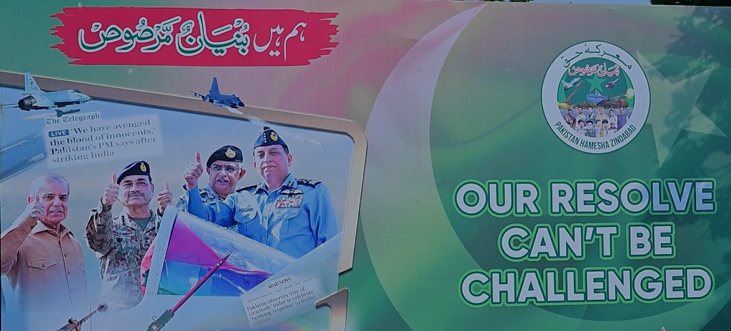
Marka-e-Haq

RAWALPINDI: A prestigious ceremony to mark the first anniversary of Pakistan’s historic success in Marka-e-Haq will be held here on Sunday at General Headquarters (GHQ).

Chief of Army Staff (COAS) and Chief of Defence Staff (CDF), Field Marshal Syed Asim Munir, will grace the occasion as the chief guest.

Chief of the Air Staff Air Chief Marshal Zaheer Ahmed Babar Sidhu and Chief of the Naval Staff Admiral Naveed Ashraf will also attend the ceremony.

The ceremony will begin with the laying of a floral wreath at Yadgar-e-Shuhada, where smartly turned out contingents of three armed forces present salute.

Field Marshal Syed Asim Munir will address the gathering and deliver an important speech highlighting the significance of Marka-e-Haq and the sacrifices rendered for the defence of the country.

Click to comment

Leave a Reply

Your email address will not be published. Required fields are marked *

Latest

PDMA organizes workshop to deal increasing risk of drought in Balochistan

Balochistan

QUETTA: In order to effectively deal with the increasing risks of drought in Balochistan, enhance the capacity for timely response in emergencies and further strengthen inter-agency coordination, the Provincial Disaster Management Authority (PDMA) Balochistan organized a one-day workshop titled “Tabletop Simulation Exercise” in collaboration with the Food and Agriculture Organization (FAO) and the World Food Program (WFP).

 On this occasion, representatives of federal and provincial departments, experts and heads of social organizations including FAO Antiseptic Specialist Roaidullah, Program Assistant WFP Asadullah, United Organization Balochistan Rehana Khilji participated.

The main objective of the workshop was to assess the potential impacts of drought in advance, promote effective coordination between relevant institutions and formulate a comprehensive strategy for timely and effective response.

 During this, a practical review of institutional preparedness, resource availability, coordination and relief measures was conducted in the context of various hypothetical emergencies. While briefing the participants, it was informed that the Government of Balochistan, as per the vision of the Chief Minister of Balochistan, is adopting a modern and effective “proactive” strategy instead of the traditional “reactive” approach to deal with natural disasters, so that preventive measures can be ensured before any possible disaster. On this occasion, it was said that the Chief Minister of Balochistan has always emphasized on planning on scientific grounds and the use of modern technology, keeping in mind the geographical and climatic conditions of the province.

 In the light of these instructions, PDMA Balochistan is being made more effective with modern data analysis, early warning system and world-class technology so that the effects of possible natural disasters can be minimized. Representatives of the departments of Meteorology, Agriculture, Livestock, Irrigation, Health, Information and other relevant institutions also participated in the workshop.

During the session, various aspects of quick response in emergencies, damage reduction, transparent and timely delivery of relief resources to the affected areas, and further strengthening the links between the district administration and the provincial control room were reviewed in detail. Addressing the concluding session, Deputy Director PDMA Asghar Ali Jamali as Chief guest of the workshop said that such exercises would prove to be an important milestone in making Balochistan a “disaster resilient” province.

He said that the provincial government under the leadership of the Chief Minister Balochistan is ensuring that farmers, livestock owners and ordinary citizens suffer minimal losses due to the effects of drought and climate change.

 He added that the Government of Balochistan and PDMA value the cooperation of all their international partner institutions and would continue their joint efforts to establish a safe, stable and prosperous Balochistan.

Continue Reading

Education

Japan donates 168 books to AIOU, launches Pakistan-Japan Advancement Center

Pakistan-Japan Advancement Center

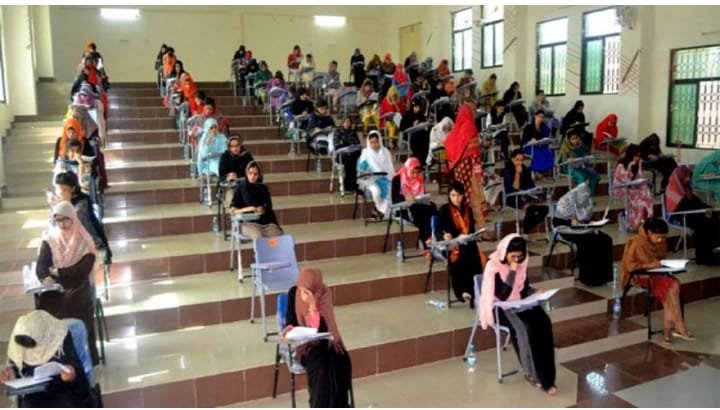
ISLAMABAD: The Embassy of Japan  donated 168 English-language books to Allama Iqbal Open University under the “Read Japan Project,” while the Japan Pakistan Advancement Center (JPAC) was also inaugurated to promote academic, cultural and employment cooperation between the two countries.

The books, donated by the The Nippon Foundation under its global “Read Japan Project” launched in 2008, were formally handed over by Akamatsu Shuichi to AIOU Vice Chancellor Prof Dr  Nasir Mahmood during a ceremony held at the university here, said a press release.

The donated collection covers a wide range of subjects including Japan’s history, politics, economy, security, international relations, philosophy, literature, language and culture, aimed at promoting deeper understanding of Japan among Pakistani students and researchers.

Japan donates 168 books to AIOU, launches Pakistan-Japan Advancement Center

On the occasion, the Japan Pakistan Advancement Center (JPAC) was also inaugurated to foster Japanese language learning, cultural and academic exchanges, while promoting employment opportunities and entrepreneurship for Pakistani youth.

Federal Minister for Overseas Pakistanis and Human Resource Development Chaudhry Salik Hussain also attended the event.

Ambassador Akamatsu congratulated the students and faculty members and said that books serve as bridges of knowledge that help people explore Japan’s rich culture and perspectives while inspiring innovation and new ideas in Pakistan.

He termed JPAC an important initiative for strengthening Pakistan-Japan relations in the fields of education, employment and entrepreneurship.

Speaking on the occasion, Prof Dr Nasir Mahmood thanked the Nippon Foundation and the Embassy of Japan for the donation, saying the books would help students gain a better understanding of Japan and further enhance bilateral relations between the two countries.

He expressed commitment to nurturing talented students and strengthening ties with Japan through the newly established JPAC.

Federal Minister Chaudhry Salik Hussain appreciated the JPAC initiative and expressed hope that it would further promote friendship, cooperation and people-to-people exchanges between Pakistan and Japan.

Continue Reading

Latest

Amid Mideast crisis, Pakistan facilitating dialogue to promote regional peace, Amb. Asim tells US War College team

Ambassador-Asim-Iftikhar-Ahmad

UNITED NATIONS: Highlighting the serious risks the Middle East crisis poses to international peace, Pakistan’s UN Ambassador Asim Iftikhar Ahmad told a delegation from the U.S. War college that Islamabad is actively fostering dialogue and contributing towards diplomatic efforts aimed at promoting regional stability.

Speaking to the 40-member delegation, which visited the Pakistani Mission to the UN on Monday, he emphasized Pakistan’s “constructive role” in promoting regional peace, stability, dialogue and diplomacy, especially with respect to its mediatory role between the United States and Iran.

The delegation, led by Col. Stephan Walters, consisted of 33 American participants as well as two from Pakistan, and one each from Turkiye, Sri Lanka, Moldova, Guatemala and Ecuador.

Dealing with the Middle East crisis, Ambassador Asim Ahmad, who was answering questions,  said it had far-reaching global consequences extending well beyond the region. He pointed out its impact on global energy markets, oil and gas supplies, fertilizer availability, food security, inflation, maritime navigation, merchandise trade, and global economic growth projections.

Referring to the disruption in the Strait of Hormuz, he underlined the serious implications for international energy flows and trade routes.  The United Nations, he said, had examined various scenarios assessing the consequences of a prolonged crisis. Pakistan, too, had experienced its economic effects arising from regional instability.

Beyond economic concerns, the crisis posed serious risks to regional and international peace and security, the Pakistani envoy said.  Pakistan supported efforts for de-escalation, dialogue, and diplomacy, he said,  noting its engagement with the United States, Iran, Gulf countries, Egypt, China, Turkiye, and other partners was aimed at preventing further escalation and creating conditions conducive to peaceful dialogue.

Pakistan’s balanced, principled, and objective approach, he said,  had enabled it to maintain trust and engagement with all relevant stakeholders, noting that Islamabad’s close relations with the United States, Iran, Gulf countries, and major international powers, together with its current membership of the Security Council, positioned it well to facilitate dialogue and contribute constructively to diplomatic efforts aimed at regional peace and stability.

Discussing the evolving security environment in the Middle East and Gulf region, Ambassador Asim Ahmad that recent developments may lead to renewed thinking regarding regional security arrangements and strategic alignments. In this regard, he emphasized that future security frameworks should remain grounded in international law, the UN Charter, collective security, mutual respect for sovereignty, and equal security for all states.

The ambassador also underlined Pakistan’s deep interest in peace and stability in the Persian Gulf region, noting the country’s longstanding economic, energy, security, and people-to-people ties with those states, including the presence of millions of Pakistanis living and working there.

Responding to questions on Islamophobia, the Pakistani envoy explained that the phenomenon refers to discrimination, marginalization, or victimization of Muslims based on their faith. Freedom of religion and belief is a fundamental human right, he said, emphasizing the importance of fostering respect, inclusion, and interfaith harmony.

He pointed out that Pakistan, together with like-minded countries, played a leading role at the United Nations in advancing efforts to combat Islamophobia, including support for the establishment of a UN Special Envoy to Combat Islamophobia tasked with developing recommendations and action-oriented initiatives for member states.

On questions relating to demographic change, population shifts, aging societies, and birth rates, he said these issues are increasingly being discussed within the United Nations framework in the context of development, human rights, economic policy, and technological transformation.

He noted that artificial intelligence is playing a growing role in supporting governments and UN agencies through data analysis, policy recommendations, and forecasting tools, saying that the influence of AI on policymaking is expected to expand further in the years ahead.

At the outset,  Ambassador Asim Ahmad reaffirmed Pakistan’s deep and abiding commitment to the United Nations and multilateralism, describing the world body as the central platform for collective action on international peace and security, development, human rights, climate change, and emerging challenges including artificial intelligence and information technology.

He emphasized that today’s global challenges were too complex and interconnected for any single country to address alone, highlighting the continued importance of multilateral cooperation through the UN platform.There was a need for UN to evolve in response to changing global realities and noted ongoing reform efforts, including revitalization of the General Assembly and  the Security Council reform. Pakistan’s supported democratic, transparent, and accountable reforms of the Security Council while opposing the creation of new permanent seats.

Ambassador Asim Ahmad underscored Pakistan’s active role as a current member of the Security Council in promoting international peace and security, including through peacekeeping, counterterrorism, regional stability, and advocacy for peaceful settlement of disputes.

He also highlighted the broad-based and dynamic relationship between Pakistan and the United States, encompassing security, defense, intelligence, counter-terrorism, economic cooperation, trade, and strong people-to-people ties.

Addressing the relationship between artificial intelligence and human rights, Ambassador Asim Ahmad emphasized that AI is becoming increasingly significant in governmental and institutional decision-making processes. He noted that the growing use of AI would inevitably raise important human rights considerations, making the subject an increasingly prominent area of discussion within the United Nations system.

people-to-people ties with those states, including the presence of millions of Pakistanis living and working there.

On their part, participants thanked the Mission for facilitating a meaningful exchange on contemporary global challenges, and acknowledged Pakistan’s active role in diplomacy, mediation, and peacebuilding efforts at the United Nations.

Earlier, Ms. Saima Saleem, a Mission’s counsellor, and Col. Umar Shafique, Military and Police Advisor at the Pakistan Mission, gave detailed presentations to the participants about the work of the Mission across different UN pillars as well as contribution to UN peacekeeping respectively.

Continue Reading

Read More

Balochistan Balochistan
Latest5 hours ago

PDMA organizes workshop to deal increasing risk of drought in Balochistan

QUETTA: In order to effectively deal with the increasing risks of drought in Balochistan, enhance the capacity for timely response...

Pakistan-Japan Advancement Center Pakistan-Japan Advancement Center
Education5 hours ago

Japan donates 168 books to AIOU, launches Pakistan-Japan Advancement Center

ISLAMABAD: The Embassy of Japan  donated 168 English-language books to Allama Iqbal Open University under the “Read Japan Project,” while...

Ambassador-Asim-Iftikhar-Ahmad Ambassador-Asim-Iftikhar-Ahmad
Latest5 hours ago

Amid Mideast crisis, Pakistan facilitating dialogue to promote regional peace, Amb. Asim tells US War College team

UNITED NATIONS: Highlighting the serious risks the Middle East crisis poses to international peace, Pakistan’s UN Ambassador Asim Iftikhar Ahmad...

Prof-Cheng-Xizhong Prof-Cheng-Xizhong
Latest5 hours ago

CPEC 2.0, Pakistan’s Robust Engine for Economic Revival: Prof Cheng

BEIJING: As global economic headwinds continue to weigh on South Asian economies, Pakistan is stepping onto a steadier growth trajectory...

president-PM president-PM
Latest5 hours ago

President, PM pay tribute to citizen martyred after confronting a suicide bomber in Attock

ISLAMABAD: President Asif Ali Zardari and Prime Minister Muhammad Shehbaz Sharif on Tuesday paid tributes to brave citizen Liaquat, who...

Mohsin-Naqvi Mohsin-Naqvi
Latest5 hours ago

Interior Minister orders major upgrades during visit to National Police Academy

ISLAMABAD: Interior Minister Mohsin Naqvi paid an official visit to the National Police Academy (NPA) on Tuesday, where he chaired...

Gilani meets Belgian Royal delegation Gilani meets Belgian Royal delegation
Latest5 hours ago

Gilani meets Belgian Royal delegation

ISLAMABAD: Chairman Senate of Pakistan, Syed Yousaf Raza Gilani, on Tuesday met with the Belgian Royal Delegation comprising Prince Édouard...

ishaq dar ishaq dar
Latest5 hours ago

DPM/FM Dar chairs meeting on recognition of medical, alternative medicine institutions

ISLAMABAD: Deputy Prime Minister/Foreign Minister Senator Mohammad Ishaq Dar, Tuesday, chaired a meeting to review and scrutinize cases relating to...

FM Dar, Austrian FM FM Dar, Austrian FM
Latest5 hours ago

DPM/FM Dar, Austrian FM discuss regional situation

ISLAMABAD: Deputy Prime Minister/Foreign Minister Senator Mohammad Ishaq Dar and Foreign Minister of Austria Beate Meinl-Reisinger, on Tuesday, exchanged views...

PM meeting PM meeting
Latest6 hours ago

PM vows full support to strengthen LEAs’ capacity

ISLAMABAD: Prime Minister Muhammad Shehbaz Sharif, Tuesday, said that all available resources would be utilized to enhance the capacity of...

Trending