
Latest
Young population Pakistan’s greatest asset: Syedaal
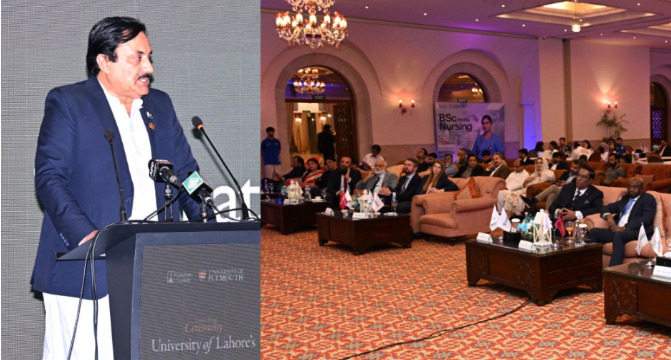
ISLAMABAD: Acting Chairman Senate Syedaal Khan Nasar has said Pakistan is fortunate to have a young population, with nearly 60 per cent of its people being youth.
He described young people as the country’s greatest asset and a source of hope for its future.
Speaking as chief guest at the launch of a Transnational Education Partnership between the University of Lahore and the University of Plymouth, UK, at a local hotel on Thursday evening, he said investing in youth could lead Pakistan towards greater development and prosperity.
He said providing young people with quality education, modern skills and access to global opportunities could promote development, prosperity and stability in Pakistan and the region.
He congratulated both universities on the partnership, saying it would further strengthen academic and educational ties between Pakistan and the United Kingdom.
He said such partnerships would enable Pakistani students to access world-class education, gain international exposure and acquire modern skills.
“Investing in the youth of today is, in fact, an investment in Pakistan’s future,” he remarked.
The Acting chairman said modern education and technology-oriented skills would strengthen the national economy and create new opportunities for development.
He welcomed the launch of academic programmes in computing, cybersecurity, artificial intelligence, business, law and health sciences.
He described these fields as vital for Pakistan’s economic and social development.
In an era shaped by artificial intelligence and emerging technologies, he said preparing young people for future needs was a pressing necessity.
Syedaal Nasar appreciated the University of Lahore’s initiative to create international educational opportunities for Pakistani students.
He expressed hope that cooperation between Pakistani and British institutions would expand beyond degree programmes to research, innovation, faculty collaboration, entrepreneurship and student exchanges.
Welcoming representatives of the University of Plymouth, he said education was an effective means of further strengthening relations between Pakistan and the UK.
He said cooperation in knowledge, research and innovation would further consolidate the longstanding friendly ties between the two countries.
The Acting chairman urged students to make the most of available opportunities, think globally and develop their skills.
He also encouraged them to embrace modern technology and innovation and play their role in the country’s development.
He appreciated all individuals and institutions involved in making the partnership a reality and expressed his best wishes for both universities.
He hoped the collaboration would provide a strong foundation for a promising future for students and the education sectors of Pakistan and the UK.
Latest
Gold Prices Drop by More Than Rs15,000 Per Tola in Pakistan

KARACHI: Gold prices in Pakistan are falling sharply amid expectations of an increase in US interest rates.
According to the All Pakistan Gems and Jewellers Association, the price of gold per tola in Pakistan decreased by Rs15,400 to Rs379,836.
The association further reported that the price of 10 grams of gold fell by Rs13,203 to Rs325,648.
Meanwhile, gold prices in the international market also declined by $154, bringing the price to $3,573 per ounce.
Latest
Fuel Prices Fall, But Transport Fares Remain Sky-High; Operators Cash In While Commuters Pay the Price

ISLAMABAD: A growing public outcry is emerging across Pakistan as transport fares continue to remain exceptionally high despite a substantial reduction in petrol and diesel prices. While petroleum prices have reportedly fallen from around Rs400 to approximately Rs324 per litre, commuters are still paying the same expensive fares, raising serious questions about the government’s failure to ensure that the benefits of lower fuel costs reach ordinary citizens.
The situation has created an apparent imbalance in the transport sector: transport operators continue to benefit from reduced fuel expenses while passengers remain burdened with fares that were fixed when petroleum prices were considerably higher. For millions of people who depend on public transport for their daily commute, the expected financial relief has yet to materialise.
Public transport within major cities has also failed to reflect the reduction in fuel prices. Buses, wagons, vans and other local transport services continue charging passengers at existing rates. The situation is no different in intercity transportation, where passengers travelling between Rawalpindi, Islamabad, Lahore, Faisalabad, Multan, Peshawar, Karachi and other major cities are still paying the previously established fares.
Major transport operators, including Daewoo Express, Faisal Movers, Sania Express and several other companies operating across the country, have also come under public scrutiny over their failure to provide meaningful fare reductions following the decline in petroleum prices.
Citizens have expressed concern that transport operators are enjoying a financial windfall as their fuel expenses decline while passenger fares remain unchanged. In the words of concerned commuters, transport operators are having a field day, while ordinary and low-income families are increasingly being pushed towards financial hardship.
The public argues that transport companies are quick to increase fares whenever petrol and diesel prices rise, but show little urgency in reducing them when fuel becomes cheaper. This one-sided approach has effectively deprived passengers of the financial relief they should reasonably expect from falling petroleum prices.
The performance of the Transport Department, provincial transport authorities and Regional Transport Authorities has also come under criticism. These institutions are legally and administratively responsible for regulating public transport fares, issuing revised fare schedules and ensuring compliance by transport operators.
However, their apparent failure to enforce corresponding fare reductions has raised serious concerns about regulatory oversight and accountability.
Public circles have further alleged that certain officials and personnel within the transport regulatory system may be turning a blind eye to excessive fares and possible irregularities. Questions are also being raised about alleged collusion between elements within the regulatory authorities and transport operators. These allegations warrant an independent inquiry to establish whether negligence, misconduct or any unlawful arrangements have contributed to the present situation.
Citizens say that while transport operators continue collecting high fares, the ordinary passenger is left with no effective mechanism to challenge overcharging or seek relief. The absence of transparent monitoring has further strengthened the perception that the interests of transport businesses are being protected at the expense of the travelling public.
Public and social circles have therefore called upon the Prime Minister of Pakistan and particularly Punjab Chief Minister Maryam Nawaz to intervene immediately and ensure that transport fares are reduced in proportion to the decline in petroleum prices.
They have demanded that the Punjab government issue revised fare schedules for all categories of public transport without further delay and strictly enforce them across the province.
They have also urged the federal and provincial governments to introduce a permanent and transparent mechanism under which transport fares are automatically reviewed whenever petrol and diesel prices increase or decrease. Such a system, they argue, would prevent arbitrary fare increases and ensure that passengers receive the corresponding benefit whenever fuel prices fall.
The proposed mechanism should include mandatory display of approved fare lists inside buses and passenger terminals, regular inspections, a dedicated public complaints helpline and strict penalties against operators found charging more than the officially approved rates.
Citizens have also demanded a review of the performance of transport regulatory authorities and an investigation into allegations of official negligence or possible collusion with transport operators. Officials found responsible for misconduct or failure to enforce regulations should face appropriate disciplinary and legal action.
The central question confronting the government is straightforward: if the prices of petrol and diesel can be reduced, why should transport fares remain unchanged?
For ordinary Pakistanis, cheaper fuel means little if the cost of travelling to work, educational institutions, hospitals and other destinations remains prohibitively expensive.
The public is demanding more than announcements and promises. It wants tangible relief in its daily expenses. The government must ensure that reductions in petroleum prices translate into lower transport fares, rather than allowing the benefits to remain concentrated in the hands of transport operators while ordinary passengers continue to pay the price.
Sada-e-Sach News Desk
Latest
Trump Says He Will Assess Situation Before Deciding on Iran
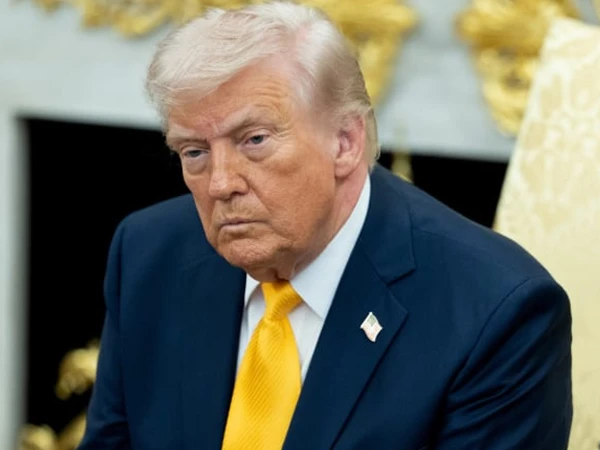
WASHINGTON: US President Donald Trump has indicated that he will adopt a cautious approach towards Iran, saying he will not rush into making a decision and will review the situation at the beginning of next year.
According to Trump, the United States will wait for the appropriate time before deciding how to proceed with Iran.
He indicated that Washington would monitor changing regional developments and diplomatic possibilities rather than making an immediate major decision.
Trump made it clear that a final decision on any potential new military action against Iran would be taken after the beginning of the new year.
He said the United States still had time and would make a decision after assessing the situation.


Gold Prices Drop by More Than Rs15,000 Per Tola in Pakistan
KARACHI: Gold prices in Pakistan are falling sharply amid expectations of an increase in US interest rates. According to the...

Fuel Prices Fall, But Transport Fares Remain Sky-High; Operators Cash In While Commuters Pay the Price
ISLAMABAD: A growing public outcry is emerging across Pakistan as transport fares continue to remain exceptionally high despite a substantial...


Trump Says He Will Assess Situation Before Deciding on Iran
WASHINGTON: US President Donald Trump has indicated that he will adopt a cautious approach towards Iran, saying he will not...


Abbas Araghchi Mocks Israeli Ambassador, Says He Did Not Know He Was Commander-in-Chief of US Military
TEHRAN: Iranian Foreign Minister Abbas Araghchi has issued a sarcastic response to an interview given by Israel’s ambassador to the...

Russian Missile Strikes Kill 3, Injure 15 in Kyiv
KYIV: Russian missile strikes on Ukraine’s capital, Kyiv, have killed three people and injured 15 others. According to Kyiv Mayor...
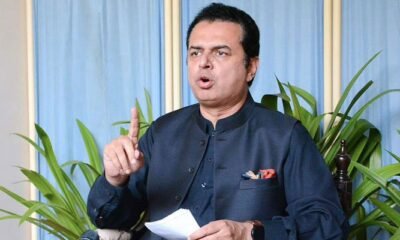

PTI Should First Return to Parliamentary Committees, Says Talal Chaudhry
ISLAMABAD: Minister of State for Interior Senator Talal Chaudhry has criticised Pakistan Tehreek-e-Insaf (PTI) leaders, saying that cooperation requires efforts...
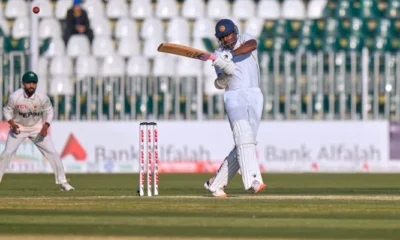

Pakistan Beat Sri Lanka in Second Test to Win Series 1-0
RAWALPINDI: Pakistan defeated Sri Lanka in the second Test to win the two-match series 1-0, after chasing a target of...
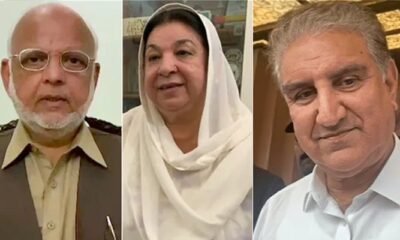

Imprisoned PTI Leaders Write to Chief Justice Over Imran Khan’s Treatment
LAHORE: Imprisoned Pakistan Tehreek-e-Insaf (PTI) leaders have written to the Chief Justice of Pakistan, raising concerns over the treatment, medical...


Spending $450 Million on US Midterm Elections Was Foolish, Elon Musk Admits
WASHINGTON: Elon Musk has admitted that spending heavily on political campaigns cannot guarantee electoral victories, acknowledging that his expenditure of...
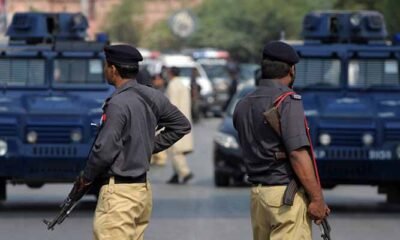

Karachi CIA Police Officer Arrested for Kidnapping Citizen and Extorting Rs100 Million Ransom
KARACHI: A CIA police officer in Karachi has been found involved in kidnapping a citizen and extorting ransom. Malir Cantt...
-
 Health7 months ago
Punjab Govt Opens Admissions for Lady Health Visitor Course
-
 Articles1 year ago
A Glimpse At Maj. Gen. Irfan Malik’s 02 Year Tenure
-
 Latest1 year ago
Punjab CM Maryam refuses to apologise, hits out at critics again
-
 Latest3 weeks ago
FDE holds Annual Awards Ceremony to Honor Intermediate Position Holders
-

 Latest12 months ago
Digital Pakistan and the Imperative of Implementing the National AI Policy
-
 Latest6 months ago
South Air ready to launch regional flight operations, connecting regions of pakistan
-
 Latest7 months ago
OPF Chairman Qamar Raza Naqvi Receives Warm Welcome from Pakistani Community in US
-

 Articles12 months ago
Golden Hour: A Dialogue of Light, River and Silence