
Health
Sindh sees 894 new HIV cases in first quarter of 2026
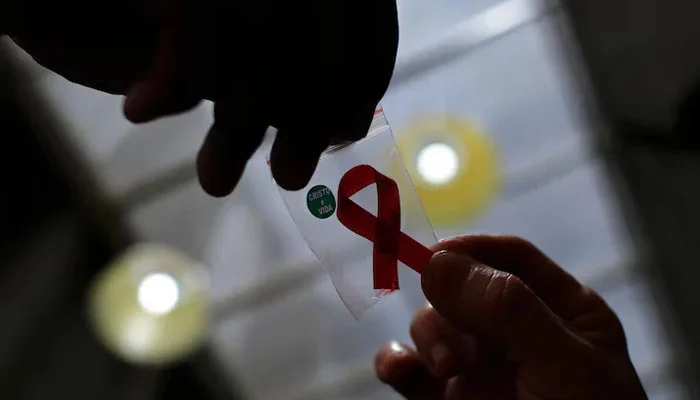
KARACHI: Sindh has reported 894 new HIV cases in the first three months of 2026, a rise that has raised serious public health concerns and highlighted ongoing gaps in infection prevention and control across the province, as officials confirmed.
According to data from the Sindh Health Department, the newly reported cases comprise 329 children under the age of 14, 332 men, 204 women, and 29 transgender individuals, The News reported.
Health experts warn that the rising numbers reflect systemic weaknesses in healthcare safety and regulatory oversight, particularly in major urban centres such as Karachi.
A month-wise breakdown of cases shows that 294 new HIV infections were recorded in January 2026, followed by 324 in February and 276 in March, underscoring the continued spread of the virus across the province.
Seven years after the devastating HIV outbreak in Ratodero in April 2019, which infected hundreds of children and exposed unsafe medical practices, experts say the persistence of new infections indicates that critical deficiencies in the healthcare system remain largely unaddressed.
Public health specialists attribute the continued spread of HIV primarily to poor infection prevention and control measures. These include the reuse of intravenous drips, used cannulas and syringes, unsterilised medical equipment, and the transfusion of unscreened blood — the practices that continue to endanger patients, particularly children.
Healthcare professionals acknowledge that such unsafe practices persist in both public and private healthcare facilities due to weak enforcement of regulations and inadequate monitoring. Experts stress that strict adherence to infection control protocols is essential to curb the spread of the virus.
An infectious diseases specialist at a private healthcare facility in Karachi described the situation as deeply alarming. “We are witnessing a steady increase in HIV cases across Sindh, including a disturbing number among children. Weak infection control standards and unsafe medical practices remain key drivers behind the spread of the virus,” the expert said.
Referring to the nature of detection, the specialist added: “Many of these cases are diagnosed incidentally. When paediatricians encounter children with recurrent infections, unexplained weight loss or weakened immunity, they screen them for HIV. Tragically, some children succumb to complications of the disease without ever being diagnosed.”
The alarming trend gained further attention following the detection of around 100 HIV cases at the Kulsoom Bai Valika Hospital in Karachi’s SITE area. In response, authorities suspended the entire paediatric department, and multiple inquiries were launched to determine the causes of the outbreak. Despite these measures, officials concede that new infections continue to surface across the province.
Of the 329 children diagnosed with HIV between January and March this year, 188 were boys, and 141 were girls under the age of 14. Experts warn that the disproportionately high number of paediatric cases indicates systemic lapses in healthcare safety and infection prevention.
Public health experts caution that unless strict infection control protocols are enforced and unsafe medical practices eliminated, Sindh may continue to witness recurring outbreaks similar to the Ratodero tragedy.
They emphasise the urgent need for routine screening of blood, sterilisation of medical equipment, elimination of syringe reuse, strengthening of regulatory oversight, and enhanced surveillance. Awareness campaigns, early diagnosis, and timely treatment are also considered essential to curb the spread of HIV among vulnerable populations.
With an average of three to four new HIV cases being diagnosed daily, the rising burden of infections serves as a stark reminder that systemic reforms promised after the Ratodero outbreak remain incomplete, leaving thousands, especially children, at risk.
Health
Hot, humid conditions to prevail across plains:PMD
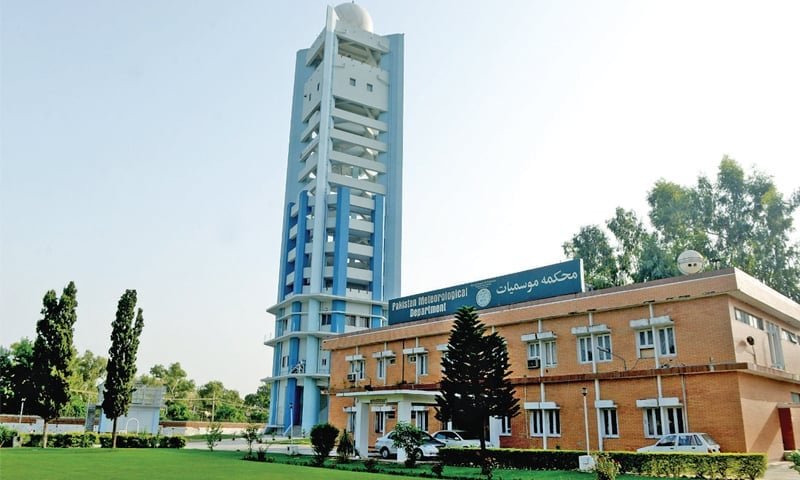
ISLAMABAD:Mainly hot and humid weather is expected to prevail over most plain areas of the country on Thursday, while partly cloudy conditions are likely in Gilgit-Baltistan and Kashmir, according to the Pakistan Meteorological Department (PMD) forecast.
In Islamabad and adjoining areas, hot and humid weather is expected during the day, while rain-wind/thunderstorm is likely during evening/night with a probability of 30 percent.
In Khyber-Pakhtunkhwa, most plain districts are expected to experience hot and humid weather. However, upper districts are likely to remain partly cloudy, with chances of rain-wind/thunderstorm in Waziristan, Hangu, Kurram, Kohat and adjoining areas during the afternoon.
In Punjab, mainly hot and humid weather is expected over most districts. However, partly cloudy conditions with chances of rain-wind/thundershower are likely in Murree, Galiyat and adjoining areas during the afternoon.
In Sindh, mainly hot and humid weather is expected over most districts, while coastal areas, including Karachi, are likely to remain partly cloudy with chances of drizzle.
Most districts of Balochistan are also expected to experience hot and humid weather, while partly cloudy conditions are likely in coastal areas.
Kashmir and Gilgit-Baltistan are expected to experience partly cloudy and dry weather.
During the past 24 hours, weather remained hot and humid over most plain areas of the country, while isolated light rain occurred in Gilgit-Baltistan. Babusar received 5 millimetres of rain.
The highest maximum temperatures recorded on Wednesday were 43 C at Nokkundi, Dalbandin and Sibbi, while Bhakkar and Noor Pur Thal recorded 42 C.
The minimum and maximum temperatures recorded in major cities were: Islamabad 24/36 C, Lahore 28/38 C, Karachi 26/34 C, Peshawar 26/38 C, Quetta 16/35 C, Gilgit 14/36 C, Muzaffarabad 22/37 C, Skardu 12/29 C, Murree 14/23 C, Faisalabad 27/38 C and Multan 27/37 C.
In Srinagar, Jammu, Leh, Pulwama, Anantnag, Shopian and Baramulla, the temperatures remained at 15/32 C, 25/34 C, 7/23 C, 16/34 C, 17/31 C, 15/34 C and 16/32 C, respectively.
Health
30 childcare centers launched for pilgrims’ families, Hajj workers
ISLAMABAD: The Ministry of Human Resources and Social Development is supervising more than 30 licensed childcare centers in Makkah and Madinah during the Hajj 1447 AH season to support pilgrims’ families and seasonal field workers.
According to the Saudi Press Agency (SPA), the centers have been prepared to accommodate up to 900 children in safe and professionally supervised environments during the Hajj season.
The report said the facilities provide educational and recreational activities for children of pilgrims, Umrah performers and workers performing field duties during Hajj operations.
Authorities said the initiative aims to reduce pressure on families and enable parents to perform Hajj rituals or official duties with greater peace of mind while their children remain in secure care centers.
The ministry added that the childcare facilities are operating under organized supervision to ensure proper care, safety and quality services for children throughout the Hajj season.
SPA told APP that the initiative supports the goals of Saudi Vision 2030 by improving family support services linked to pilgrims’ comfort and enhancing the overall Hajj experience.
Health
Punjab Launches Disease Prevention Program to Combat Major Illnesses

Lahore: Punjab Chief Minister Maryam Nawaz has approved the launch of a province-wide “Disease Prevention Program” aimed at controlling the spread of major life-threatening illnesses.
The initiative will focus on preventing diseases such as diabetes, tuberculosis (TB), HIV/AIDS and hepatitis, alongside a large-scale public awareness campaign to educate citizens about prevention and treatment.
The decision was taken during a high-level meeting chaired by the chief minister, where officials briefed her on the program’s objectives and implementation strategy.
Maryam Nawaz directed authorities to strictly enforce health standard operating procedures (SOPs) in public hospitals to prevent outbreaks and improve patient safety.
She also instructed the Punjab Healthcare Commission to ensure compliance with SOPs in private hospitals and clinics.
In addition, the chief minister ordered strict legal action against quack doctors operating across the province, stressing the need to eliminate unsafe medical practices.
She highlighted the importance of public awareness, noting that early detection of symptoms can play a key role in preventing serious complications and saving lives.
Officials said the program aims to strengthen preventive healthcare, reduce disease burden, and promote healthier communities across Punjab.

Health minister orders probe into Sindh MDCAT complaints
ISLAMABAD:Federal Minister for Health Syed Mustafa Kamal has taken notice of alleged irregularities in the Medical and Dental College Admission...


CDA chairman directs faster work on Expressway East project
ISLAMABAD: Capital Development Authority (CDA) Chairman Sohail Ashraf has directed officials to accelerate work on the Islamabad Expressway Service Road...

GB ministers call on Governor Kundi
PESHAWAR: Governor Khyber Pakhtunkhwa Faisal Karim Kundi on Saturday held a meeting with a delegation of Gilgit-Baltistan ministers at the...

DPM/FM, British HC discuss Pak-UK bilateral ties
ISLAMABAD, Oct 03 (APP):British High Commissioner Jane Marriott, on Saturday, called on Deputy Prime Minister/Foreign Minister Senator Mohammad Ishaq Dar...


Govt, PPP, opposition hold first round of talks at Parliament House
ISLAMABAD: The first round of talks between the government, Pakistan Peoples Party (PPP) and opposition concluded at Parliament House here...

CCC reiterates resolve to maintain internal stability, uphold rule of law
RAWALPINDI: The Corps Commanders’ Conference (CCC) while underscoring the importance of internal stability, on Friday resolved that any attempt to...

IMCG F-6/2 Holds Investiture Ceremony of Newly Elected College Council
ISLAMABAD: The investiture ceremony of the newly elected College Council 2026-27 was held at Islamabad Model College for Girls (IMCG),...

PM orders expansion of Aasaan Khidmat Centers across country
ISLAMABAD: Prime Minister Shehbaz Sharif on Thursday reiterating commitment to providing citizens with fast, transparent, and high-quality services at their...

Armed Forces fully prepared to protect Pakistan’s geographical borders, national security: DG ISPR
RAWALPINDI: Director General (DG) Inter-Services Public Relations (ISPR), Lt Gen Ahmed Sharif Chaudhry, while reiterating that there would be no...

PM reviews progress on Fuel Relief Scheme
ISLAMABAD: Prime Minister Muhammad Shehbaz Sharif Thursday chaired a review meeting regarding the progress of the Prime Minister’s Fuel Relief...
-
 Health6 months ago
Punjab Govt Opens Admissions for Lady Health Visitor Course
-
 Articles12 months ago
A Glimpse At Maj. Gen. Irfan Malik’s 02 Year Tenure
-

 Latest1 year ago
Punjab CM Maryam refuses to apologise, hits out at critics again
-

 Latest10 months ago
Digital Pakistan and the Imperative of Implementing the National AI Policy
-
 Latest5 months ago
Syed Zeeshan Ali Naqvi Elected as President CJP, Raja Gohar Iqbal as Secretary General
-

 Articles10 months ago
Golden Hour: A Dialogue of Light, River and Silence
-

 Latest5 months ago
HEC launches fully online, paperless degree attestation system
-

 Latest5 months ago
OPF Chairman Qamar Raza Naqvi Receives Warm Welcome from Pakistani Community in US