
Latest
US military aircraft arrive in Islamabad ahead of top officials visit
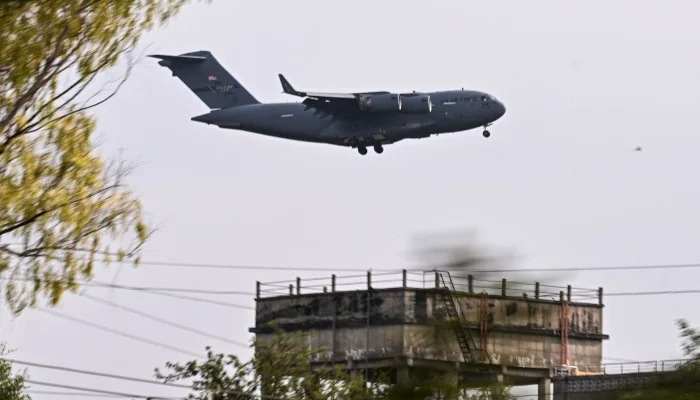
Washington: Several US military transport aircraft have begun arriving in Islamabad, according to a flight-tracking website, in what appears to be preparations for a possible visit by the US vice president.
Large US Air Force C-17 aircraft carrying equipment have landed at Nur Khan Airbase, the report said.
Three aircraft arrived on April 19 at different times: the first at 8:30am local time, followed by a second at 11:03am and a third at 2:40pm, according to the tracking data. Another aircraft is believed to be in route.
Additional US aircraft were seen refuelling at Ramstein Air Base and Moron Air Base, indicating a broader logistical operation.
The aircraft are reported to be transporting security, communications and other support equipment typically deployed ahead of high-level US visits. Officials have not publicly confirmed the visit.
The report about the arrival of the US aircraft comes hours after sources said that an advance team from the US arrived in Islamabad.
Advance teams from foreign delegations have begun arriving in the country ahead of the much-anticipated talks, sources said.
Authorities in Islamabad and Rawalpindi heightened security in the federal capital, sealing off the Red Zone to traffic as Pakistan prepares to host visiting foreign delegations.
The measures follow reports about the second round of talks between delegations from the United States and Iran, reportedly scheduled next week.
In a statement, Islamabad police said that the Red Zone and Extended Red Zone will remain completely closed for all kinds of traffic until further notice due to the arrival of foreign delegations.
They advised citizens to use alternate routes and cooperate with traffic police to ensure smooth flow and security.
Further, the district administrations of Islamabad and Rawalpindi announced an immediate suspension of public and goods transport in the twin cities.
The Islamabad deputy commissioner suspended heavy transport and public transport services until further notice, without citing any reason.
“Heavy transport and public transport in the city are being suspended until further orders. Citizens are earnestly requested to cooperate with the security agencies,” the Islamabad DC posted on X.
Similarly, all private, public, and goods transport has been suspended with immediate effect in Rawalpindi. The official confirmed that further updates will be issued later.
“All private, public and goods transport in Rawalpindi is hereby suspended with immediate effect. Further updates will be shared,” the Rawalpindi DC said in his X post.
Security measures
A day earlier, the Rawalpindi police were put on high alert on the directives of City Police Officer (CPO) Syed Khalid Mahmood Hamdani.
“Rawalpindi Police have placed the city on high security alert and implemented extraordinary arrangements to ensure foolproof security in view of the movement of foreign delegations,” state-run news agency, APP, reported.
More than 10,000 police officers and personnel were deployed across the city to perform security duties, while over 600 special pickets were established with strict monitoring of all entry and exit points being done.
Special teams of Elite Commandos and trained snipers had been assigned security responsibilities, while the Elite Force, Dolphin Force, police station mobiles, and other quick response units conducted patrolling throughout the city.
Search, sweep, combing, and intelligence-based operations had also been intensified, with close monitoring and checking of suspicious individuals continuing across Rawalpindi.
Security around sensitive installations, key public and private locations and residential places of importance has been further tightened, while Safe City surveillance, CCTV cameras and modern monitoring systems are being used for round-the-clock observation.
Authorities in the twin cities had announced a two-day holiday on April 10 and 11, as Pakistan hosted the high-stakes talks between the US and Iran.
Prime Minister Shehbaz Sharif invited delegations from Washington and Tehran for peace talks after brokering a two-week ceasefire between the two sides on April 8.
The Middle East conflict began on February 28, following joint strikes by the US and Israel against. The scope of the conflict quickly spread as Tehran effectively blocked the Strait of Hormuz and launched retaliatory attacks against Israel and US bases across the Gulf region.
After agreeing to the PM Shehbaz-facilitated ceasefire, the two sides held negotiations in Islamabad on a wide range of disputes. However, the talks could result in an agreement for a permanent end to the conflict.
However, Pakistan continued its marathon efforts to help resolve longstanding disputes between the two sides, including COAS-CDF Field Marshal Asim Munir’s visit to Tehran, where he met Iran’s top political and military leadership.
A day after CDF Munir’s visit, Iran declared the Strait of Hormuz open, citing the agreement of a ceasefire between Israel and Lebanon.
However, the country blocked the waterway again, citing Washington’s naval blockade of Iranian ports as the reason.
Despite lingering issues, Iranian Parliament Speaker Mohammad Bagher Ghalibaf said talks with Washington have seen “progress,” but “many gaps and some fundamental points remain.”
“We are still far from the final discussion,” said Ghalibaf in a televised address earlier today.
US President Donald Trump has also said that “very good conversations” were going on with Iran, but warned Tehran against trying to “blackmail” Washington.
Latest
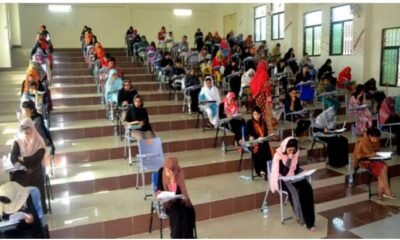
Health minister orders probe into Sindh MDCAT complaints
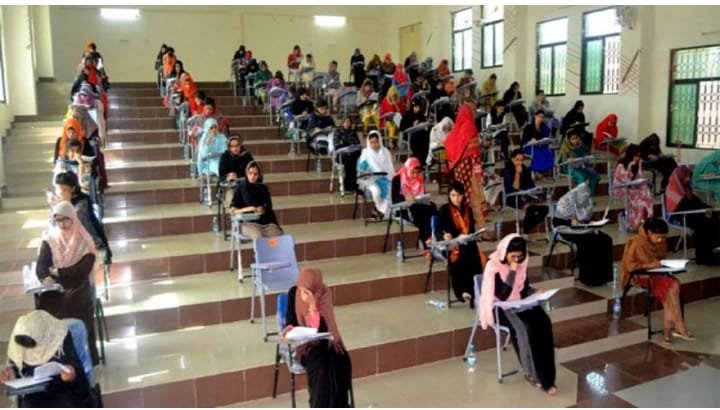
ISLAMABAD:Federal Minister for Health Syed Mustafa Kamal has taken notice of alleged irregularities in the Medical and Dental College Admission Test (MDCAT) held in Sindh and ordered a comprehensive inquiry into the complaints.
According to official sources, the minister directed a five-member committee, including the President of the Pakistan Medical and Dental Council (PMDC), to conduct a transparent investigation and submit its report within 15 days.
The committee has been tasked with examining the complaints and reviewing the circumstances surrounding the alleged irregularities during the examination, sources said.
The minister directed the committee to complete the inquiry within the stipulated timeframe and present its findings for further action in accordance with the applicable rules.
Latest
CDA chairman directs faster work on Expressway East project
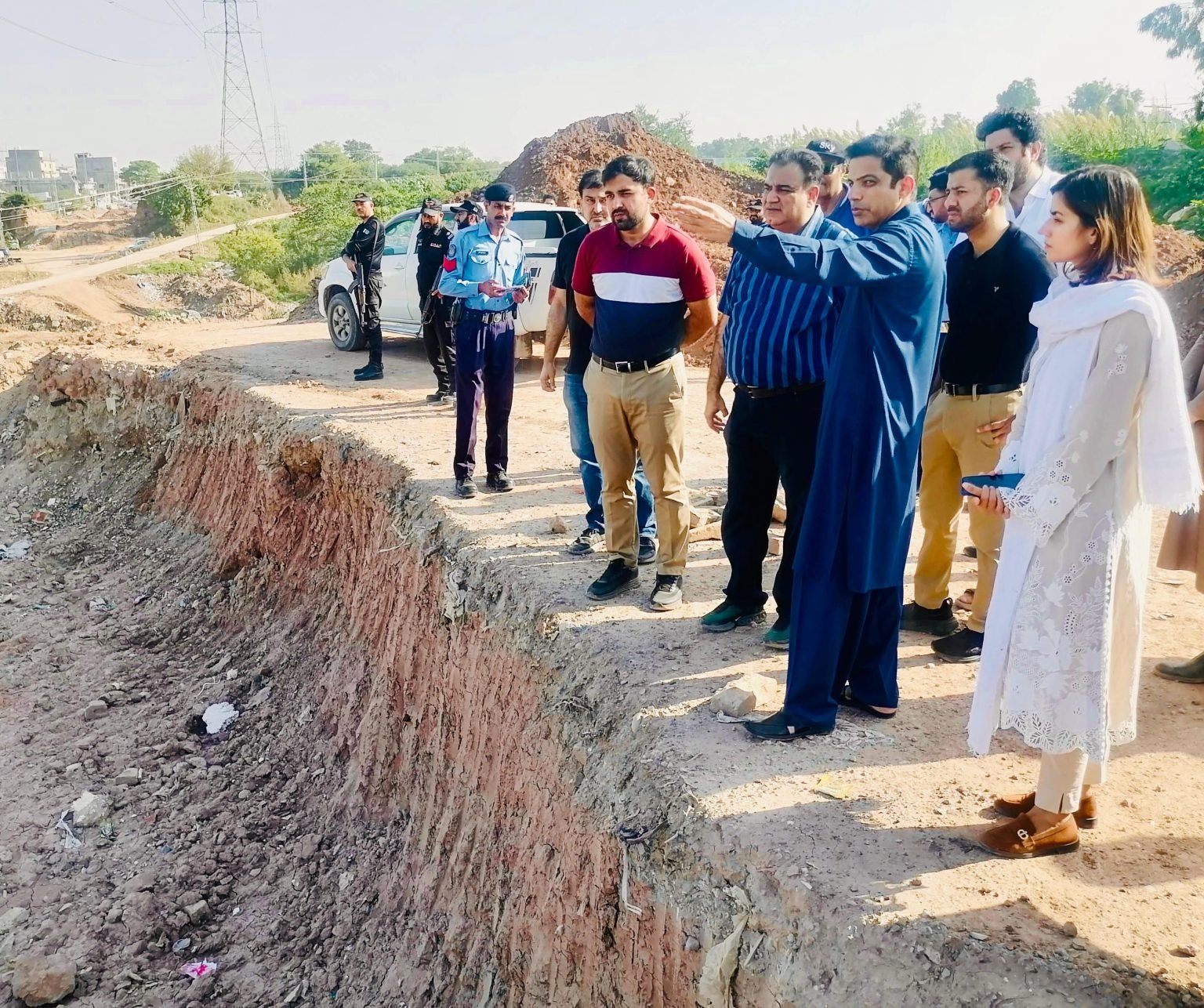
ISLAMABAD: Capital Development Authority (CDA) Chairman Sohail Ashraf has directed officials to accelerate work on the Islamabad Expressway Service Road East project while ensuring strict compliance with approved designs and construction standards.
During an inspection of the project on Saturday, the chairman reviewed progress and was briefed on ongoing works and the next phase of development.
He directed the project director and relevant departments to maintain continuous field monitoring and quality control and ensure effective traffic management to minimise inconvenience to commuters.
The chairman described the Expressway East project as an important infrastructure scheme for improving connectivity, traffic flow and road capacity in the capital. He also stressed that construction quality should not be compromised in efforts to meet the project timeline.
During the visit, he was also briefed on an ongoing enforcement operation against unauthorised and illegal construction along the Islamabad Expressway.
According to the CDA, 377 buildings have been identified for action, including 281 commercial structures. So far, 58 buildings have been sealed, while 124 buildings between Sohan and Khanna bridges have been marked for demolition.
The authority said Rs234.685 million had been recovered through land-use conversion, unauthorised construction and de-sealing charges. Around Rs3 billion remained recoverable under applicable regulations in connection with land-use conversion and violations relating to unauthorised construction, setbacks, floor area ratio and covered area.
The chairman directed the relevant departments to ensure strict enforcement of building-control and land-use regulations, particularly mandatory fire-safety requirements.
The enforcement operation is being conducted by the CDA’s Building Control Section and Enforcement Directorate in coordination with the district administration and Islamabad police.
Latest
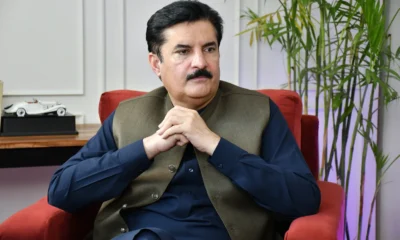
GB ministers call on Governor Kundi
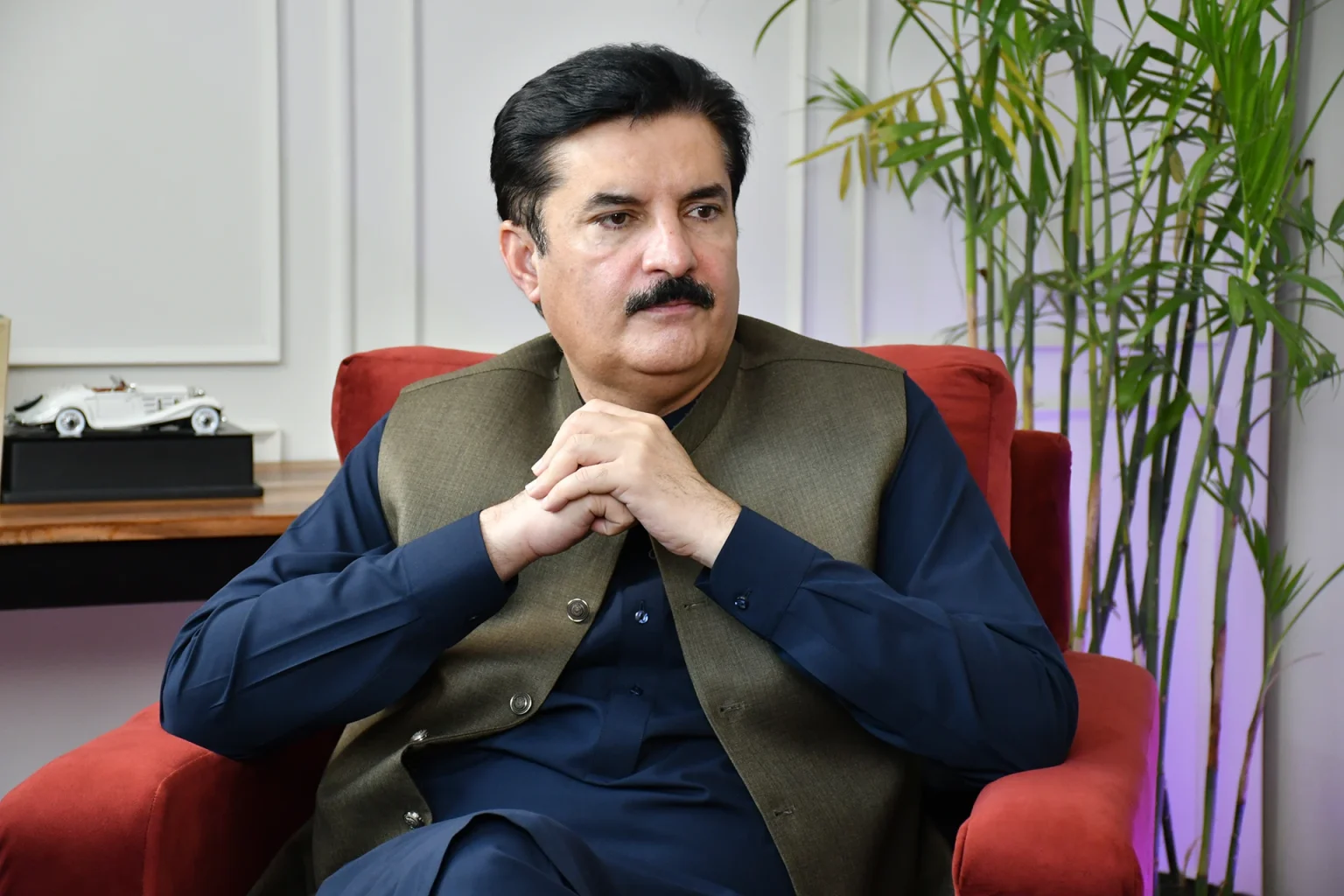
PESHAWAR: Governor Khyber Pakhtunkhwa Faisal Karim Kundi on Saturday held a meeting with a delegation of Gilgit-Baltistan ministers at the Governor’s House here and discussed the country’s political situation and other matters of mutual interest.
The delegation comprised Gilgit-Baltistan Minister for Local Government and Rural Development Zulfiqar Ali Murad, Minister for Health Iqbal Hassan and Minister for Education Aman Ali Ameer.
During the meeting, the two sides exchanged views on the prevailing political situation in the country and various issues of mutual interest. They also discussed the recent elections in Gilgit-Baltistan and the Pakistan Peoples Party’s success in the polls.
The visiting ministers were taken on a tour of the Governor’s House. Governor Kundi presented them with traditional shawls and caps.

Health minister orders probe into Sindh MDCAT complaints
ISLAMABAD:Federal Minister for Health Syed Mustafa Kamal has taken notice of alleged irregularities in the Medical and Dental College Admission...


CDA chairman directs faster work on Expressway East project
ISLAMABAD: Capital Development Authority (CDA) Chairman Sohail Ashraf has directed officials to accelerate work on the Islamabad Expressway Service Road...

GB ministers call on Governor Kundi
PESHAWAR: Governor Khyber Pakhtunkhwa Faisal Karim Kundi on Saturday held a meeting with a delegation of Gilgit-Baltistan ministers at the...
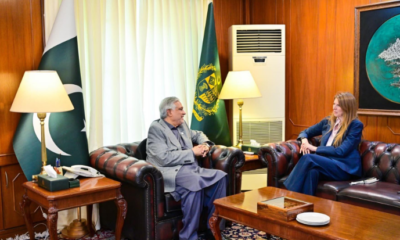

DPM/FM, British HC discuss Pak-UK bilateral ties
ISLAMABAD, Oct 03 (APP):British High Commissioner Jane Marriott, on Saturday, called on Deputy Prime Minister/Foreign Minister Senator Mohammad Ishaq Dar...
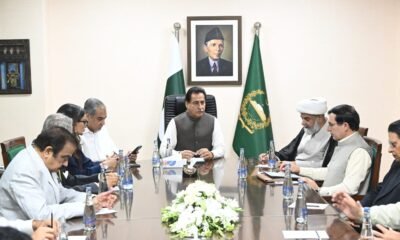

Govt, PPP, opposition hold first round of talks at Parliament House
ISLAMABAD: The first round of talks between the government, Pakistan Peoples Party (PPP) and opposition concluded at Parliament House here...

CCC reiterates resolve to maintain internal stability, uphold rule of law
RAWALPINDI: The Corps Commanders’ Conference (CCC) while underscoring the importance of internal stability, on Friday resolved that any attempt to...

IMCG F-6/2 Holds Investiture Ceremony of Newly Elected College Council
ISLAMABAD: The investiture ceremony of the newly elected College Council 2026-27 was held at Islamabad Model College for Girls (IMCG),...

PM orders expansion of Aasaan Khidmat Centers across country
ISLAMABAD: Prime Minister Shehbaz Sharif on Thursday reiterating commitment to providing citizens with fast, transparent, and high-quality services at their...

Armed Forces fully prepared to protect Pakistan’s geographical borders, national security: DG ISPR
RAWALPINDI: Director General (DG) Inter-Services Public Relations (ISPR), Lt Gen Ahmed Sharif Chaudhry, while reiterating that there would be no...

PM reviews progress on Fuel Relief Scheme
ISLAMABAD: Prime Minister Muhammad Shehbaz Sharif Thursday chaired a review meeting regarding the progress of the Prime Minister’s Fuel Relief...
-
 Health6 months ago
Punjab Govt Opens Admissions for Lady Health Visitor Course
-
 Articles12 months ago
A Glimpse At Maj. Gen. Irfan Malik’s 02 Year Tenure
-

 Latest1 year ago
Punjab CM Maryam refuses to apologise, hits out at critics again
-

 Latest10 months ago
Digital Pakistan and the Imperative of Implementing the National AI Policy
-
 Latest5 months ago
Syed Zeeshan Ali Naqvi Elected as President CJP, Raja Gohar Iqbal as Secretary General
-

 Articles10 months ago
Golden Hour: A Dialogue of Light, River and Silence
-

 Latest5 months ago
HEC launches fully online, paperless degree attestation system
-

 Latest5 months ago
OPF Chairman Qamar Raza Naqvi Receives Warm Welcome from Pakistani Community in US